


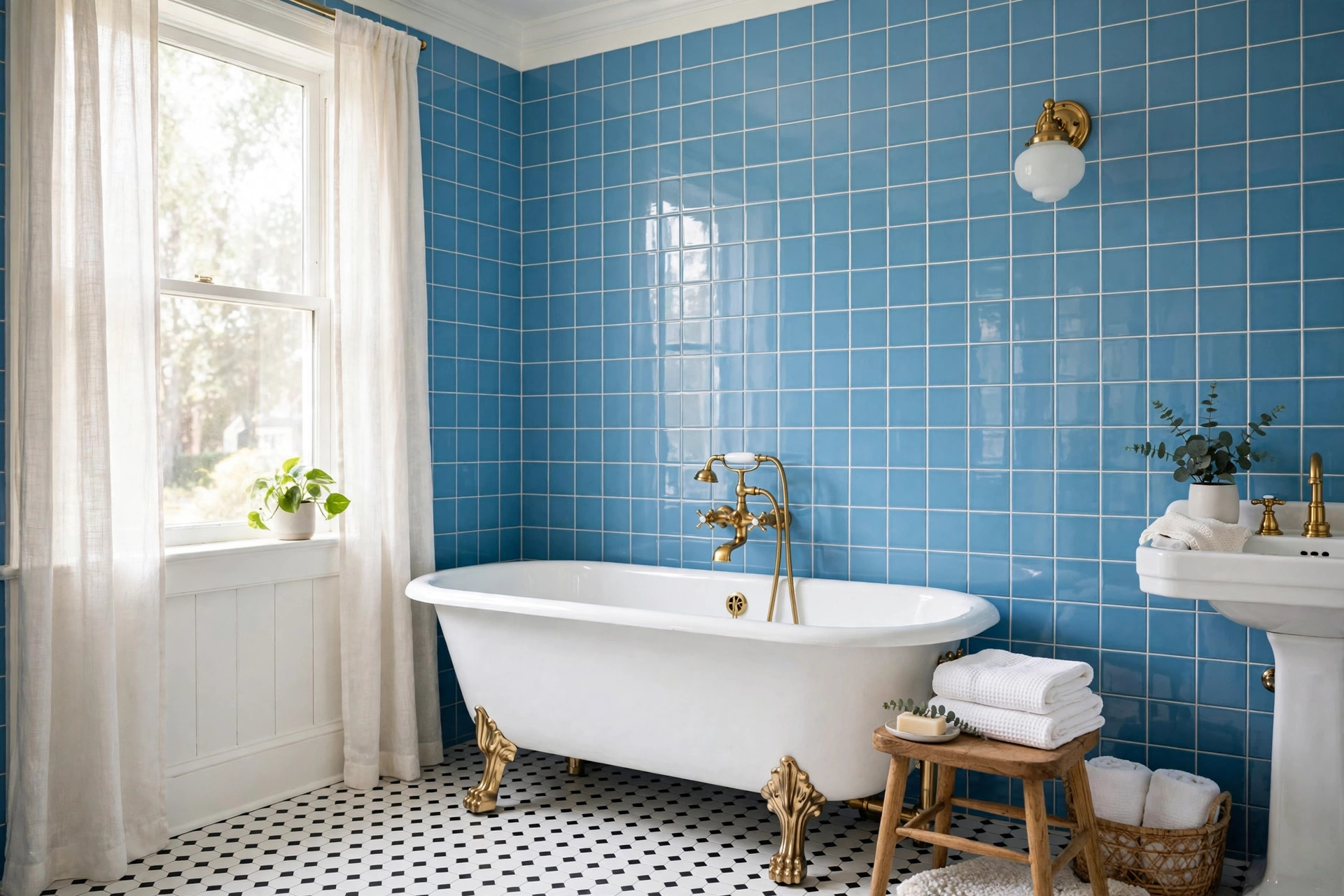
Powder blue tile is one of the most charming survivors of the mid-century bathroom — soft, calm, and unmistakably retro. But its pale glaze shows soap scum, hard-water marks, and grout stains more readily than darker tile, and harsh cleaning can dull the finish for good. The good news is that knowing how to keep powder blue bathroom tile looking new comes down to gentle habits, not expensive products. With the right routine, original 1950s or 1960s tile can look fresh for decades to come.
Clean Gently and Often
The golden rule for vintage tile is simple: clean little and often, and never use anything abrasive. A weekly wipe with warm water and a few drops of mild dish soap is enough for most bathrooms. Use a soft microfibre cloth or a non-scratch sponge, working in small sections and rinsing as you go so soap does not dry on the glaze. For a deeper clean once a month, mix one part white vinegar with three parts warm water, spray it on, leave it for five minutes, then wipe and rinse well.
Avoid the products that damage old glaze: scouring powders, steel wool, stiff brushes, and cleaners containing bleach or ammonia. Bleach can yellow pale blue glaze over time and weaken old grout, while abrasive pads leave fine scratches that trap dirt and make the tile look dull. If you are unsure about a product, test it on a single tile behind the door first and wait a day before using it more widely. Powder blue tile rewards a light touch — the glaze is the colour, and once it is scratched or dulled, no cleaner will bring it back.
Care for the Grout
Grout is usually what makes old tile look tired, not the tile itself. White or pale grey grout around powder blue tile picks up mildew and soap residue quickly, especially in the shower. Scrub grout lines weekly with a soft old toothbrush and a paste of baking soda and water, then rinse thoroughly. For stubborn staining, a grout-specific cleaner or a dilute oxygen bleach solution works well — apply it, wait ten minutes, scrub gently, and rinse.
Once a year, seal the grout. A penetrating grout sealer, applied with a small brush and left to cure for 24 hours, keeps water and soap from soaking in and makes weekly cleaning far easier; a bottle costs $15 to $30 and covers a typical shower surround. If grout is cracked or missing, rake out the loose material and re-grout the section rather than painting over it — grout paint peels in wet areas and looks patchy against pale blue tile. Fresh, sealed grout is the single biggest visual upgrade you can give a vintage tiled bathroom.
Prevent Water Spots and Soap Scum
Prevention beats scrubbing every time. Hard water is the main enemy of powder blue tile: mineral deposits leave cloudy white spots that build up into a haze if left alone. After each shower, run a squeegee over the tiled walls — it takes thirty seconds and removes most of the water before it can dry into spots. Keep a small squeegee on a hook by the shower so it becomes part of the routine, not a chore.
Soap choice matters too. Bar soaps and creamy body washes leave more residue than clear liquid shower gels, and that residue is what turns into soap scum on pale glaze. Switching to a clear gel and rinsing the walls after showering cuts scum dramatically. Good ventilation helps as well: run the extractor fan during and for twenty minutes after every shower, or open a window if you have one. Damp air feeds mildew in grout lines, and a dry bathroom stays cleaner between deep cleans. If your water is very hard, a showerhead filter costing $25 to $50 can reduce mineral deposits noticeably.
Protect the Finish and Fix Small Damage
Vintage glaze is tougher than it looks, but it has limits. Never hang heavy suction-cup hooks on tiled walls — they can pop off and chip the glaze — and use adhesive hooks or drilled fixings instead. Keep hair dye, self-tanner, and strong cleaning chemicals away from the tile, and wipe up spills straight away; even a small dye stain can set into old grout within minutes.
For chips, a ceramic touch-up kit in a matching pale blue costs $10 to $20 and works well on small nicks: clean the chip, apply thin layers with a fine brush, and let each layer dry fully. Larger damage needs a professional tile restorer, who can colour-match glaze and repair cracks invisibly. Never paint over powder blue tile as a shortcut — paint peels in steam, traps moisture, and destroys the value of original tile. And if you ever re-grout or re-caulk, use a silicone caulk matched to the grout colour at the bath edge and corners, replacing it every few years before it blackens.
A Routine That Keeps Blue Tile Beautiful
The secret to learning how to keep powder blue bathroom tile looking new is consistency, not effort. A quick squeegee after showers, a gentle weekly wipe, a monthly vinegar clean, and an annual grout seal will keep original tile looking fresh year after year. Treat the glaze kindly, keep the grout sealed, and fix small chips before they grow. Your powder blue bathroom has already survived half a century — with a little regular care, it will look just as lovely for the next fifty years.


GIPHY App Key not set. Please check settings