


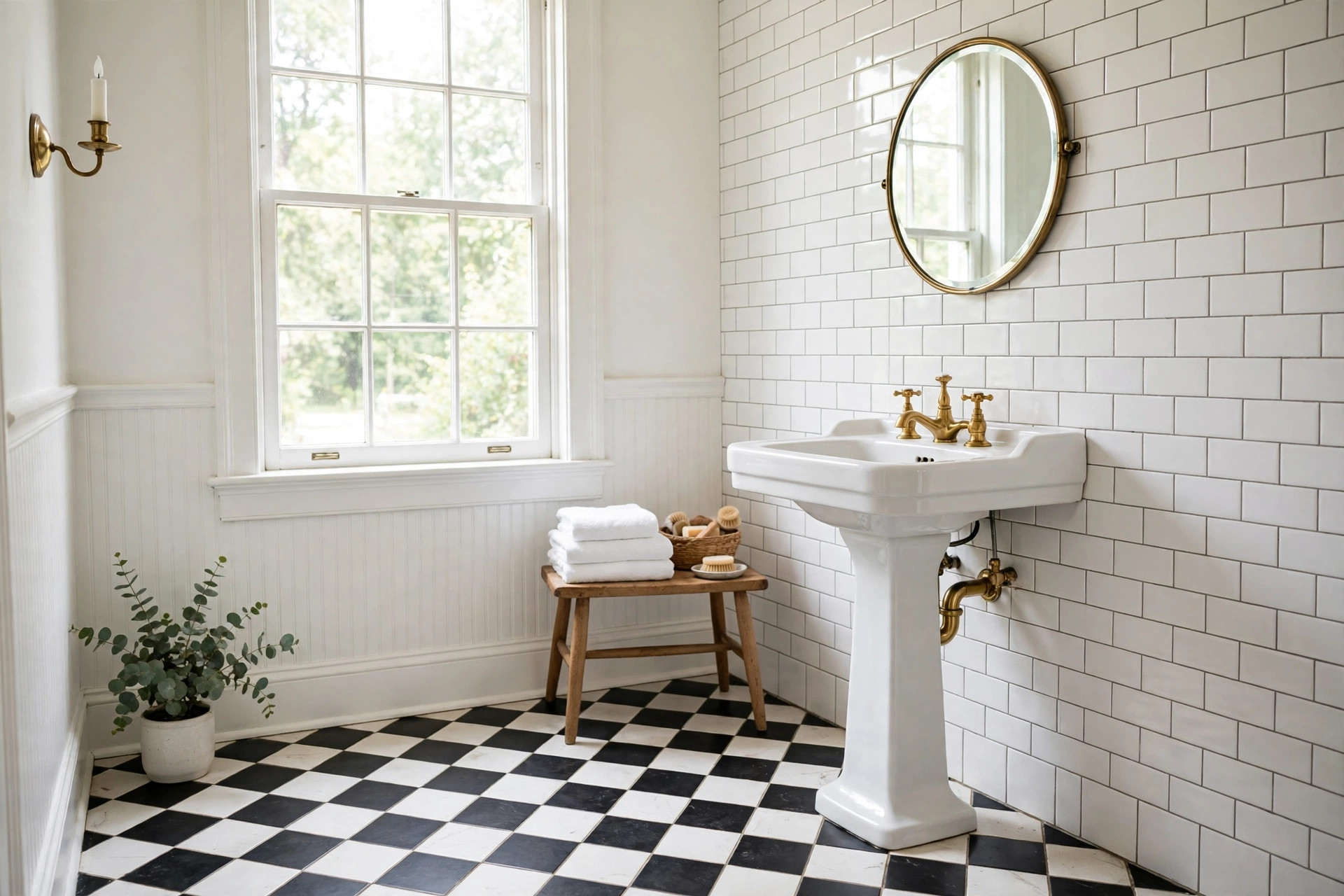
How long does checkerboard tile last? If you choose the right materials and look after them, a checkerboard bathroom floor can easily serve for 40 to 50 years — and plenty of original floors from the 1920s and 1930s are still going strong a century later. The pattern itself is timeless, but longevity depends on what the tiles are made of, how they were installed, and how the bathroom is used day to day. Before you commit to this bold retro look, it helps to know what you are really buying into.
Ceramic and Porcelain: The Long-Distance Runners
Most modern checkerboard floors use ceramic or porcelain tiles, and these are the workhorses of the bunch. A good quality porcelain tile, properly installed over a stable subfloor, can last 50 years or more in a residential bathroom. Ceramic is slightly softer and more porous, so expect 30 to 40 years of good service in a family bathroom, with the black tiles usually showing wear first.
The key difference is density. Porcelain is fired at higher temperatures, which makes it denser, harder, and far less absorbent — typically under 0.5 percent water absorption. That matters in a bathroom, where steam and splashes are constant. Ceramic absorbs more moisture, which can lead to hairline cracks in very cold or damp conditions, though in a heated, well-ventilated bathroom this is rarely an issue.
Marble checkerboard floors look magnificent, but they are a different proposition. Marble is a natural stone, softer than porcelain, and it will need resealing every 12 to 18 months. With careful maintenance, a marble checkerboard floor can still last decades, but it will develop a patina — small etches, softened edges, a gentle sheen — that some homeowners love and others regret. Budget around $8 to $15 per square foot for porcelain checkerboard tile, $5 to $10 for ceramic, and $15 to $30 or more for marble.
What Actually Wears a Checkerboard Floor Out
Tiles themselves rarely fail. What fails is everything around them. Grout is the usual weak point: standard cement grout in a wet bathroom typically needs attention after 8 to 15 years, showing stains, small cracks, or crumbling at the edges. Epoxy grout costs more upfront — roughly double the material cost — but resists staining and moisture far better, and can last the life of the floor.
The subfloor matters just as much. Checkerboard tile laid over a flexing plywood subfloor will crack along the grout lines, usually within the first few years. A cement backer board or a properly prepared mortar bed gives the tiles the rigid support they need. If your bathroom floor has any bounce at all, fix that before a single tile goes down.
Traffic patterns also tell a story. The tiles in front of the vanity and the shower door take the most foot traffic, and in a busy family bathroom you may see the glaze dull slightly on those tiles after 15 to 20 years. The black tiles show this first, since any lightening of the glaze reads as a greyish haze. Choosing a matte or honed finish hides wear far better than a high-gloss glaze.
Installation Choices That Add Decades
A checkerboard floor is only as good as its installation, and a few choices at the start pay off for decades. First, use a high-quality modified thinset mortar rather than a budget mastic — mastic softens with prolonged moisture exposure and is not recommended for bathroom floors at all. Expect to pay $25 to $40 per bag for a good modified thinset, and a typical 50-square-foot bathroom needs two to three bags.
Second, seal the grout. Even with epoxy grout, a penetrating sealer on cement grout every one to two years keeps water out and prevents the dark staining that makes old checkerboard floors look tired. A bottle of quality grout sealer costs $15 to $25 and covers a small bathroom easily.
Third, pay attention to the layout. A classic checkerboard uses 12-by-12-inch tiles, but 8-by-8-inch tiles feel more authentic in a 1920s-style bathroom, and smaller tiles mean more grout lines — more grip under wet feet, but also more grout to maintain. A diagonal layout looks dramatic and can make a small bathroom feel larger, though it uses about 10 percent more tile due to cuts.
Caring for Checkerboard Tile Year After Year
Day-to-day care is simple, and that simplicity is part of why these floors last so long. Sweep or vacuum weekly to remove grit — sand and grit are the main culprits behind glaze wear, acting like sandpaper underfoot. Mop with warm water and a pH-neutral cleaner; avoid vinegar, bleach, and harsh acidic cleaners, which can etch grout and dull glazes over time. A bottle of pH-neutral floor cleaner costs $8 to $12 and lasts months.
Deal with small problems quickly. A cracked tile is not an emergency, but water finding its way through a crack into the subfloor is. Keep a few spare tiles from your original batch — dye lots vary, and matching a black tile five years later is harder than you would think. Replacing a single tile is a straightforward job for a handy homeowner and costs little more than the price of the tile and a small bag of grout.
For marble checkerboard floors, the routine is stricter: reseal annually, wipe up spills promptly, and never use acidic cleaners. Marble etches on contact with citrus, vinegar, and many common bathroom products, so keep a dedicated stone-safe cleaner under the sink.
When a Checkerboard Floor Finally Needs Replacing
Even the best tile floor has a lifespan, and the signs are usually clear. Widespread grout failure, multiple cracked tiles, hollow sounds when you tap the floor, or tiles lifting at the edges all point to a failing installation rather than worn-out tile. In many cases, a professional can remove and replace the damaged section without tearing out the whole floor — another advantage of a simple two-colour pattern, since matching tiles are easy to source.
If the floor is an original from the 1920s or 1930s, think carefully before replacing it. Original checkerboard floors in good condition add genuine character and value to a period home, and a careful restoration — deep cleaning, regrouting, and resealing — often costs a fraction of a full replacement. A professional tile restoration for a small bathroom typically runs $300 to $800, compared with $1,500 to $3,500 for a full rip-out and retile.
So, how long does checkerboard tile last? With porcelain or ceramic tiles, a solid installation, and basic care, expect half a century or more — long enough that the next owner will be asking the same question about your floor. Choose your materials wisely, seal your grout, and this most classic of bathroom patterns will reward you for decades.

GIPHY App Key not set. Please check settings