


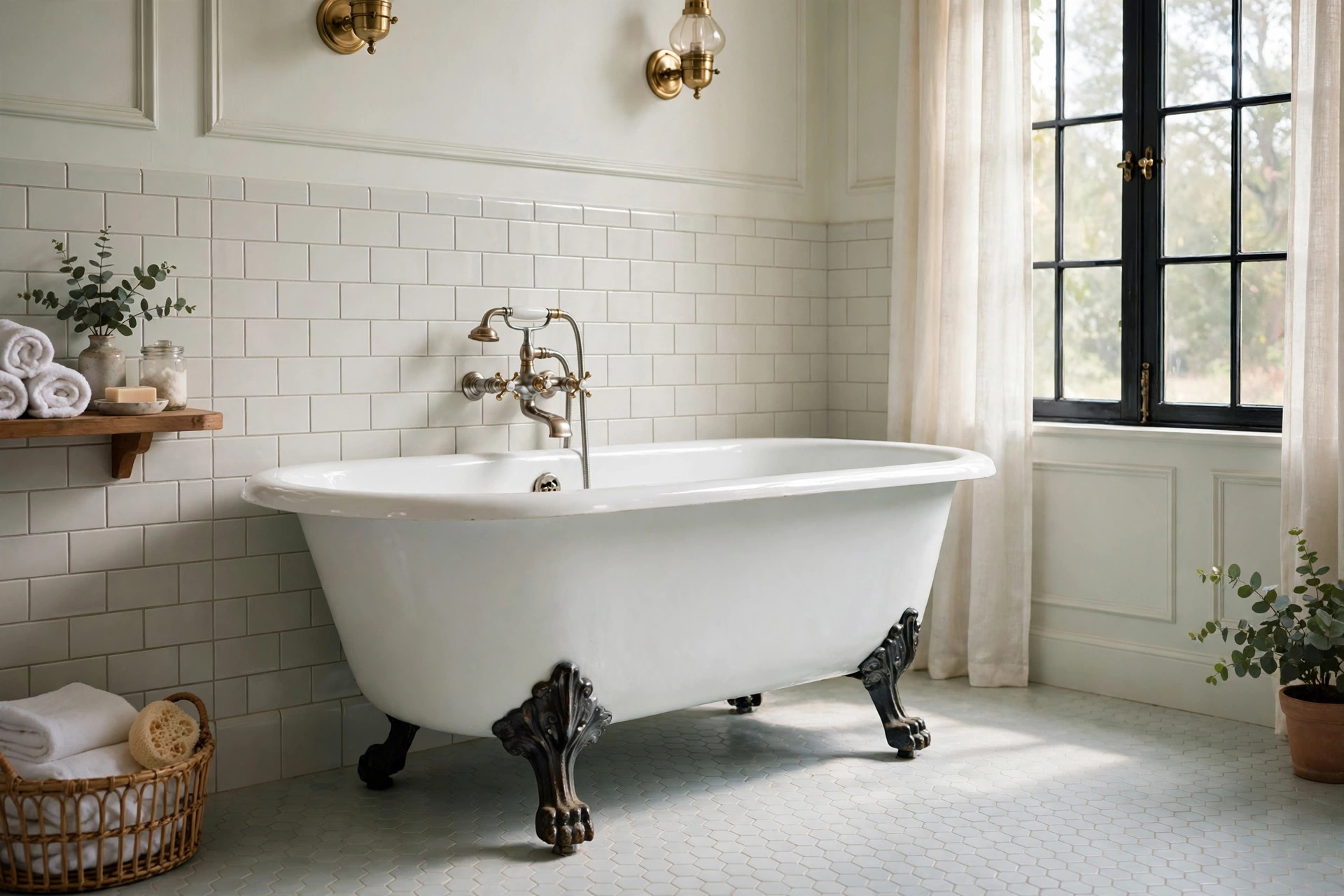
A cast iron clawfoot tub can last a century or more, but only if you listen to it. The 9 signs your vintage clawfoot tub needs repair are usually small at first — a rust spot near the drain, a chip in the enamel, a foot that rocks slightly on the tile — and easy to ignore until a small problem becomes a ruined floor. Because these tubs are heavy, old and often plumbed with original fittings, catching trouble early is the difference between a simple fix and a full restoration.
Signs 1–3: Rust, Chips and Finish Failure
1. Rust spots around the drain and overflow. Rust is the number one enemy of a cast iron tub, and it almost always starts where water sits: around the drain, the overflow plate and the base of the taps. A small orange stain may look cosmetic, but it means the porcelain enamel has failed and water is reaching the iron underneath. Clean the spot gently and watch it for a few weeks — if it returns quickly or grows, the iron is actively corroding and needs attention before it eats through the tub wall.
2. Chips and cracks in the porcelain enamel. Chips happen when something heavy is dropped in the tub, and a single small chip is not a disaster. What matters is what you do next. An exposed chip lets water reach the iron, and rust will spread underneath the surrounding enamel, loosening it in a widening circle. Cracks are more serious: a hairline crack in the enamel can let water in, while a crack you can feel with a fingernail may go through to the iron. Any chip larger than a pea, or any crack at all, should be sealed or repaired promptly.
3. Dull, rough or crazed finish. A healthy porcelain finish is smooth and glossy. If the inside of your tub feels rough, looks dull even after cleaning, or shows a fine network of hairline cracks — known as crazing — the enamel is wearing out. Crazing is common on tubs that are eighty or a hundred years old, and it traps dirt and makes the tub hard to keep clean. A tub with widespread crazing is usually ready for professional refinishing, which typically costs $300 to $600 depending on the size of the tub and the condition of the surface.
Signs 4–6: Leaks, Drain and Plumbing Trouble
4. Water pooling under or around the tub. Water on the bathroom floor after a bath is never normal. Check the drain connection, the overflow gasket and the tap connections first — these are the most common leak points on a vintage tub, and the rubber gaskets and washers dry out and shrink with age. A leak at the drain can rot a wooden floor surprisingly quickly, so if you see staining on the ceiling below or softness in the floorboards, call a plumber before you use the tub again.
5. A slow or gurgling drain. A clawfoot tub should empty briskly. If the water drains slowly, gurgles, or leaves a ring of grime, the problem may be a partial blockage in the trap or the waste pipe — common in old plumbing, where decades of soap and hair build up in the bends. It can also mean the tub is not level, so water does not flow evenly towards the drain. Try a plunger and a drain snake first, but if the problem persists, the waste assembly may need to be taken apart and cleaned or replaced.
6. Discoloured water or a metallic smell. If the bathwater runs brown, yellow or grey when you first turn on the taps, or if it smells metallic, the inside of the supply pipes or the tub’s iron body may be corroding. Discoloured water is often a plumbing issue rather than a tub issue — old galvanised steel pipes rust from the inside — but it can also come from rust inside the tub itself, especially around the overflow. Either way, do not ignore it: have the water checked and the pipes inspected, and avoid bathing in discoloured water until you know the cause.
Signs 7–9: Stability, Feet and Structural Wear
7. A rocking or wobbling tub. A clawfoot tub should sit solidly on all four feet. If it rocks when you step in, one foot may be shorter than the others, the floor may have settled, or a foot may be cracked. A rocking tub puts stress on the drain connection and can crack the waste pipe, so it needs levelling promptly. Adjustable feet shims, cut from hardwood or rubber, can level a tub by a few millimetres, but if the floor itself is uneven or soft, the floor needs attention first.
8. Cracked, loose or corroded feet. The feet are usually cast iron, and they take the full weight of a tub filled with water — a standard 5-foot tub holds around 40 gallons, and water alone weighs more than 330 pounds. Check each foot for cracks, especially where it bolts to the tub body, and for rust that has eaten into the metal. A cracked foot can fail suddenly, so a damaged foot should be repaired or replaced by a specialist who can match the original pattern.
9. Soft floor, musty smell or stained ceiling below. This is the sign that means stop using the tub and investigate immediately. A soft or springy floor around the tub, a musty smell that cleaning does not remove, or a brown stain on the ceiling of the room below all point to a long-term leak that has been soaking the structure. A plumber and a builder should inspect the area before the tub is used again — and remember that a filled clawfoot tub is extremely heavy, so structural problems underneath it are not something to put off.
Our Top Picks
If your tub needs work, these three products will help you look after it properly. A porcelain repair kit, with a two-part epoxy filler and a colour-matched topcoat, is ideal for sealing small chips before rust can spread — use it on chips smaller than a pea and follow the curing times exactly. A set of replacement rubber gaskets for the drain and overflow is a cheap, essential spare for any vintage tub owner, since dried-out gaskets are the most common cause of leaks. And a gentle, non-abrasive enamel cleaner will keep a refinished or original surface in good condition without wearing the glaze. For anything beyond small chips and gaskets — refinishing, foot repairs, structural work — hire a specialist who has worked on cast iron tubs before, and get the work quoted in writing.
A vintage clawfoot tub is one of the most rewarding fixtures you can own. Check your tub against these 9 signs your vintage clawfoot tub needs repair every few months, fix the small problems while they are still small, and your tub will be ready for another century of long, hot baths.


GIPHY App Key not set. Please check settings