


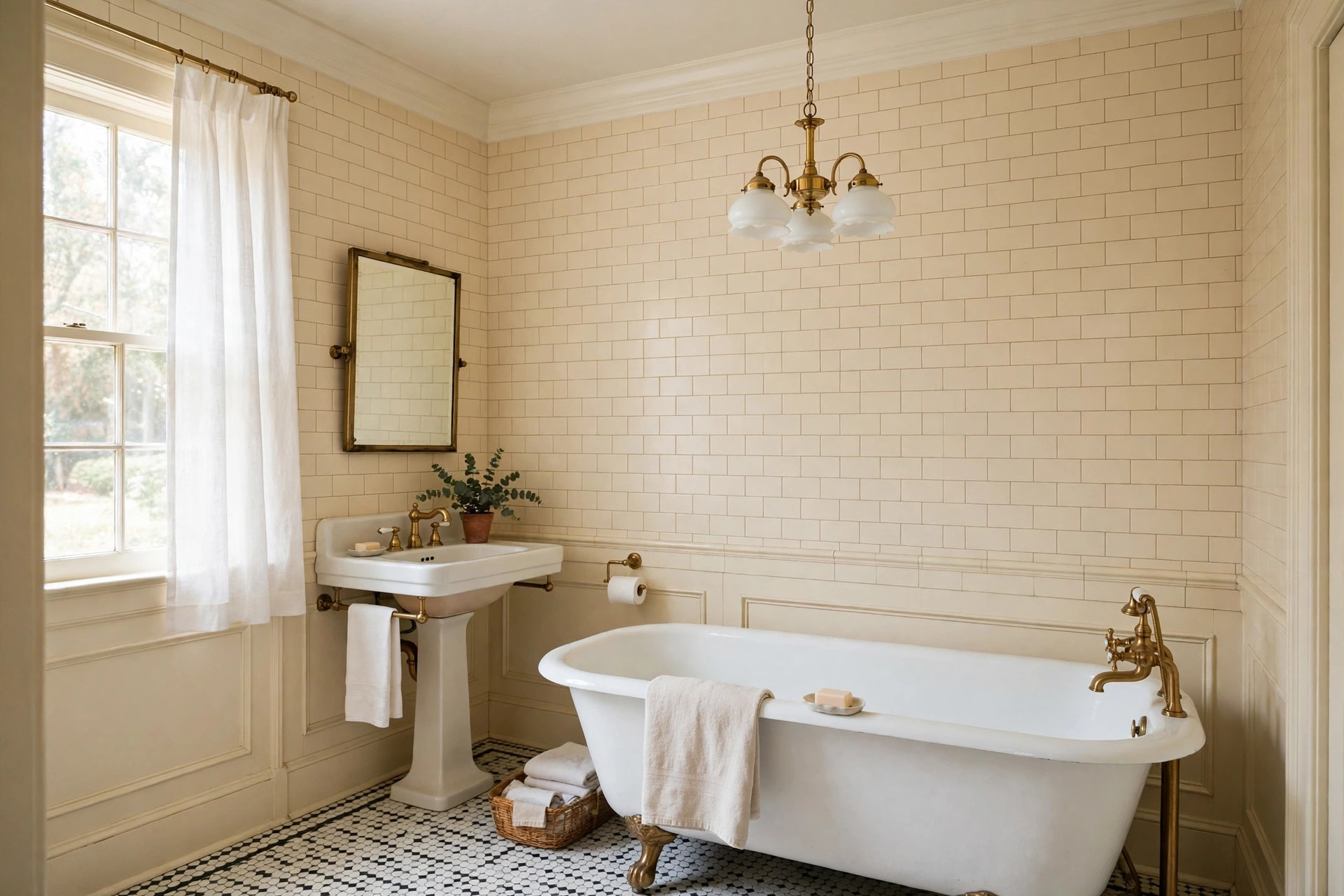
Learning how to identify real 1940s bathroom chandeliers is the difference between owning a piece of wartime-era craftsmanship and paying antique prices for a modern reproduction. During the 1940s, bathroom lighting was practical first and decorative second: fixtures were compact, built from brass or steel, and fitted with milk glass or etched shades that softened the light in small, tiled rooms. Because genuine pieces are now more than eighty years old, they carry the marks of their age in ways that are hard to fake convincingly — if you know where to look. This guide walks you through the shapes, materials, glass, wiring and maker’s marks that separate the real thing from a convincing copy, so you can shop flea markets, estate sales and online listings with confidence.
What a 1940s Bathroom Chandelier Actually Looked Like
First, set your expectations. A 1940s bathroom chandelier was rarely the grand, dripping crystal piece we picture when we hear the word chandelier. Wartime metal rationing meant fixtures were modest: two to five arms, usually in a simple cross or small ring arrangement, spanning roughly 12 to 18 inches wide. Ceiling-mounted flush fixtures and small semi-flush chandeliers were far more common in bathrooms than long hanging pieces, because 1940s bathrooms were small — often just 5 by 7 feet — with ceilings around 8 feet high. Shades were usually milk glass, opal glass or lightly etched clear glass in simple dome, cone or tulip shapes. Brass was the most common metal, often with a lacquered or lightly polished finish, while chrome appeared on more streamlined, Art Deco-influenced pieces. If a seller shows you a 24-inch, eight-arm crystal chandelier and calls it a 1940s bathroom fixture, be sceptical: the scale and the sparkle belong to a dining room, not a wartime bathroom. The fixtures that hung above 1940s tubs and vanities were quiet, well-made workhorses, and that modesty is itself one of the best clues you have.
Materials That Give Away the Real Thing
Pick the fixture up — weight is your first clue. Genuine 1940s fixtures were made from solid brass, cast metal or steel, and they feel heavy for their size. A small two-arm fixture from the era typically weighs 3 to 5 pounds, while a modern reproduction in hollow tubing or resin can weigh half that. Look at the metal under the arms and around the canopy, where cleaning rarely reached. Real brass from the 1940s develops a warm, uneven patina — darkened in the crevices and slightly greenish at the joints — while reproduction brass tends to look uniformly bright, or artificially aged with a painted-on finish that rubs off on your fingers. Steel fixtures from the war years were sometimes painted rather than plated, because nickel and chrome were rationed; original paint is thin, slightly crazed and worn at the edges, not thick and glossy. Check the screws and nuts too: period hardware uses slotted screws, not Phillips-head screws, which only became common in household fixtures after the war. Cast arms should show faint mould lines and slight asymmetry from hand finishing; perfectly smooth, identical arms are a sign of modern casting. Finally, run a finger along the underside of the arms. Eight decades of dusting and polishing leave a soft, rounded wear that no factory distressing quite reproduces.
Glass Shades, Prisms and Finishes
The glass tells its own story. Milk glass shades from the 1940s were made by layering white glass over clear, so hold a shade up to the light: a genuine piece glows evenly, with a soft, almost waxy depth, while many reproductions look flat and chalky. Look for tiny imperfections — small bubbles, faint ripples or a slightly uneven rim — which are normal in period glass and almost absent from modern machine-made shades. Etched or frosted shades should show a fine, slightly irregular pattern; laser-sharp, perfectly repeated etching is a modern giveaway. Prisms, where present, were cut glass with small chips and wear on the edges from eighty years of dusting; flawless, razor-sharp prisms usually mean new glass. Check how the shade attaches: period fixtures used fitter screws, thumb screws or a simple slip fitter sized to a 2.25-inch or 3.25-inch opening, and the fitter ring often shows wear marks from decades of removal. If the shade screws on with a modern plastic ring or a metric thread, it is not original. Mismatched shades are common on genuine fixtures — a shade may have been replaced in the 1960s — so judge each shade on its own merits rather than rejecting a fixture for one newer piece of glass.
Marks, Wiring and Simple Age Tests
Turn the fixture over and look for a maker’s mark on the canopy, the central stem or inside the shade fitter. American makers of the period included Lightolier, Moe-Bridges, Lincoln and the Chase Brass and Copper Company, and their marks were usually stamped into the metal rather than printed on a sticker. A stamped mark with slightly uneven lettering is a good sign; a crisp laser-etched logo is not. Age also shows in the wiring: original 1940s wiring is cloth-covered and often frayed, and it should always be replaced by a qualified electrician before use — but its presence is strong evidence of age. Reproductions usually arrive with modern plastic-coated wire. A magnet test helps too: a magnet will stick to steel fixtures but not to solid brass, so a fixture sold as brass that grabs a magnet is probably plated steel or a modern alloy. Finally, check the ceiling canopy for a plaster dust line and old paint rings, which show the fixture actually hung in a home for decades. No single test proves authenticity, but when the size, weight, glass, hardware and marks all point the same way, you can buy with confidence. If three or more of these clues disagree with the seller’s story, walk away and keep looking — another genuine fixture will come along.
Our Top Picks
If you want the 1940s look without paying antique prices or rewiring an eighty-year-old fixture, these three options capture the era honestly. A two-arm solid brass semi-flush fixture with milk glass dome shades is the closest match to a genuine wartime bathroom light, and it suits small bathrooms with 8-foot ceilings. A chrome five-light fixture with etched glass shades leans into the streamlined Art Deco side of the decade and works well above a double vanity. And a professionally rewired vintage-style fixture — an older body fitted with new cloth-covered wiring by a specialist — gives you genuine period metalwork that is safe to install today. Whichever route you choose, check the fixture’s width against your room first: a light that spans more than a third of your vanity width will overwhelm a small 1940s-style bathroom.
A genuine 1940s bathroom chandelier is a small, honest piece of design — modest in scale, heavy in the hand and soft in the light it throws. Once you know how to identify real 1940s bathroom chandeliers, you will spot the real thing quickly and stop paying antique prices for yesterday’s reproductions. Take your time, check the glass and the metal, and let the fixture’s age speak for itself.

GIPHY App Key not set. Please check settings