

The history of the bathroom from 1920s to today is really the story of how a purely functional room became one of the most personal spaces in the home. A century ago, the bathroom was small, tiled, and strictly practical. Today it is a spa, a dressing room, and a design statement all at once. Understanding each era — what it looked like, why it looked that way, and what survives — helps anyone restoring a vintage bathroom choose details that feel authentic rather than merely old-fashioned.
The 1920s: The Bathroom Comes Indoors
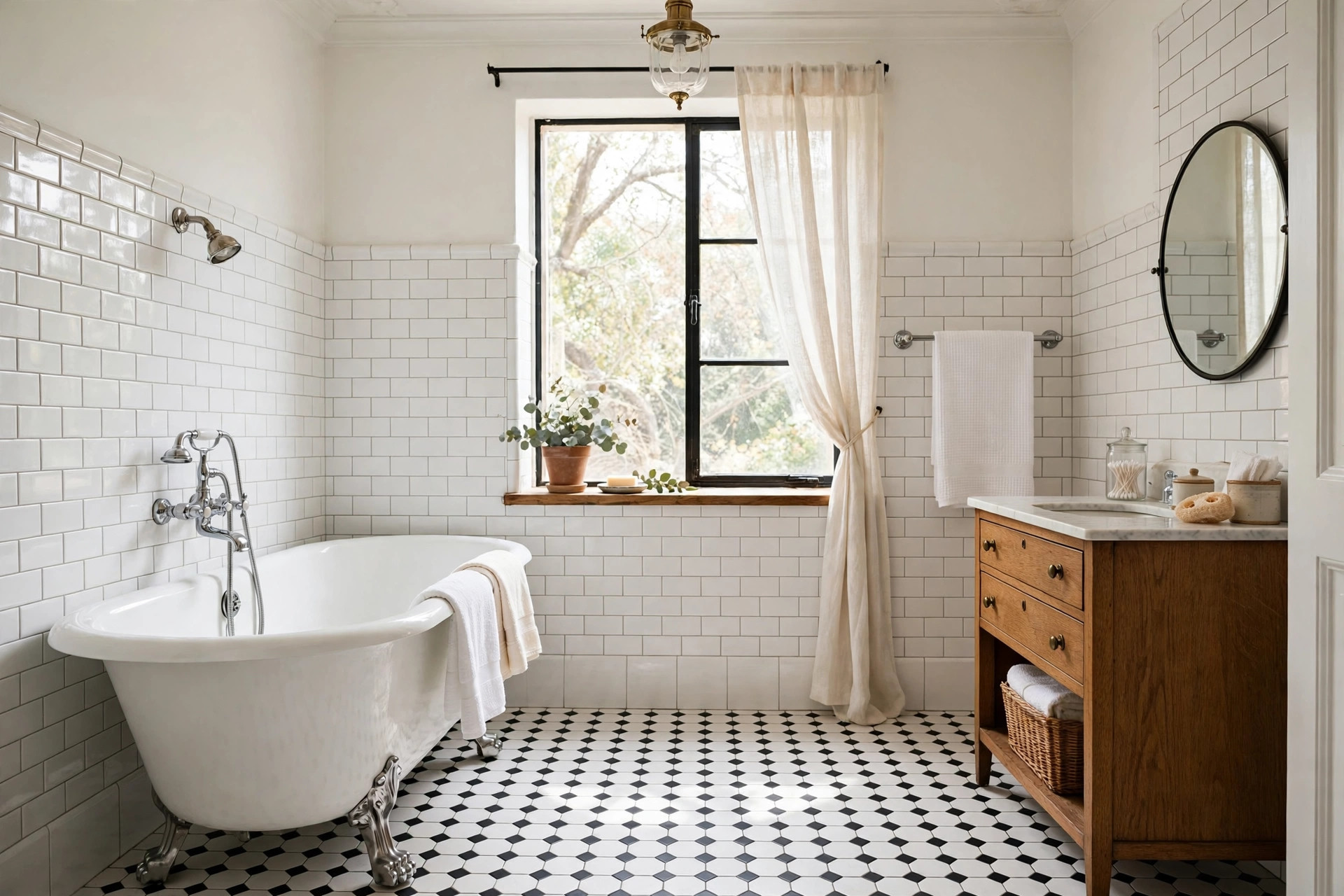
In the 1920s, the modern bathroom finally arrived in the average home. Indoor plumbing, which had been a luxury in the 1910s, spread rapidly as cities extended water and sewer lines, and by the end of the decade most new middle-class houses included a dedicated bathroom. These rooms were small — often just 5 by 7 feet — and they were designed around hygiene. White was the dominant colour, chosen because it signalled cleanliness, and the materials were chosen to be washable: glossy ceramic wall tile, often in a 3-by-6-inch subway format, running to a height of about 4 feet, with painted plaster above.
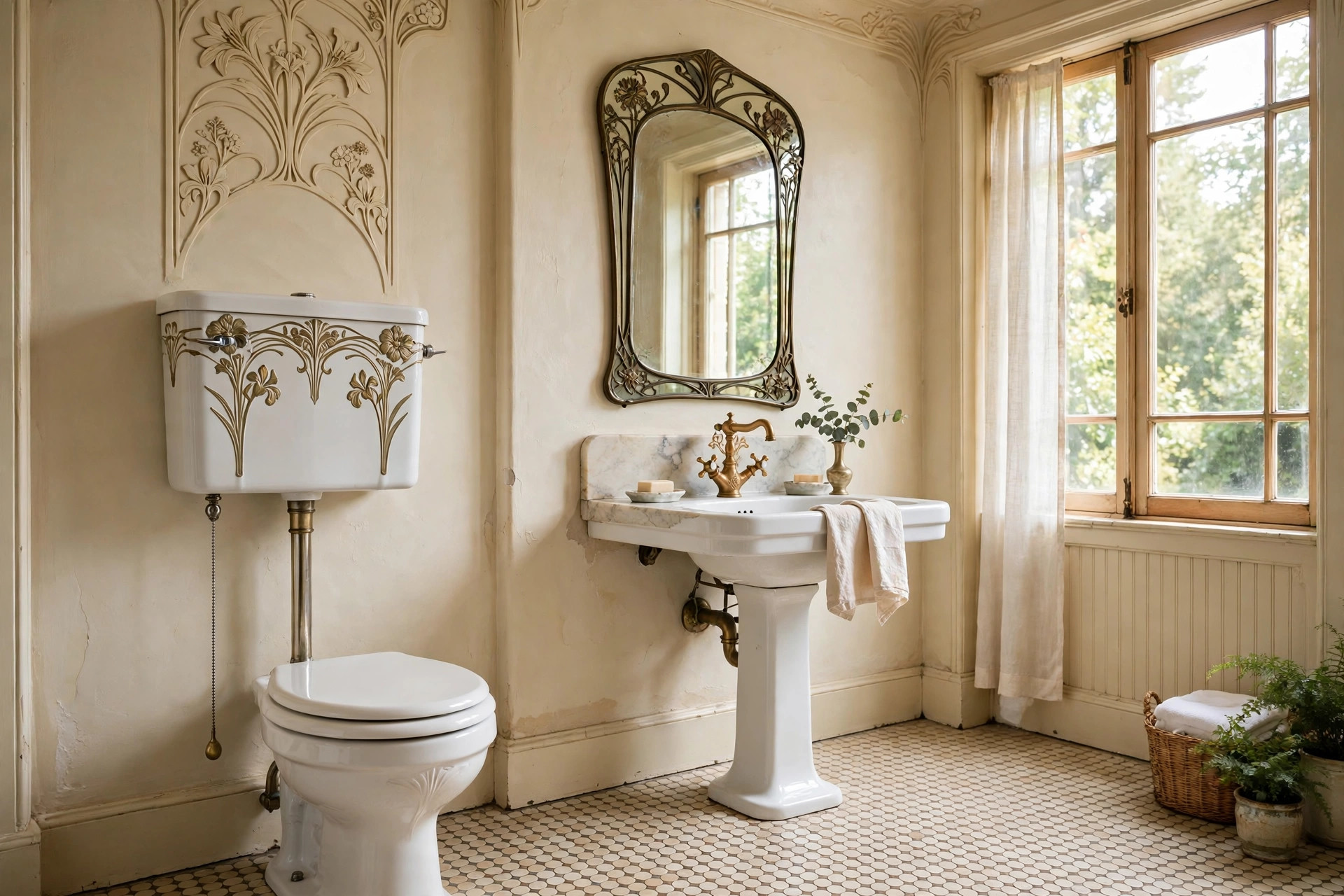
The fixtures of the 1920s are instantly recognisable. The pedestal sink, usually in white porcelain from American Standard or Crane, stood on a slender column. The clawfoot tub, often 5 feet long with rolled edges and ball-and-claw feet, was the centrepiece, and high-tank toilets with a pull chain hung on the wall. Floors were typically small hexagonal mosaic tiles in white with black accents, or a simple black-and-white checkerboard. Art Deco touches — stepped patterns, sunburst motifs, and bold black borders — crept in toward the end of the decade, especially in wealthier homes.
The 1930s: Colour Arrives
If the 1920s bathroom was white, the 1930s bathroom was colourful. Manufacturers began offering fixtures in pastel shades — soft pink, mint green, pale blue, and butter yellow — and homeowners embraced them. A 1930s bathroom often featured coloured wall tile with a contrasting border, a coloured pedestal sink, and a matching coloured toilet, all in the same pastel.
Design also became more streamlined. The Art Deco influence deepened, with geometric tile patterns, chrome towel bars, and built-in medicine cabinets with mirrored doors. The console sink — a porcelain basin supported by two chrome legs — became popular, as did the first built-in bathtubs with tiled surrounds.
The 1940s: Wartime Simplicity
The 1940s were defined by the Second World War, and the history of the bathroom from 1920s to today takes a practical turn here. From 1942 to 1945, metal rationing limited the production of chrome fixtures, enamelled steel, and new porcelain, so bathroom construction slowed and designs became simpler. Vanities were smaller and plainer, hardware was often wooden or Bakelite instead of chrome, and many homeowners made do with what they had, repainting rather than replacing.
After the war, the housing boom changed everything. Returning soldiers and their families needed homes fast, and builders responded with millions of modest houses, each with a compact but complete bathroom. The post-war 1940s bathroom kept the small footprint — a tub, a toilet, and a sink in about 35 square feet — but added a few comforts: a built-in tub with a tiled surround, a vanity cabinet with storage, and a mirror-fronted medicine cabinet.
The 1950s: The Pink Bathroom Era
The 1950s are the decade most people picture when they think of a retro bathroom, and for good reason: this was the era of the pink bathroom. Manufacturers marketed coloured fixtures aggressively, and pink — along with turquoise, mint green, and pale yellow — became the height of fashion. A typical 1950s bathroom had pink wall tile to a height of about 4 feet, a pink tub and toilet, a matching pink sink, and a black or white floor tile.
Other 1950s innovations shaped the room as well. The vanity became standard, replacing the pedestal sink in many homes, and the first wall-hung toilets and low-profile tanks appeared. Ceramic tile patterns grew more playful, with boomerang and starburst motifs, and chrome fixtures became slimmer and more sculptural. Bathrooms also began to grow: the post-war ranch house often included a second half-bathroom, and the master bathroom — a private en suite — started to appear in larger homes.
The 1960s and 1970s: Avocado, Harvest Gold, and the Sunken Tub
The 1960s and 1970s brought the boldest colours in bathroom history. Avocado green and harvest gold joined the palette, and fixtures, tile, and even toilets were produced in these deep, earthy tones. Design swung between space-age style — moulded fibreglass tub-shower units and pop-art colours — and an earthy look of wood panelling and plants. The sunken tub and the first whirlpool jets appeared in high-end homes, bathrooms grew larger, and double vanities became common in master suites.
The 1980s and 1990s: The Spa Bathroom and the Beige Years
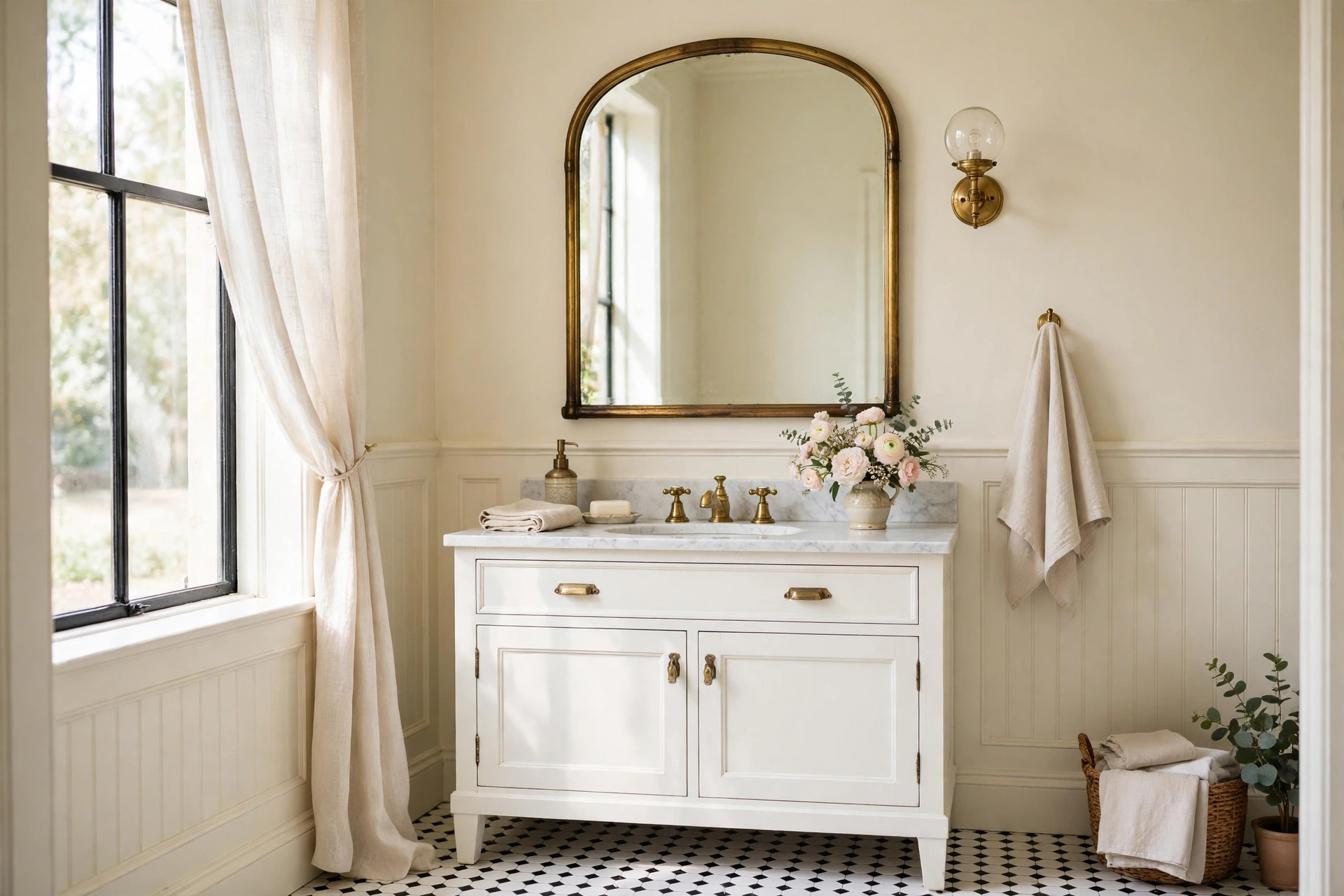
By the 1980s, the bathroom had become a status symbol. The master bathroom expanded into a suite, often 100 square feet or more, with a separate shower and soaking tub, double vanities, and marble, granite, and brass fixtures. The 1990s softened the look: brushed nickel replaced brass, the palette settled into beige, cream, and soft grey, and walk-in showers with glass enclosures gained popularity. The all-white bathroom returned, this time as a deliberate design choice.
The 2000s to Today: The Modern Spa
The history of the bathroom from 1920s to today ends — for now — in the modern spa bathroom. The 2000s brought the freestanding soaking tub back into fashion, this time in sleek sculptural forms rather than the clawfoot of the 1920s. Frameless glass showers, rainfall showerheads, heated floors, and vessel sinks became standard in high-end remodels, while the palette swung between crisp white minimalism and warm, natural materials such as wood, stone, and handmade tile.
Today’s bathroom is the largest and most personal it has ever been. Smart features — digital shower controls, LED mirrors, heated towel rails — sit alongside vintage-inspired details: subway tile, hex floor tile, and clawfoot tubs are all back in production.
What Each Era Means for Your Remodel
If you are restoring a retro bathroom, choose one era as your anchor — the black-and-white tile of the 1920s, the pastel fixtures of the 1930s, the compact vanity of the 1940s, or the pink tile of the 1950s — and let the other details support it. A faithful cosmetic refresh typically runs $3,000 to $8,000 for a small bathroom, while a full period-accurate remodel can run $15,000 to $30,000 or more. Salvage yards and architectural reclaim shops are the best sources for genuine fixtures, and they reward patience.
A century of bathroom design has left us with an extraordinary palette to draw from. Whether you love the crisp hygiene of the 1920s, the colour of the 1930s, the practicality of the 1940s, or the exuberance of the 1950s, there is an era that matches your taste — and a bathroom waiting to be brought back to life.

GIPHY App Key not set. Please check settings