


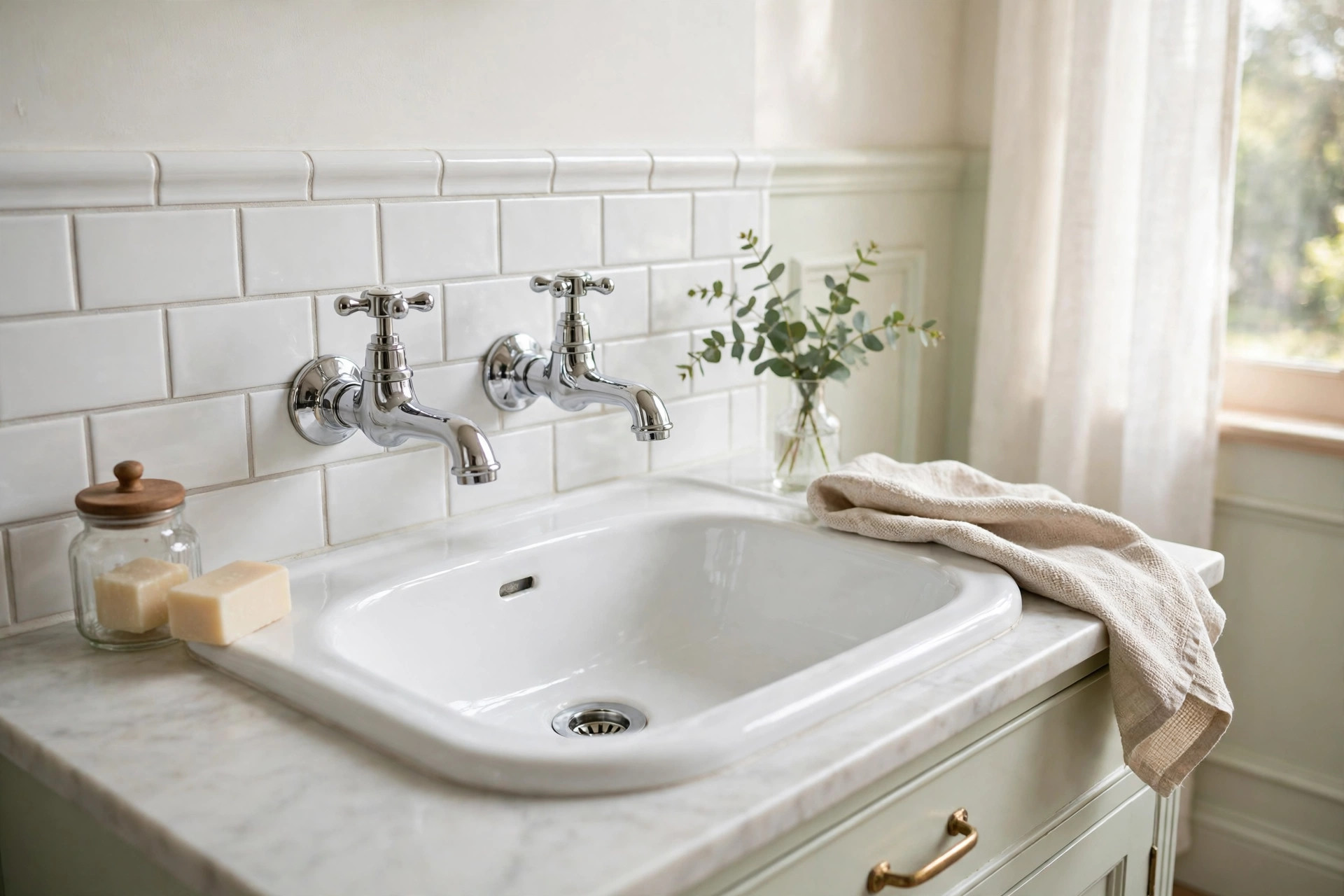
Rust spots on an old tap or towel rail can make an otherwise charming vintage bathroom look tired. The good news is that learning how to remove rust from vintage bathroom fixtures is straightforward — as long as you choose a method that attacks the rust without attacking the finish underneath. Chrome, nickel and porcelain enamel are far more delicate than the steel beneath them, so aggressive products are off the table.
Know What You Are Working With
Before you start, identify the finish. Most vintage bathroom fixtures are chrome-plated brass (shiny, mirror-like), nickel-plated (slightly warmer and softer in tone), or porcelain-enamelled cast iron (the white or coloured coating on old sinks and tubs). Rust usually appears where the plating has worn thin — around the base of taps, on screw heads, or along the edge of a towel bar.
Here is the critical rule: you are cleaning the finish, not the rust itself. If you scrub through the remaining chrome to get at the rust, you will end up with a bigger bare patch that rusts again faster. Every method below is chosen to be safe for plating.
Method 1: White Vinegar Soak (Best for Removable Parts)
White vinegar is a mild acid that dissolves light rust without harsh chemicals. This is the best method for how to remove rust from vintage bathroom fixtures like tap handles, drain covers and screws that you can remove.
- Remove the rusty part if possible.
- Submerge it in white vinegar for 1–3 hours (a gallon costs about $4).
- Scrub gently with an old toothbrush or soft cloth.
- Rinse thoroughly and dry completely — any moisture left behind invites rust back.
For fixtures you cannot remove, soak a cloth in vinegar, wrap it around the rusty area, and cover with cling film to keep it wet for an hour. Never leave vinegar on chrome longer than a few hours, and never use it on natural stone surrounds.
Method 2: Baking Soda Paste (Safest All-Rounder)
Mix baking soda with a little water into a thick paste. Spread it over the rust spot, leave it for 30–60 minutes, then rub gently with a soft cloth or a piece of crumpled aluminium foil. The foil trick works surprisingly well on chrome: aluminium is softer than chrome plating, so it lifts rust without scratching the finish underneath.
This is my go-to recommendation for anyone nervous about damaging an old fixture — it is almost impossible to overdo. The downside is that it only handles light to moderate surface rust.
Method 3: Lemon Juice and Salt (For Porcelain Enamel)
For rust stains on porcelain-enamelled sinks and tubs — the orange-brown streaks under old taps — sprinkle table salt over the stain, squeeze lemon juice over it, and leave for 30 minutes. The citric acid loosens the stain while the salt provides gentle abrasion. Wipe with a soft sponge and rinse well.
Do not use this method on chrome or nickel: the acid-plus-salt combination can pit metal plating. It is for enamel only, and always test in an inconspicuous spot first, since very old enamel can be thin.
Method 4: A Commercial Rust Remover (For Stubborn Cases)
When gentle methods fail, a rust remover based on oxalic acid or a chelating formula (products marketed as safe for porcelain and fibreglass, typically $10–15) can tackle heavier rust. Apply exactly as directed, keep contact time short, and rinse thoroughly. Avoid anything containing hydrochloric or phosphoric acid in high concentrations — these will strip plating and etch enamel.
Whichever method you use for how to remove rust from vintage bathroom fixtures, wear gloves and ventilate the room.
Protect the Surroundings While You Work
Rust removers — even gentle ones — can mark the surfaces around your fixtures, so a little prep saves regret. Lay an old towel over the basin or tub edge before you start, and mask nearby painted walls or wallpaper with painter’s tape if you are working on a wall-mounted tap. If you are soaking a removable part in vinegar, do it in a plastic basin rather than the sink itself, so drips do not sit on the enamel. And keep a bowl of clean water and a dry cloth within reach: the faster you rinse and dry after treatment, the lower the risk of any residue dulling the finish.
After the Rust Is Gone: Stop It Coming Back
Removing rust is only half the job. Dry fixtures after use where you can, fix dripping taps promptly (constant moisture is the main cause of fixture rust), and apply a thin coat of carnauba wax or a chrome-safe metal polish to vulnerable spots twice a year. A small tin of paste wax costs around $8–12 and lasts years.
If the plating is worn through over a large area and rust keeps returning within weeks, the honest answer is that the fixture needs re-plating by a specialist — typically $50–150 per piece depending on size. In my opinion, re-plating an original 1920s or 1950s tap is worth it; reproductions rarely match the weight and detailing of the original.
Start with the vinegar or baking soda method, work gently, and your vintage fixtures can shine like they did decades ago. And remember the golden rule of restoration: it is always easier to do a second gentle pass than to undo one aggressive one. When in doubt, stop, rinse, dry, and assess in daylight before deciding whether the spot needs another round.

GIPHY App Key not set. Please check settings