


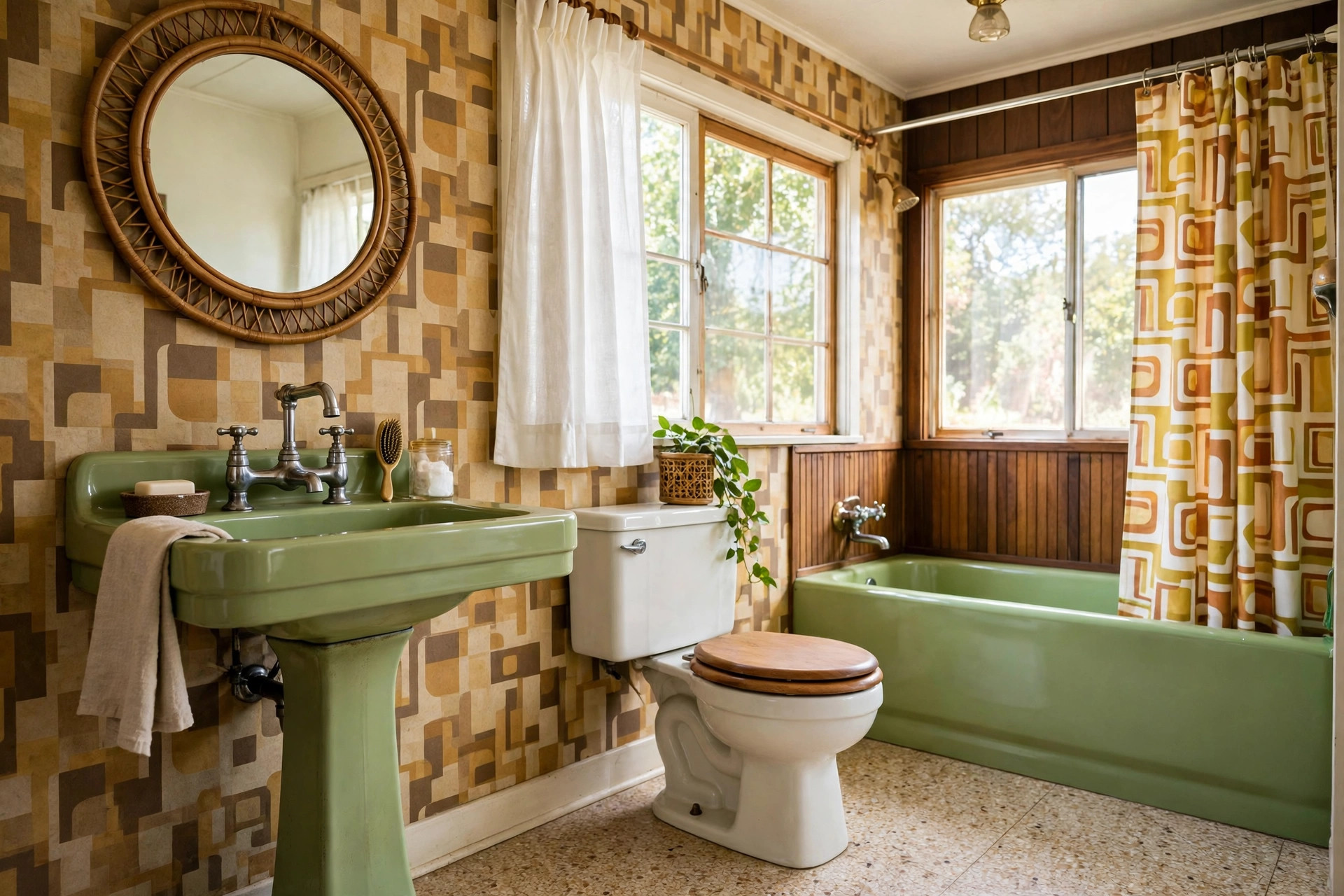
A real 1970s pedestal sink brings instant period character to a retro bathroom — the soft curves, the coloured glaze, the solid feel under your hands. But reproductions are everywhere, and a new sink with a vintage-style shape can fool even a careful buyer. Learning how to identify real 1970s pedestal sinks protects your budget and helps you choose a piece that will last another fifty years. The evidence is in the shape, the glaze, the maker’s stamp, and the plumbing underneath.
Start With the Shape and Proportions
The 1970s pedestal sink has a distinctive silhouette. Look for a generously rounded basin, often 22 to 27 inches wide, sitting on a pedestal that flares gently at the base. The basin rim usually curves down smoothly into the pedestal with no sharp step, and the back of the basin rises slightly where it meets the wall. Many period sinks also have a wide, flat ledge at the back — typically 6 to 8 inches deep — designed to hold a soap dish, toothbrush holder, and the chunky taps of the era.
Measure the height: most 1970s pedestals stand 31 to 34 inches to the top of the rim, a little lower than many modern comfort-height designs. Check the weight too. A genuine vitreous china sink from the period feels heavy and solid, often 40 to 60 pounds for basin and pedestal together. A reproduction in lightweight ceramic or resin feels noticeably lighter and sounds hollow when tapped. If the shape looks right but the sink feels feather-light, walk away.
Read the Glaze and Colour
Colour is one of the strongest clues. The 1970s palette ran to avocado green, harvest gold, chocolate brown, dusty pink, powder blue, and warm beige — colours that modern makers rarely reproduce exactly. Hold a paint swatch or a known period tile next to the glaze in daylight. Genuine 1970s glaze has depth: the colour looks rich and slightly translucent, with subtle variation across curved surfaces where the glaze pooled or thinned during firing.
Look closely at the surface. Fifty years of use leaves honest marks: fine crazing — a web of hairline cracks in the glaze — around the drain or on the basin floor, light wear where hands and water have passed, and tiny kiln marks or glaze drips on the underside. A perfectly uniform colour with a flawless, glassy surface is suspicious; even a well-kept period sink usually shows some crazing under bright light. Also check the underside of the basin: original glaze often stops short of the hidden areas, leaving a rougher, unglazed band that reproductions rarely copy.
Find the Maker’s Stamp
The maker’s stamp is the closest thing to a birth certificate your sink will ever have. Turn the basin over or crouch to look at the back wall of the pedestal — most manufacturers stamped their logo, model number, and date code into the ceramic before firing, usually on the underside of the basin or the back of the pedestal. Look for names such as Kohler, American Standard, Crane, Eljer, or Mansfield, alongside a date code that places the piece in the 1970s.
Date codes vary by maker: some used a two-digit year, others a letter-and-number system, and a quick search for the maker’s date-code chart can confirm the decade in minutes. The stamp itself should be crisp and slightly recessed into the glaze, with the same glaze colour flowing into it. A stamp that looks painted on, blurred, or missing entirely is a warning sign. When you are working out how to identify real 1970s pedestal sinks, a clear period stamp plus the right colour is strong evidence — though a stamp alone is not proof, since old stamps can be faked and some genuine sinks lost their marks to repairs.
Check the Plumbing and Fittings
The plumbing tells its own story. A 1970s sink was built for 8-inch widespread taps or a 4-inch centre-set fitting, with tap holes drilled to match the hardware of the day. Measure the distance between the tap holes: 8 inches centre to centre is classic for a 1970s basin, while many modern reproductions use a single-hole or 4-inch layout. The drain hole is usually a standard 1-1/2 inch, but the overflow channel — the small opening near the top of the basin — was often larger and more generously shaped than on modern sinks.
Look at the trap and waste fittings if they are still attached. Period fittings are typically solid brass, often chrome-plated, and show honest tarnish or wear. Bright, lightweight plastic traps and shiny new chrome fittings suggest the sink has been refitted or is new altogether. Also check the wall fixing: original pedestal sinks were bolted to the wall through lugs on the back of the basin, and you may see the original bolt holes or faint marks where the fixings sat. A basin with no sign of wall fixing at all may never have been installed — possible for a genuine unused piece, but worth questioning.
Putting It All Together
No single clue proves a sink is genuine, but several together make a convincing case. A heavy vitreous china basin in avocado or harvest gold, with a period maker’s stamp, fine crazing, and 8-inch tap spacing, is very likely a real 1970s piece. A light, flawless sink in an almost-right colour, with no stamp and modern tap spacing, is almost certainly a reproduction. Take a torch, a tape measure, and a paint swatch when you go hunting, and do not rush: the right sink is worth waiting for. With practice, you will know how to identify real 1970s pedestal sinks at a glance — and your bathroom will have a centrepiece with a genuine story.

GIPHY App Key not set. Please check settings