


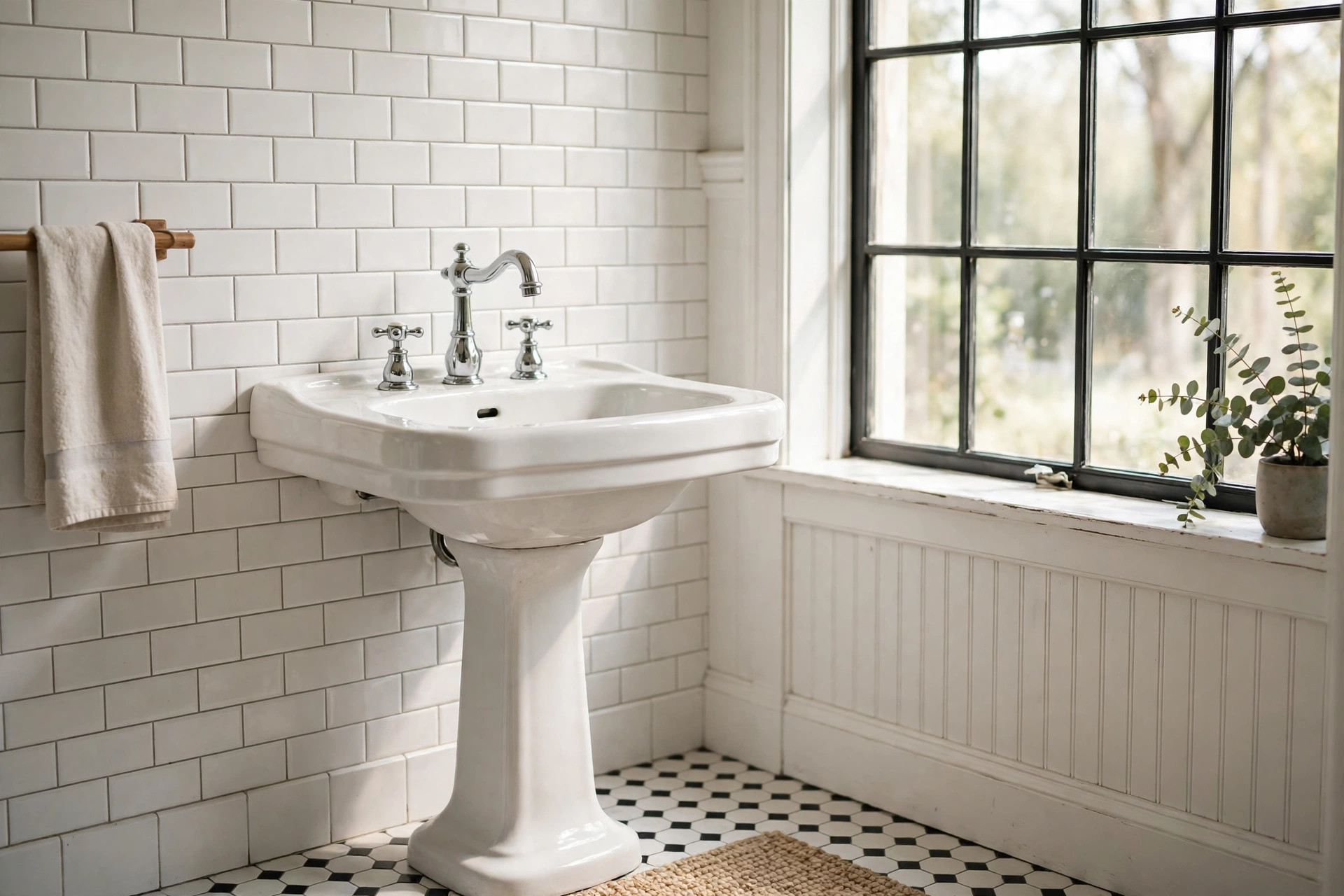
There is something deeply satisfying about turning a cross-handle faucet. The little porcelain-tipped handles, the smooth quarter-turn, the way they suit a pedestal sink or a clawfoot tub: cross handles are the jewellery of a vintage bathroom. But behind that pretty silhouette sit real decisions about fit, finish, valves, and water pressure, and getting them wrong means drips, wobbles, or a faucet that simply does not fit your sink. This cross-handle faucet buying guide walks through what to look for, so the faucet you fall in love with is also the one that works beautifully for years.
Why Cross Handles Suit a Vintage Bathroom
Cross-handle faucets were the standard in bathrooms from the 1900s through the 1940s, and they remain the most convincing choice for a period restoration. The handles themselves, usually a four-armed cross in metal with a porcelain index button marked hot or cold, echo the hardware of the era in a way lever handles never quite do. They also pair naturally with the other details of a vintage bathroom: hex tile, pedestal sinks, high-tank toilets, and exposed supply lines.
That said, cross handles are not just about looks. The quarter-turn ceramic disc valves inside most modern cross-handle faucets are far more reliable than the old compression washers they replace, so you get period style with modern performance. If anyone in the household has arthritis or limited grip strength, test a cross handle in person first: levers are easier to operate with a closed fist, and some cross handles need a firmer grip than others.
Brass, Chrome, or Nickel? Choosing a Finish
Finish is the first decision, and it shapes the whole room. Polished chrome is the safest choice: bright, easy to clean, the most affordable, and a match for almost any vintage fixture. Expect to pay $180 to $350 for a good-quality chrome widespread cross-handle faucet. Polished nickel is warmer and slightly softer than chrome, with a faint golden cast that looks wonderful beside marble and warm white tile; it costs more, usually $250 to $500, and needs gentler cleaning to avoid water spots.
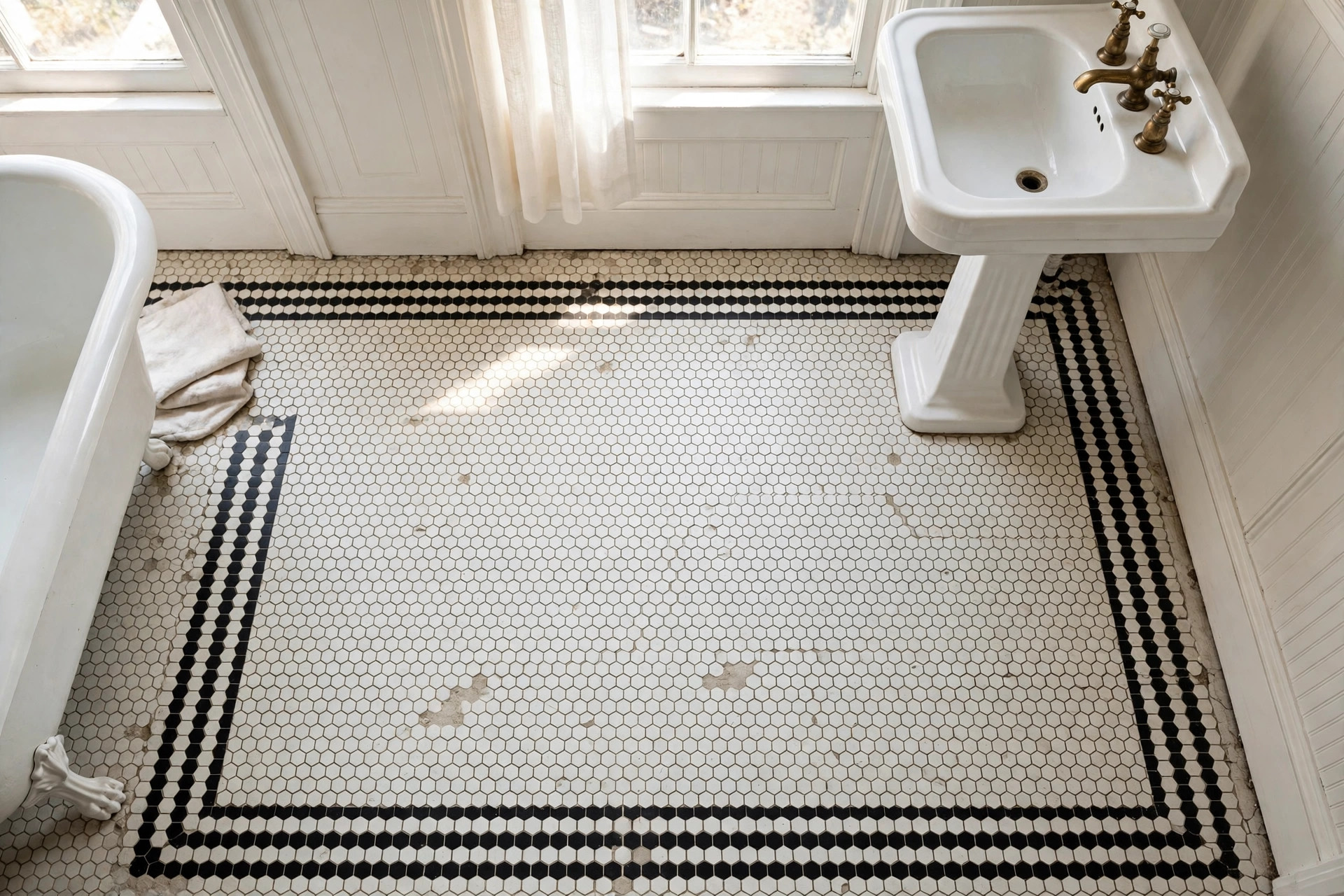
Unlacquered brass is the romantic choice. It starts bright and slowly develops a living patina, darkening in the crevices and brightening where hands touch it daily. If you love that evolving look, unlacquered brass is unbeatable, but know that it requires occasional polishing if you want it to stay bright, and it is the priciest option at $350 to $700. Oil-rubbed bronze and matte black suit some vintage-inspired bathrooms, but they read as more modern farmhouse than period, so use them deliberately. Whatever finish you choose, buy the matching drain, supply lines, and trap in the same finish: mixed metals around one sink look accidental rather than eclectic.
What to Check Before You Buy
Sizing is where most faucet mistakes happen, so this cross-handle faucet buying guide puts it front and centre. First, measure your sink’s spread: the distance between the centres of the outer holes. Widespread faucets suit 8 to 16 inch spreads, centreset faucets fit a standard 4 inch spread, and single-hole faucets need one hole only. A widespread faucet will not fit a 4 inch centreset sink, and no amount of wishing changes that.
Next, check the spout height and reach. A spout that is too short splashes water behind the sink; one that is too tall overwhelms a small pedestal basin. For a standard pedestal sink, look for a spout reach of about 5 to 6 inches and a height that clears the backsplash by at least 2 inches. For a vessel sink, you will need a taller, vessel-height faucet instead. Also check the number of holes in your sink or countertop: a three-hole sink takes a widespread faucet with a separate spout and two handles, while a widespread set with a deck plate can cover extra holes.
Valve type matters as well. Ceramic disc valves are the modern standard: smooth, durable, and drip-free for years. Compression valves are the old style and will need washer replacements. Check the water pressure rating, too: most cross-handle faucets need at least 20 PSI to perform well, and low-pressure homes may need a model designed for gravity-fed systems. Finally, confirm the faucet is lead-free and certified to the relevant plumbing standards, and check the warranty. A lifetime finish warranty is a good sign; a one-year warranty is not.
Installation: What Your Plumber Needs to Know
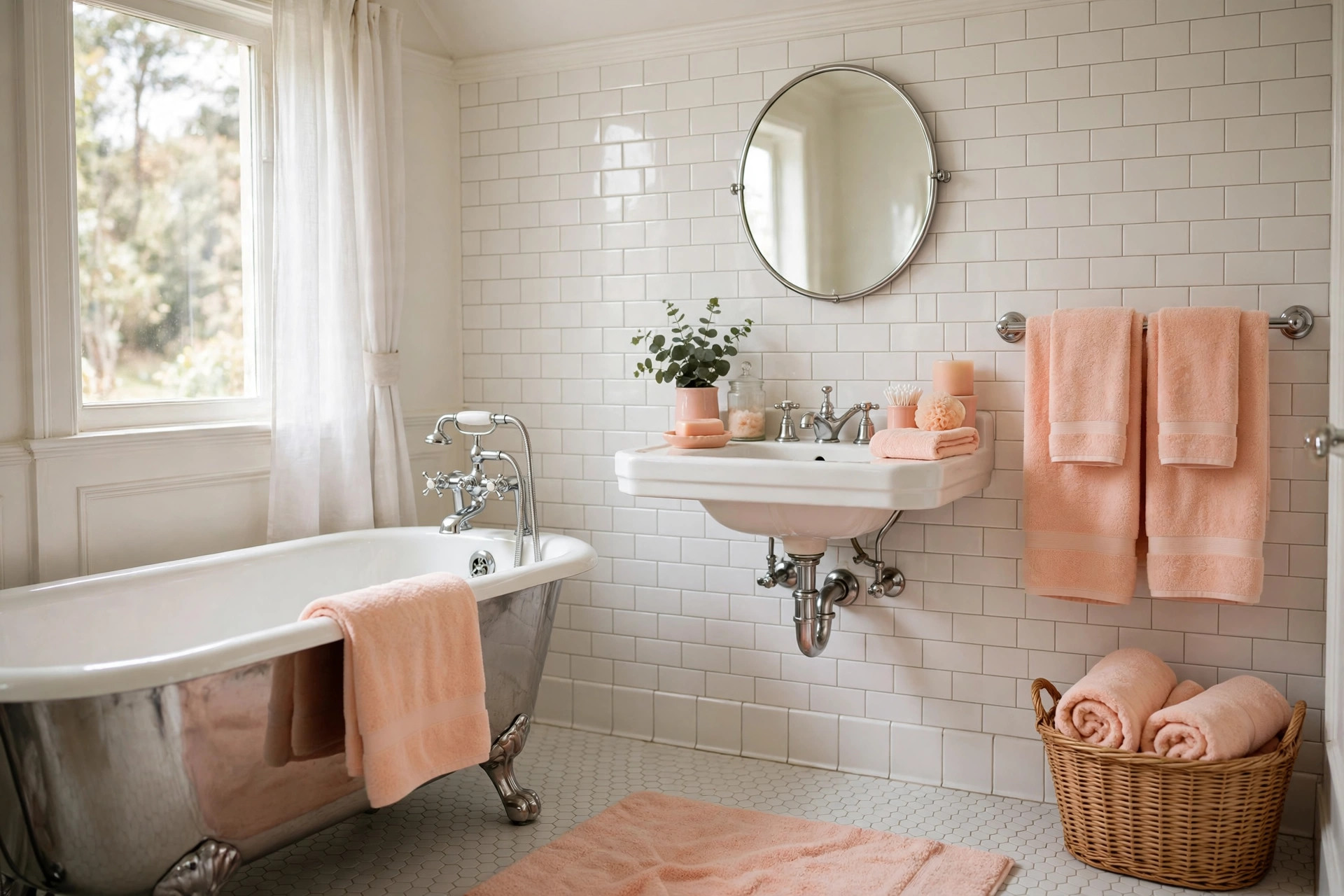
Most cross-handle faucets install like any widespread faucet, but a few details catch people out. Tell your plumber the faucet model before the rough-in, because the valve bodies sit below the deck and need clear space, especially under a pedestal sink where room is tight. If you are fitting a faucet to a clawfoot tub, you will need a tub-mounted or freestanding tub filler with cross handles, which is a different product entirely, usually $400 to $900.
Budget $150 to $300 for professional installation if the plumbing is already in place, and more if supply lines or the drain need moving. Supply lines are worth replacing while the wall is open: braided stainless steel lines are inexpensive insurance against leaks. And keep the installation manual and spare parts: the little porcelain index buttons and handle screws are easy to lose and surprisingly hard to replace.
Our Top Picks
The classic chrome widespread: A polished chrome cross-handle faucet with porcelain hot and cold indices and ceramic disc valves, sized for an 8 inch spread. Best for a straightforward 1920s or 1930s restoration where reliability and easy cleaning matter most.
The warm polished nickel bridge faucet: A bridge-style faucet in polished nickel, with the spout and handles joined by an exposed horizontal bar. Best for a statement pedestal sink or a larger vintage bathroom where the faucet is meant to be admired.
The unlacquered brass showpiece: An unlacquered brass cross-handle faucet with a high-arc spout, designed to age gracefully into a soft patina. Best for a high-end period bathroom where the owner loves living finishes and does not mind occasional polishing.
Care and Maintenance
Caring for a cross-handle faucet is simple if you match the cleaner to the finish. Chrome and polished nickel need only a soft cloth and mild soap; avoid abrasive pads and vinegar-based cleaners, which can dull the surface. Unlacquered brass can be left to patina or polished with a gentle brass cleaner, but never use a harsh chemical on any finish without testing it in a hidden spot first.
Wipe the handles dry after use to prevent water spots, and check the aerator every few months: unscrew it, rinse out any sediment, and screw it back. If a handle ever feels stiff, the valve may need a drop of plumber’s grease rather than force. Treat your cross-handle faucet kindly, and it will reward you with decades of smooth, satisfying turns and a bathroom that looks like it stepped out of another era, in the best possible way.

GIPHY App Key not set. Please check settings