


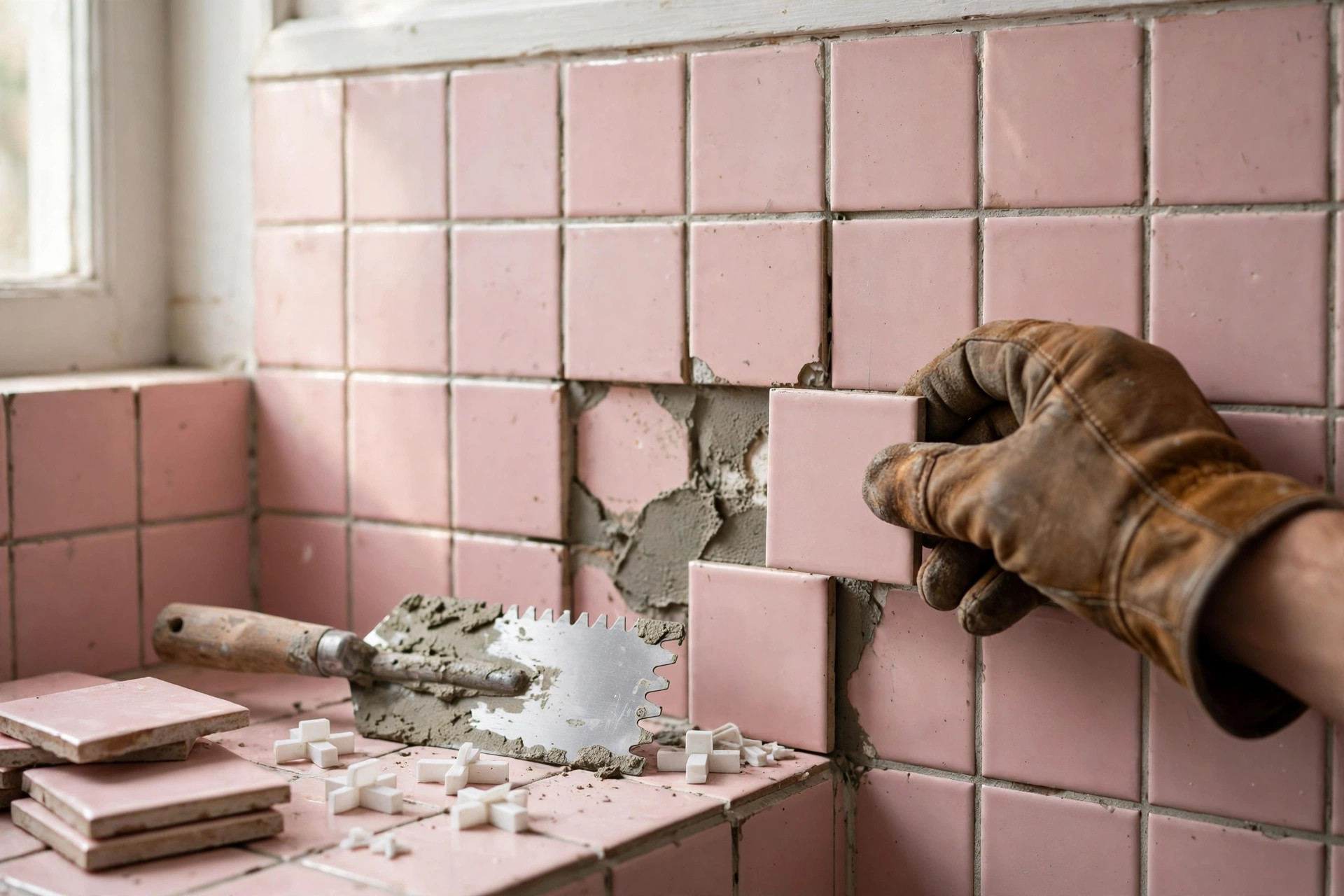
Figuring out how to match old bathroom tile for repairs is part detective work, part treasure hunt. Whether a plumber opened your wall, a tile cracked, or decades of moisture took their toll, you rarely need to gut the whole bathroom. Original tile — especially pre-1960s ceramic — is often better made than anything at the big-box store, and a well-matched repair is invisible from two feet away. Here’s the method professionals use, step by step.
Step 1: Identify exactly what you have
Before you search for anything, document your tile precisely:
- Size: Measure in inches — common vintage sizes include 4¼ × 4¼ wall tile, 6 × 6, 3 × 6 subway, and 1 × 1 or 2 × 2 hex floor mosaics. Measure several tiles; old tile varies slightly.
- Thickness and edge: Note whether edges are square, rounded (bullnose), or cushioned. Thickness matters — vintage wall tile is often ¼ inch, thinner than modern ⅜-inch tile.
- Color and glaze: Photograph in natural daylight (not flash). Note the exact hue, gloss level, and any mottling, speckling, or crazing (fine cracks in the glaze).
- Back markings: If you can remove one tile, check the back for manufacturer stamps — names like American Olean, Mosaic Tile Co., or Cambridge narrow the hunt enormously.
- Count what you need, then add 20% for breakage and cuts.
Step 2: Hunt salvage and specialty sources
This is where knowing how to match old bathroom tile for repairs pays off — the tile exists; it’s just not at the home center. Try these in order:
- Architectural salvage shops — your best bet for genuine period tile, often pulled from demolitions. Prices run $2–$8 per tile. Bring a sample.
- Habitat for Humanity ReStores — donated tile lots appear regularly and cheaply ($0.50–$2 per tile).
- Specialty reproduction suppliers — companies like Subway Ceramics, B&W Tile, and Mission Tile West reproduce classic American tile profiles in period colors. Expect $8–$25 per square foot.
- eBay and Etsy — search the exact size plus color (“4.25 vintage mint green tile”). Sellers often list small lots perfect for repairs. Budget $3–$10 per tile plus shipping.
- Tile rescue yards and demolition contractors — ask local contractors who renovate old houses; they often stockpile pulled tile.
- The back of your own bathroom — check behind the toilet, inside closets, or under vanities for spare original tiles left by the builder. This is the holy grail: a perfect match for free.
Step 3: When you can’t find an exact match
Sometimes the exact tile simply doesn’t exist anymore. You still have options:
- Steal from a hidden spot. Remove tiles from behind the toilet tank or inside a closet, use them for the visible repair, and put your closest-match tile in the hidden spot.
- Create a deliberate feature. Frame the repair area with a contrasting border tile or a decorative listello strip — it reads as a design choice, not a patch.
- Go one shade off, on purpose. A slightly lighter or darker tile in the same size, placed in a low-visibility area, is far less noticeable than you’d fear.
- Consider handmade-look tile. Modern handmade-look ceramics (Zellige-style, $10–$30/sq ft) blend surprisingly well with vintage tile because their glaze variation hides the difference.
Step 4: Install so the repair disappears
- Match the grout, not just the tile. Old grout has aged and darkened. Use a grout color one shade darker than you’d expect, or stain existing grout to match the new. Mismatched grout lines shout “repair” louder than slightly-off tile.
- Mind the plane. Old walls are rarely flat. Dry-fit and shim so the new tile sits flush with its neighbors — a lip catches light and attention.
- Feather the blend. If the new tile is a hair off in color, scatter two or three of them among originals nearby rather than clustering them in one obvious patch.
- Age the glaze (gently). A light rub with fine steel wool can knock the factory shine off new tile to better match decades-old glaze. Test on a spare first.
What a pro repair costs
DIY with salvaged tile: often under $50 in materials (thinset, grout, a few tiles). Hiring a tile setter for a small patch: $200–$500 depending on your market. A full reproduction-tile repair of a shower wall section: $500–$1,500. Compare that with $5,000–$15,000 for a full re-tile, and the repair route wins every time.
Frequently asked questions
Can you replace just a few bathroom tiles?
Yes. Individual tiles can be carefully chiseled out and replaced without disturbing the surrounding field, as long as the substrate behind them is sound.
How do I match 1950s bathroom tile colors?
The classic palette was pastel: mint green, pale pink, butter yellow, powder blue, and peach. Reproduction suppliers carry these exact shades; bring a daylight photo and a sample chip when shopping.
What if the wall behind the tile is damaged?
Cut back to solid substrate, patch with cement board, waterproof it (a liquid membrane like RedGard, about $50 per gallon), then set your matched tile. Never set tile over crumbling plaster.
Learning how to match old bathroom tile for repairs is really learning to think like a restorer: identify precisely, source creatively, and install invisibly. Your vintage tile survived seventy years — with a careful patch, it’ll easily survive seventy more.

GIPHY App Key not set. Please check settings