


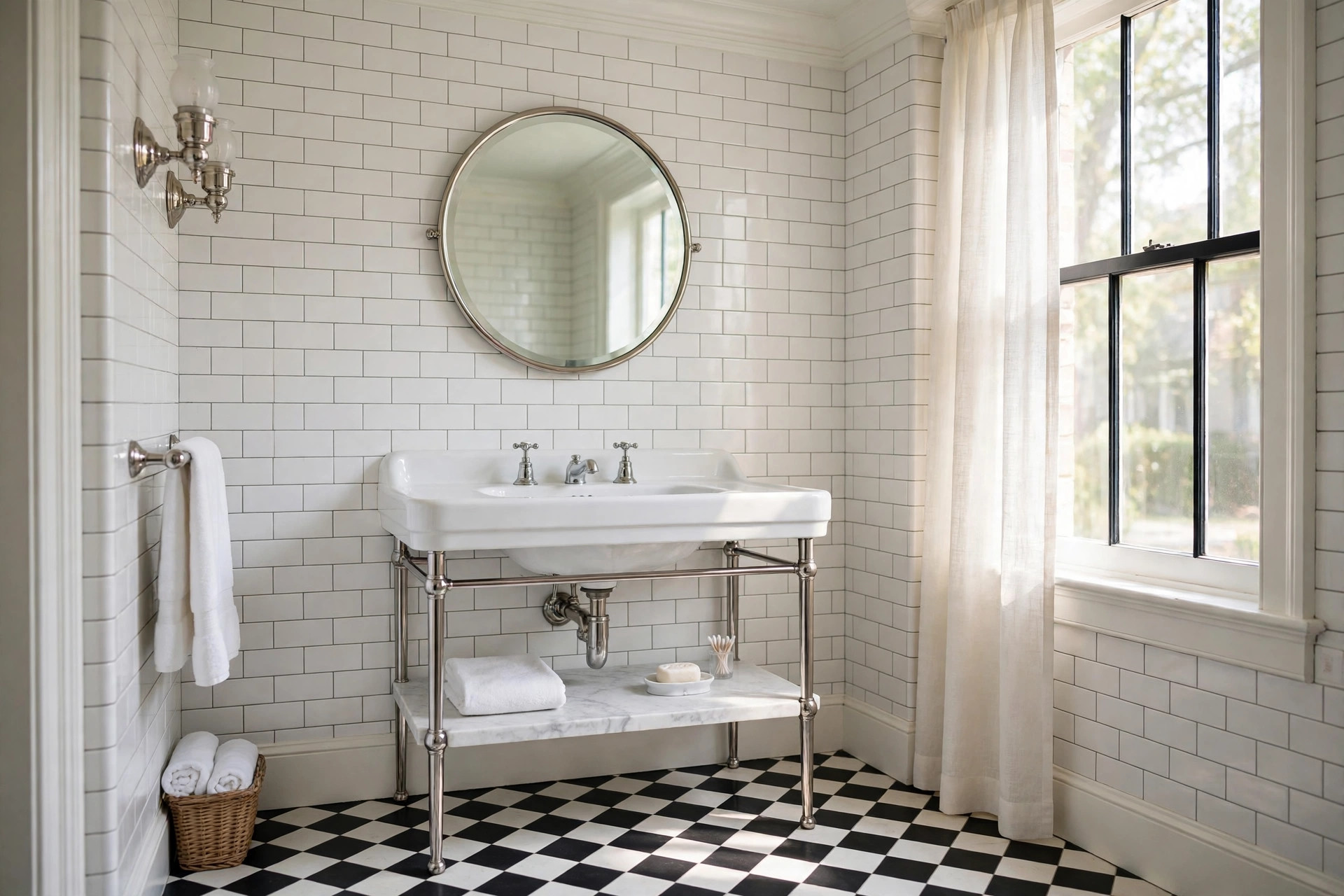
If you adore the glamour of the Deco era, these 11 1930s console sink ideas are the perfect place to start. The console sink — a porcelain basin carried on slender metal legs, often with a marble shelf beneath — was the defining fixture of the 1930s bathroom. It looked light and elegant, it made a small room feel larger, and it gave homeowners a generous washstand without the bulk of a vanity cabinet. Nearly a century later, it still does all of that, which is why designers keep returning to it for period restorations and vintage-inspired renovations alike.
Why the 1930s Console Sink Still Works Today
The 1930s bathroom was a study in streamlined optimism. After the heavy, dark wood vanities of the Edwardian era, homeowners wanted light, hygiene and a touch of Hollywood shine. Porcelain basins with softly rounded fronts, chrome-plated legs and towel bars, and shelves of veined marble answered that brief beautifully. A console sink leaves the floor visible beneath it, so even a compact bathroom of 1.5 by 2.4 metres feels open rather than crowded. It also shows off beautiful flooring — black and white chequerboard tile, for instance — instead of hiding it behind cabinetry.
Modern reproductions have made the look far more practical than the originals. Today’s console sinks come with standard 20-centimetre tap spacing, overflow protection and basins deep enough for everyday use, while keeping the slender silhouette that makes the style so appealing. If you are restoring a period home or simply borrowing its style, the console sink is one of the easiest authentic touches you can add.
Eleven Ideas to Steal for Your Bathroom
- The classic white porcelain console. A rectangular basin with a gently curved front, carried on straight chrome legs, is the purest version of the look. Pair it with a round mirror and a pair of glass sconces for instant 1930s polish.
- A marble shelf for display. Many originals included a lower shelf of white Carrara marble. Use yours for folded hand towels, a small vase of eucalyptus and a ceramic soap dish — practical storage that doubles as styling.
- The corner console for tiny bathrooms. A triangular basin fitted into a corner frees up precious floor space in a cloakroom or en suite. Look for models around 45 centimetres wide, which fit neatly without crowding the door swing.
- Black porcelain with chrome legs. A glossy black basin makes a dramatic statement against white subway tile. Keep the rest of the room pale so the sink becomes the focal point rather than one dark note among many.
- A console with an integrated towel bar. The towel bar mounted between the front legs is a signature 1930s detail. It keeps a hand towel exactly where you need it and adds a lovely horizontal line to the design.
- The double-basin console for couples. In a wider bathroom, a 120-centimetre double console gives two people room to get ready at once while preserving the airy, open feel a cabinet vanity would destroy.
- Brass legs instead of chrome. Polished brass or unlacquered brass legs warm up the look beautifully, especially alongside warm white walls and a honey-toned timber floor. Expect brass-finish legs to cost roughly $50 to $150 more than chrome on a comparable model.
- A console paired with a pedestal-style backsplash. Some reproductions add a low porcelain backsplash to the rear of the basin, protecting the wall from splashes while echoing the pedestal sinks of the same decade.
- The glass shelf variation. Swap the marble shelf for a thick tempered-glass shelf for an even lighter appearance. It suits bathrooms where you want the tilework underneath to stay visible.
- A console sink in a bold colour. Soft pastel basins — pale green, powder blue or blush pink — were popular in the late 1930s. A coloured basin with white fittings is a joyful nod to the era that still feels fresh today.
- The freestanding console as a room divider. In a larger bathroom, position a console sink away from the wall as a gentle divider between the bathing and dressing zones. It reads as furniture rather than plumbing, which is precisely the point.
Materials, Measurements and Plumbing Notes
Before you order, measure carefully. A standard single console sink is about 55 to 65 centimetres wide and 45 to 50 centimetres deep, with the basin rim sitting 80 to 85 centimetres from the floor. Leave at least 75 centimetres of clear space in front for comfortable use, and check that the waste pipe and supply lines can be concealed or finished neatly — exposed chrome bottle traps look intentional, while bare plastic ones do not.
Porcelain remains the best basin material: it is durable, easy to clean and true to the period. Marble shelves need sealing once a year to resist water marks, while glass shelves need only a wipe. Chrome legs are the most forgiving choice in a humid bathroom, but brass and nickel finishes are perfectly workable if you dry them after splashes. Budget-wise, a good reproduction console sink typically costs between $300 and $900, with marble shelves and double basins at the higher end.
Styling and Care for a Lasting Deco Look
Finish the scheme with period-appropriate details: a round or arched mirror, globe-shaped wall lights, black and white floor tile, and a small potted fern on the shelf. Avoid heavy modern cabinetry nearby — the console sink’s charm is its lightness, and bulky storage will fight it. Instead, add a slim wall cabinet or a recessed medicine cabinet for toiletries.
Cleaning is simple. Wipe porcelain with a soft cloth and a mild, non-abrasive cleaner, and polish chrome legs weekly to prevent water spots. With that modest care, a console sink will serve your bathroom for decades, just as the originals did.
These 11 1930s console sink ideas prove that the best bathroom fixtures never really go out of fashion. Choose the version that fits your room, your budget and your household, and you will have a washstand with genuine Deco soul — light, elegant and ready for another ninety years.

GIPHY App Key not set. Please check settings