

Few patterns say “1960s bathroom” quite like basketweave tile. That clever interlacing of rectangles and small squares — like a woven basket rendered in ceramic — gave mid-century bathrooms texture, rhythm and a handmade warmth that plain square tiles never could. These 9 1960s basketweave tile ideas will help you bring that woven charm into your own bathroom, whether you are restoring a period home or borrowing the look for a modern renovation.
What Makes Basketweave So 1960s
Basketweave tile was a natural fit for the 1960s. The decade loved texture and pattern, from shag pile carpets to bold geometric wallpaper, and the basketweave brought that same energy to the bathroom floor. The classic format pairs small rectangular tiles, usually 5 by 10 centimetres, with tiny square dots at the intersections, creating a woven effect that reads as both orderly and organic.
The 1960s palette was warm and optimistic: avocado green, mustard yellow, harvest orange and soft turquoise, often set against cream or white. Today, softer versions of those colours — sage, dusty blue, warm grey — give the same pattern a fresher feel, while the original brights are perfect for a faithful restoration.
Nine Ideas to Weave Into Your Bathroom
- The classic black and white floor. White rectangles with black dot squares is the most timeless version of the pattern. It suits almost any bathroom and pairs beautifully with chrome fittings and white subway tile walls.
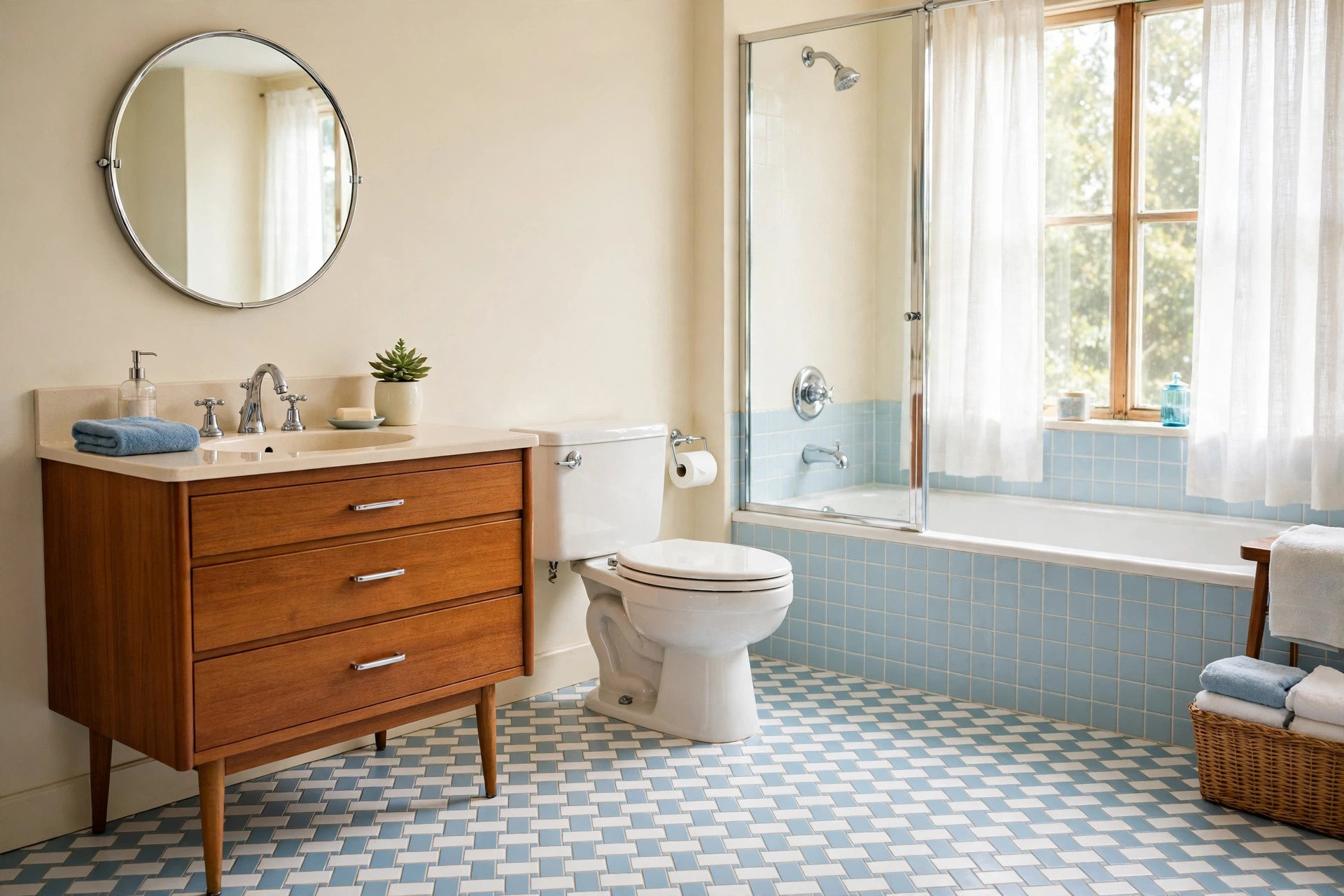
- A soft blue basketweave. Pale blue rectangles with white dots feel calm and clean, and they echo the pastel bathroom suites that were so popular in the 1960s. Use them on the floor and keep the walls plain white.
- The avocado accent. A floor of cream basketweave with avocado green dots is a gentle nod to the decade’s most famous colour. It reads as retro without overwhelming the room.
- Basketweave on the shower wall. Carry the pattern up the shower wall for a fully immersive mid-century look. Choose a matte glaze for grip and a grout colour close to the tile colour so the weave, not the grout lines, takes centre stage.
- A basketweave bath surround. Tiling the side of the bath in a matching basketweave turns a plain tub into a design feature. It works best when the floor uses the same pattern in a different colour, so the two surfaces talk to each other.
- The mustard feature strip. A single horizontal strip of mustard basketweave across a white tiled wall adds a jolt of 1960s colour without committing the whole room to it. It is an easy weekend project with a big visual return.
- Warm timber and terracotta. Pair a terracotta-toned basketweave floor with a timber vanity and cream walls for a warm, earthy take on the pattern. Brass fittings complete the look beautifully.
- A small-space basketweave. In a tiny bathroom, use the pattern on the floor only, in pale colours, to add interest without shrinking the room. Small-scale patterns can make a small space feel busy if they cover every surface, so let the floor do the talking.
- The full 1960s restoration. For a faithful period bathroom, combine a basketweave floor with a coloured suite, a large mirror and globe lighting. It is bold, it is unapologetic, and it is exactly what the decade intended.
Sizing, Cost and Installation
Basketweave tiles usually come on mesh sheets of about 30 by 30 centimetres, which makes installation far easier than laying hundreds of individual pieces. Check the sheet size and the grout joint width — typically 2 to 3 millimetres — before you order, and buy 10 to 15 per cent extra for cuts around the bath, the basin pedestal and the door frame.
Standard ceramic basketweave sheets typically cost roughly $7 to $18 per square foot, with porcelain and handmade versions costing more. A tiler experienced with mosaic sheets will keep the weave aligned across joins, which is the detail that separates a professional finish from a DIY disappointment.
Choosing Colours That Feel Authentically 1960s
Colour is where a basketweave floor either sings or falls flat, so choose with the decade in mind. The early 1960s favoured soft pastels — powder blue, mint green and pale pink — while the later part of the decade went bolder with avocado, mustard and burnt orange. For a bathroom you will live with every day, the safest approach is to pick a pale or neutral base for the rectangles and let the small dot squares carry the colour. That way you get the retro hit without the room feeling like a time capsule.
If you love the bolder colours, use them in a smaller dose: a mustard dot square against cream rectangles, or a turquoise floor confined to the shower area. Test samples under your actual lighting before ordering, because warm bathroom bulbs can turn a cool sage green muddy, while daylight can wash out a soft pink. Hold the sample next to your basin, your mirror frame and your towels — if all four sit comfortably together, the colour is right.
Styling and Care
Balance the pattern with plain surfaces elsewhere: painted walls, a simple mirror and unfussy fittings. If your basketweave is bold, keep towels and accessories neutral; if it is pale, add colour through towels, a plant or a piece of framed 1960s artwork. Seal grout annually in wet areas, and clean with a pH-neutral cleaner to keep both tile and grout looking fresh.
These 9 1960s basketweave tile ideas prove that a woven pattern can carry a whole bathroom. Whether you choose the timeless black and white floor or a full avocado restoration, the basketweave brings texture, history and a warm mid-century welcome to the room.

GIPHY App Key not set. Please check settings