

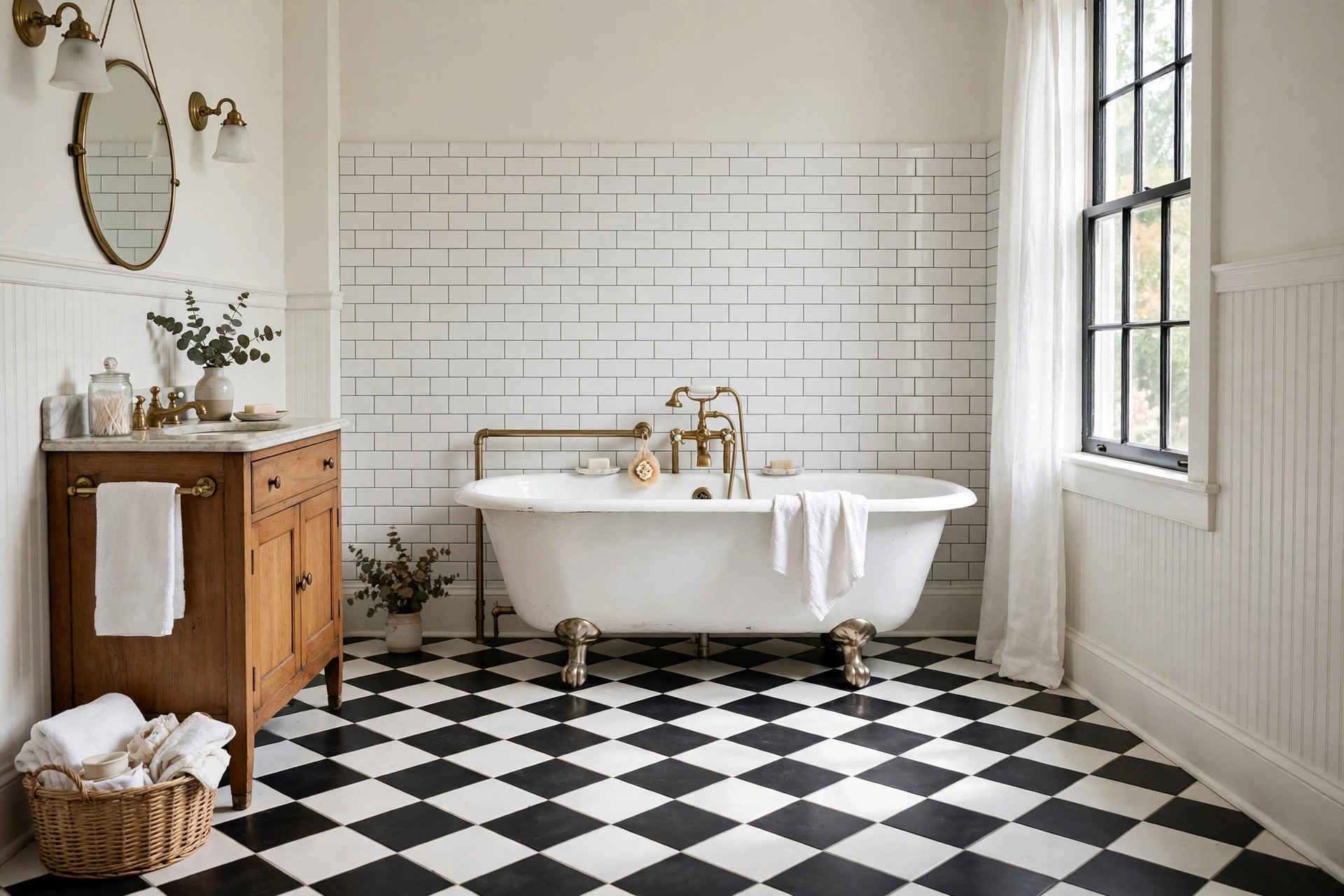
So, do checkerboard tiles add value to your home? The short answer is yes — usually, and often more than you might expect. The classic black-and-white checkerboard floor is one of the rare design choices that has survived more than a century of changing taste, from Victorian hallways to 1950s diners to today’s vintage-inspired bathrooms. When it is done well, with quality materials and a sympathetic setting, it can lift a bathroom or kitchen from forgettable to memorable, and memorable rooms help sell houses. But like any bold choice, it depends on the execution, the room and the buyer.
Why Buyers Love the Checkerboard Look
Checkerboard tile works because it is both classic and graphic. Estate agents consistently report that period-appropriate details photograph beautifully and help a listing stand out in a crowded market, and a checkerboard floor is one of the most photogenic features a bathroom can have. It reads as intentional and characterful, which matters in older homes where buyers are specifically looking for charm rather than a blank, builder-grade box.
The pattern also has a practical advantage: it is forgiving. The strong geometry disguises minor wear, hides dust and hair better than a plain pale floor, and draws the eye across the room, making small bathrooms feel larger and more considered. In a 1920s or 1930s house, a checkerboard floor feels like it belongs — it honours the architecture rather than fighting it. That sense of belonging is exactly what buyers of period homes are paying for, and it is why the question “do checkerboard tiles add value to your home” so often gets a yes from people who sell houses for a living.
What the Numbers Actually Say
Let us be honest about the limits of the evidence: no appraiser will add a fixed dollar figure for a checkerboard floor, and any article that quotes a precise percentage return on investment for tile alone is guessing. What we can say with confidence is that bathroom and kitchen updates are among the highest-returning home improvements, and that within those rooms, quality hard-surface flooring outperforms cheap alternatives at resale. A well-installed checkerboard floor in porcelain or natural stone typically costs $8 to $20 per square foot installed, including materials, and it lasts for decades — unlike vinyl or laminate, which buyers often plan to replace immediately.
The value shows up indirectly. A dated or damaged bathroom can drag down offers, while a fresh, characterful one helps a home sell faster and closer to asking price. A checkerboard floor is a relatively small investment within a bathroom refresh that delivers an outsized visual impact. If you are asking do checkerboard tiles add value to your home because you are weighing a renovation budget, think of the floor as the anchor of the room: spend on it, and the rest of the refresh — paint, fixtures, lighting — looks more expensive by association.
When Checkerboard Can Hurt Rather Than Help
There are situations where the pattern works against you. Scale matters enormously: very large checkerboard squares, say 18 inches or more, can overwhelm a tiny bathroom, while very small squares can look busy and dated. The sweet spot for most bathrooms is 8 to 12 inch tiles, which read as classic without dominating the room. Colour matters too. The traditional black-and-white combination is the safest for resale; bold colour pairings such as red and cream or green and white are charming but narrow your buyer pool.
Quality is the other deciding factor when you are asking do checkerboard tiles add value to your home. Cheap peel-and-stick checkerboard or thin vinyl printed to look like tile can actually reduce perceived value, because buyers spot it instantly and mentally add a replacement cost. If you are installing checkerboard, use real ceramic, porcelain or marble tile, keep the grout lines crisp and even, and choose a grout colour that flatters the pattern — light grey is a forgiving choice that softens the contrast slightly. A poorly executed checkerboard floor is worse than a plain one, so if the budget does not stretch to proper materials and a skilled tiler, it is better to wait.
Our Top Picks
If you are planning a checkerboard floor, these three generic options cover most bathrooms beautifully. First, classic glazed porcelain checkerboard tiles in 12 inch squares — durable, water-resistant, easy to clean and available in true black and soft white for around $5 to $9 per square foot. Second, honed marble checkerboard tiles, typically Carrara white paired with Nero Marquina black, which bring a luxurious, slightly soft veining that suits period bathrooms; expect $12 to $20 per square foot, plus sealing. Third, matte ceramic checkerboard tiles with a slightly textured finish, ideal for family bathrooms where slip resistance matters — look for a slip rating of R10 or above and budget $4 to $7 per square foot. Whichever you choose, order at least 10 percent extra for cuts and breakages, and keep a few spare tiles for future repairs.
Getting the Most Value From Your Checkerboard Floor
To maximise the return on your checkerboard floor — and to make sure the answer to do checkerboard tiles add value to your home stays yes — keep the rest of the room calm. A checkerboard floor is a statement, so let it be the only one: choose plain wall tiles, a simple painted wall in a soft white or pale sage, and unfussy fixtures. In a small bathroom, run the pattern on the diagonal to make the floor feel larger. Make sure the layout is centred on the room’s focal point — the door or the bath — rather than starting from a random corner, because an off-centre grid is the first thing a visitor’s eye catches.
Maintain it well, too. Seal natural stone annually, re-grout any cracked joints promptly, and clean with a pH-neutral floor cleaner rather than harsh bleach, which can dull the grout and etch marble. So, do checkerboard tiles add value to your home? In a period property, installed properly with quality materials, the answer is a confident yes — not because the tiles themselves carry a price tag, but because they turn an ordinary bathroom into a room buyers remember, photograph and fall for.

GIPHY App Key not set. Please check settings