


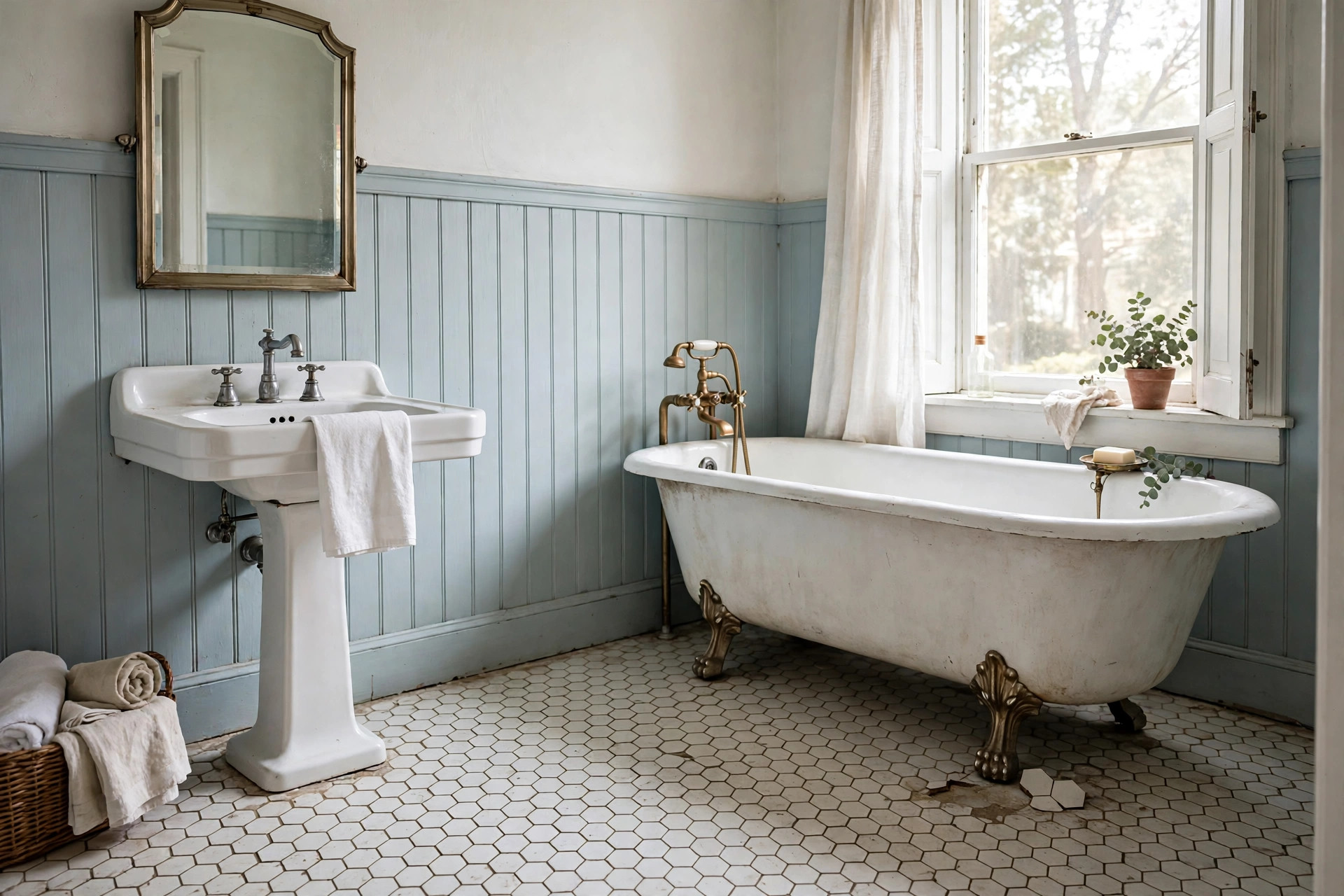
These 9 signs your vintage hex tile needs repair are the early warnings that a period floor gives before a small problem becomes an expensive one. Original hex tile floors are remarkably tough — many have survived a century of daily use — but they are not indestructible. Grout ages, mortar beds dry out, and water finds every weak point. The good news is that almost every problem is cheap to fix if you catch it early. Walk your floor once a month, look for the signs below, and act on the first one you find.
Grout, Sound and Movement
1. Cracked or Crumbling Grout
Grout is the first thing to fail on an old tile floor, and it is the easiest to spot. Look for hairline cracks running along the grout lines, small pieces flaking away, or grout that has turned powdery and pale. In a bathroom, cracked grout lets water into the mortar bed below, and that moisture is what causes most serious tile damage. A single cracked grout line is a weekend repair with a grout saw and a small bag of sanded grout, costing around $15. A floor full of cracked grout left for a year can mean loose tiles and a full re-grout.
2. Tiles That Sound Hollow When Tapped
Walk the floor slowly and tap each tile lightly with the handle of a wooden spoon or a small rubber mallet. A well-bonded tile gives a sharp, solid click. A tile that has lost its bond gives a hollow, drum-like sound. One or two hollow tiles can be lifted, cleaned, and re-bedded with thin-set mortar. A large patch of hollow tiles suggests the mortar bed itself is failing, and that is a job for a professional tiler rather than a DIY repair.
3. Loose or Rocking Tiles
A tile that moves when pressed is past the warning stage and into active failure. Step on each tile near the bath, the sink, and the doorway, and feel for any rocking or dipping. A rocking tile grinds against its neighbours every time someone steps on it, which chips the glaze and loosens the tiles around it. Lift a rocking tile carefully, scrape out the old mortar, and reset it with fresh thin-set. If the tile breaks during removal, salvage yards stock reclaimed 1-inch hex tiles in the classic white and black colours, usually for $1 to $3 per tile.
Stains, Chips and Mould
4. Stains That Will Not Clean Off
Some stains are just dirt, but a stain that survives proper cleaning can signal water damage underneath. Dark grey or brown stains spreading from a grout line, or a patch of tiles that stays damp-looking long after a shower, suggest moisture is trapped in the mortar bed. A white, chalky bloom on the grout, known as efflorescence, means water is moving through the floor. Both signs point to a leak or a failed seal somewhere, and the source needs finding before the tile is repaired.
5. Chipped or Cracked Tiles
A small chip on the edge of one tile is cosmetic. A crack running across several tiles in a straight line is structural, and it usually means the floor beneath has moved. Check for cracks near the toilet base, the bath feet, and the doorway, where the floor flexes most. A single cracked tile can be replaced individually if you can find a match. A line of cracked tiles deserves a look at the subfloor before any tile is replaced, because new tiles laid over a moving floor will crack in exactly the same place.
6. Grout That Has Turned Dark or Mouldy
Grout that stays dark even after cleaning with a baking soda paste and a stiff brush may be holding mould deep inside. Mould in old grout is not only unsightly; it means the grout has become porous and is absorbing water instead of repelling it. This often happens where the original grout was never sealed, or where the sealer wore off years ago. Raking out the worst lines and re-grouting with a modern sanded grout, then sealing the whole floor with a penetrating sealer for around $20, usually solves the problem.
Edges, Smells and Uneven Floors
7. Tiles Lifting at the Edges
Run your hand along the edge of the floor where the tile meets the wall, the bath, and the door threshold. If the edges of the tiles are curling upward, or the caulk line has pulled away from the wall, water is getting underneath. Edge lifting is common in bathrooms where the seal between the floor and the wall has failed, and it lets every shower send water straight into the mortar bed. Scrape out the old caulk, dry the area thoroughly, and reseal with a silicone caulk made for bathrooms. This is a $10 repair that prevents hundreds of dollars of damage.
8. A Musty Smell That Won’t Go Away
Trust your nose. A bathroom that smells musty even after a thorough clean, with the window open and the fan running, often has damp trapped under the tile. The smell comes from the mortar bed or the subfloor staying wet between showers. Check for the other signs on this list, especially hollow tiles and dark grout, and pay attention to whether the smell is stronger near the bath or the toilet. A persistent musty smell is a reason to lift one tile in the worst area and look underneath before the problem spreads.
9. Uneven or Sunken Areas
Stand at the doorway and look across the floor at a low angle. A healthy tile floor is flat. A dip or a sunken patch, even one only a few millimetres deep, means the mortar bed or the subfloor has settled or rotted. Water pools in dips, which speeds up every other problem on this list. Small dips can sometimes be fixed by lifting the affected tiles and re-bedding them. A large sunken area usually means the subfloor needs attention, and that is the point to call a professional rather than keep patching the surface.
Our top picks
- A pH-neutral tile cleaner: strong enough for daily grime, gentle enough not to attack century-old grout.
- A grout saw and a bag of sanded grout: the two tools that handle the most common vintage tile repair, for under $20 together.
- A penetrating grout sealer: one bottle seals a whole small bathroom floor and keeps water out of the grout for years.
When to Call a Professional
Most of these 9 signs your vintage hex tile needs repair are DIY-friendly when caught early: re-grouting, resetting a tile, resealing an edge. Call a tile restoration specialist when you find a large area of hollow tiles, a crack running across the room, a sunken patch, or any sign of subfloor damage. A specialist can also source matching reclaimed tiles, so the repair disappears instead of drawing the eye. Check the floor monthly, fix the small things promptly, and your original hex tile can easily last another hundred years.


GIPHY App Key not set. Please check settings