


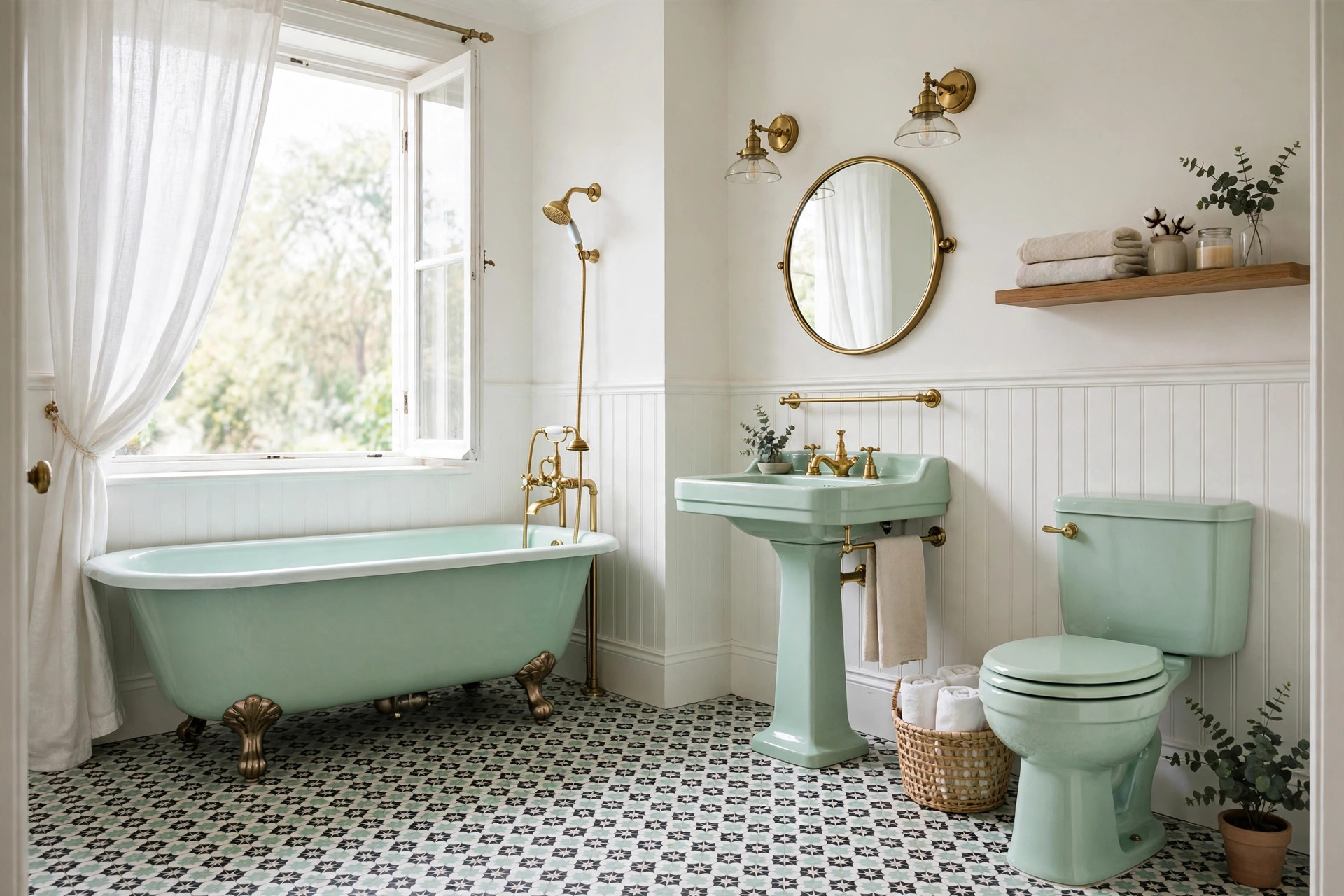
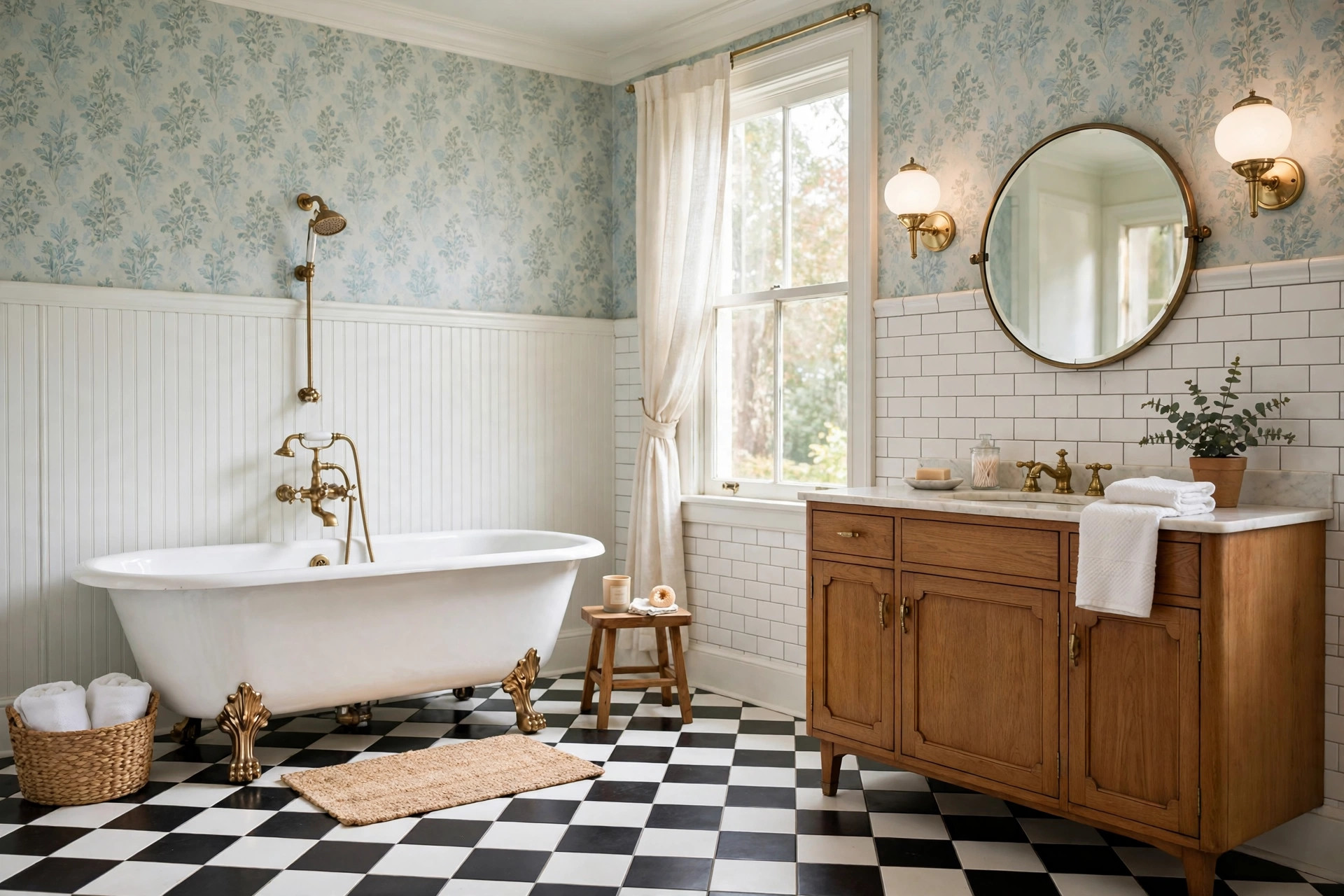
What is a clawfoot tub? It’s the freestanding, vintage-style bathtub that stands on four decorative feet — usually shaped like a lion’s paw clutching a ball, hence the name. Popular from the late 1800s through the 1930s, clawfoot tubs were the standard bathtub before built-in alcove tubs took over in the 1940s and 50s. Today they’re the single most recognisable symbol of the vintage bathroom — and the question I hear most is whether they’re actually comfortable, or just beautiful. The honest answer: they’re both, with a few caveats worth knowing before you buy.
The anatomy of a clawfoot tub
A classic clawfoot tub has three defining features:
- Freestanding body — finished on all sides (often with a rolled rim), designed to sit anywhere in the room, not tucked into an alcove.
- Four feet — the iconic ball-and-claw, but also imperial, cannonball, and paw-foot styles. Feet are usually chrome, brass, or painted cast iron.
- Cast iron construction — traditional tubs are cast iron coated in porcelain enamel. They’re extraordinarily heavy (300–500 lbs empty) and retain heat beautifully.
Modern reproductions come in acrylic too — lighter (70–100 lbs), cheaper, and easier to install, but they cool faster and can feel less substantial.
The four main styles
- Classic roll-top (flat rim): the symmetrical Victorian original. Timeless, and the easiest to fit with a shower conversion.
- Slipper tub: one end raised higher than the other for a reclined, lounging soak. The most comfortable shape for bathing.
- Double slipper: both ends raised — symmetrical and sculptural, great as a room centerpiece.
- Double-ended: symmetrical with the drain in the middle and faucets mounted on the rim. Elegant, but faucet options are pricier.
Standard sizes run 60–72 inches long, 30–32 inches wide, holding 40–60 gallons — noticeably deeper than a modern alcove tub’s 14–15 inches of soaking depth. That depth is the whole point.
Are they actually comfortable? The honest verdict
For soaking: yes, wonderfully. The deep water, the reclined angle of a slipper end, and cast iron’s heat retention make for a genuinely luxurious bath — better, in my opinion, than any standard modern tub. Tall bathers especially love the extra length.
For daily showering: it’s a compromise. As covered in our shower conversion guide, you can absolutely add a shower — but you’ll manage a curtain ring and slightly more splash than an enclosed stall. If you shower 95% of the time and bathe rarely, a clawfoot tub may frustrate you.
Getting in and out: the rim sits 24–30 inches off the floor — higher than a modern tub. It’s fine for most adults but worth considering for anyone with mobility issues or small children.
Cleaning: the exterior needs attention since it’s visible from every angle, and the floor underneath collects dust. A tub on feet is harder to clean around than a built-in.
What they cost in 2026
- Salvage originals: $200–$800 at architectural salvage yards and ReStores — the best value if you’re willing to reglaze ($300–$600 extra).
- New cast iron reproductions: $1,500–$3,500 from specialist makers.
- New acrylic reproductions: $700–$1,800 — lighter, cheaper, easier to install upstairs.
- Faucets: freestanding or rim-mounted fillers run $150–$500; add $150–$300 for a shower conversion kit.
- Installation: $500–$1,500+ depending on floor reinforcement (cast iron upstairs often needs it) and plumbing work.
Buying checklist: what to check
- Enamel condition: look for chips, rust spots, and dull patches. Light wear reglazes beautifully; deep rust-through is a pass.
- Feet: make sure all four are present and matching — replacements are findable but fiddly.
- Drain and overflow: check the drain assembly isn’t seized and the overflow is intact.
- Measurements: confirm it fits through your doorways and up your stairs — a 72-inch cast iron tub has ended more than one renovation day.
- Floor strength: a filled cast iron tub can exceed 800 lbs. Upstairs installations may need joist reinforcement — get a contractor’s opinion.
Clawfoot tub vs. modern freestanding tub
Modern freestanding tubs (the sleek oval acrylics) are lighter, easier to clean around, and designed for today’s plumbing. But they lack the depth, the heat retention, and — let’s be honest — the soul of cast iron. If authenticity matters to your vintage bathroom, there’s no substitute. If practicality wins, modern freestanding is the easier life.
Frequently asked questions
What is a clawfoot tub made of?
Traditionally cast iron with a porcelain enamel coating. Modern versions also come in acrylic, and occasionally copper or stone resin.
Do clawfoot tubs use more water?
Yes — 40–60 gallons versus ~30 for a standard tub. If you’re on a well or a water meter, that’s worth knowing.
Can a clawfoot tub go upstairs?
Yes, but check floor load capacity first. Acrylic reproductions are the safer upstairs choice; cast iron may need structural reinforcement.
So what is a clawfoot tub? It’s the deep, sculptural, unapologetically romantic heart of the vintage bathroom — genuinely comfortable for soaking, genuinely practical with a shower conversion, and genuinely worth the effort if you love the era. Just measure your doorways first.

GIPHY App Key not set. Please check settings