


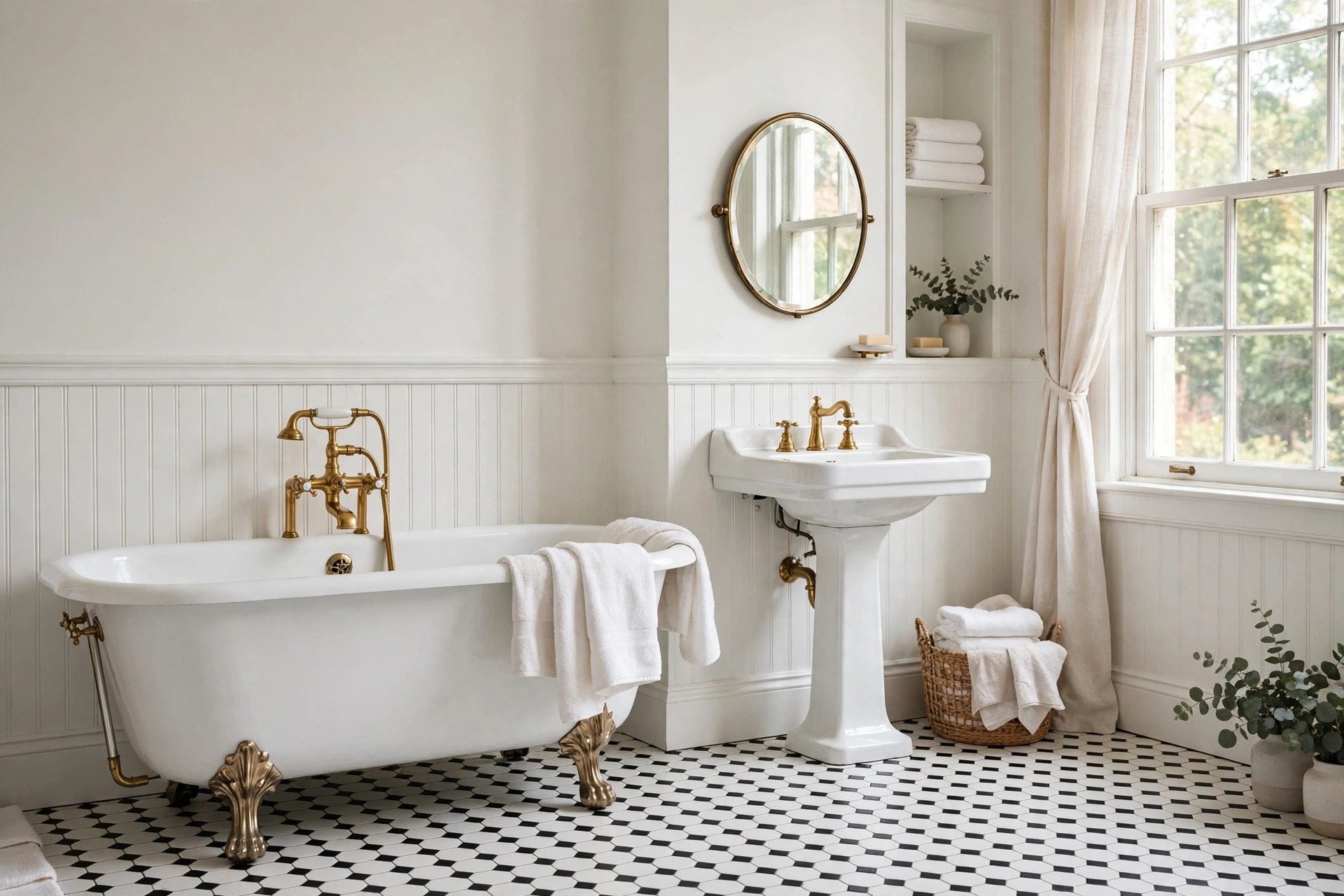
The reproduction vs salvage vintage bathroom fixtures debate comes up in almost every period bathroom renovation I have seen discussed, and for good reason. The choice affects your budget, your timeline, and how authentic the finished room feels. One path gives you a gleaming clawfoot tub that was cast sometime around the First World War; the other gives you the same silhouette, fresh from a factory, with a modern warranty. Both can look wonderful. Neither is right for every project, and the wrong choice can quietly double your plumbing bill.
This guide breaks down the real pros, cons, and prices of each route, fixture by fixture, so you can decide with open eyes rather than auction fever or showroom impulse.
What Counts as Reproduction?
Reproduction vintage bathroom fixtures are brand-new products made to echo the styling of earlier eras — typically Victorian, Edwardian, Art Deco, and mid-century designs. They are manufactured today, usually in porcelain, acrylic, or cast iron, with period-style taps in chrome, brass, or nickel finishes.
Because they are new, they comply with modern plumbing codes, use standard pipe fittings, and come with warranties. You can order a matching suite — bath, basin, and toilet — that all look like they belong together, in finishes that match the first time.
What Counts as Salvage?
Salvage fixtures are original pieces rescued from demolished or renovated buildings, sold through architectural salvage yards, demolition dealers, and increasingly through online marketplaces. A genuine 1920s pedestal sink or a 1930s high-level cistern toilet carries a century of character: crazing in the glaze, a patina on the brass, maker’s stamps you can research.
But originals were made for plumbing standards that no longer exist. Sizes, tap hole spacings, and drain positions can be gloriously non-standard, and cast iron does not care about your feelings or your contractor’s schedule.
Cost Comparison: What You Will Actually Pay
Prices vary enormously by region and era, but here is an honest range based on what I have seen advertised across salvage yards and reproduction retailers in USD.
Clawfoot tubs. A salvaged roll-top tub in restorable condition typically runs $300–$800, though refinishing the interior adds roughly $400–$600 if you hire a specialist. A new reproduction roll-top tub costs roughly $900–$2,500 depending on size, material (acrylic is cheaper than cast iron), and brand. If you want cast iron specifically, the price gap narrows fast.
Pedestal sinks and basins. Salvage: $75–$300 for common 1920s–50s models. Reproduction: $200–$600 for a matching period-style basin. This is one area where salvage is often the clear winner on price, provided the tap hole spacing suits modern taps.
High-tank and period toilets. Original 1920s–30s high-level cistern toilets appear at salvage yards for $150–$400, but flush mechanisms almost always need rebuilding with modern internals (budget $100–$200). Reproduction high-tank toilets run $600–$1,200. Be aware: some reproductions do not flush as efficiently as modern low-profile toilets — check the gallons-per-flush rating.
Taps and hardware. This is where salvage often loses. Period taps are beautiful but frequently have worn washers, pitted chrome, and non-standard thread sizes. Salvaged sets run $40–$150 but may need $50–$100 of plumber’s patience. Good reproduction cross-handle taps cost $120–$400 per set and simply work.
The Case for Salvage
Authenticity is the big one. A genuine fixture has weight, proportion, and surface detail that reproductions sometimes soften. Cast-iron baths from the 1910s–30s hold heat beautifully — once hot, the water stays warm noticeably longer than in thin acrylic. There is also the environmental angle: reusing a heavy piece of sanitaryware is a real sustainability win.
Salvage can also be cheaper, particularly for statement pieces like ornate sinks and unusual toilets, and some collectors value original maker’s marks (a Mott or a Crane stamp from the 1920s is a lovely detail to own).
The Case for Reproduction
Convenience wins here, and it wins big. Everything fits modern rough-in dimensions. Everything arrives undamaged (inspect on delivery, of course). You get warranties, spare parts, and customer service — three things no salvage yard has ever offered me.
For family bathrooms, reproductions are arguably safer: no lead-based glazes from pre-1960s pieces (a genuine concern with very old imported ceramics — have them tested if in doubt), no razor-sharp chips in porcelain, and surfaces that meet today’s hygiene expectations. And when a reproduction tap fails in six years, you can order the same cartridge; when a 1927 tap fails, you begin a new hobby called “hunting obscure washers.”
The Hybrid Approach: Best of Both Worlds
In my opinion, the smartest renovations mix the two. Use salvage for the pieces where originality shows — the tub, a statement sink, a medicine cabinet — and reproduction for the pieces where reliability matters most: taps, shower valves, toilet internals, and anything hidden behind a wall.
This is also the most budget-friendly strategy. A salvaged clawfoot tub ($500) with new reproduction taps ($250) and a modern shower valve hidden inside period-style trim gives you the soul of the original.
Red Flags to Watch For
On salvage pieces: hairline cracks in porcelain, rust-through on cast iron (surface rust is fine, holes are not), and lead glaze on very old or imported ceramics.
On reproductions: vague “vintage style” marketing with no era reference, taps with no replaceable cartridges, and acrylic tubs priced like cast iron. Read the spec sheet the way you would read a contract — because for $2,000, it basically is one.
Our Top Picks
- A reproduction roll-top tub in cast iron. The single best anchor piece for a vintage bathroom: authentic weight and heat retention, modern drain fittings, and a warranty. Look for a model with adjustable feet so you can level it on an uneven period floor.
- Salvaged pedestal sink from a reputable yard. Sinks are simple, durable, and cheap second-hand; inspect the glaze for chips around the rim and check the tap hole spacing against the taps you plan to buy.
- Reproduction cross-handle tap set in unlacquered brass. New internals, period silhouette, and the unlacquered finish develops a lovely patina over time — the vintage look, earned honestly rather than faked.
Closing Thoughts
There is no universally correct answer in the reproduction vs salvage vintage bathroom fixtures question — only the answer that fits your budget, your plumber’s patience, and how much authenticity you can feel from a bathtub. Salvage gives you the real thing with all its quirks; reproduction gives you the look with none of the surprises. Mix them thoughtfully, and you will end up with a bathroom that feels a century old and works like it was installed yesterday.

GIPHY App Key not set. Please check settings