

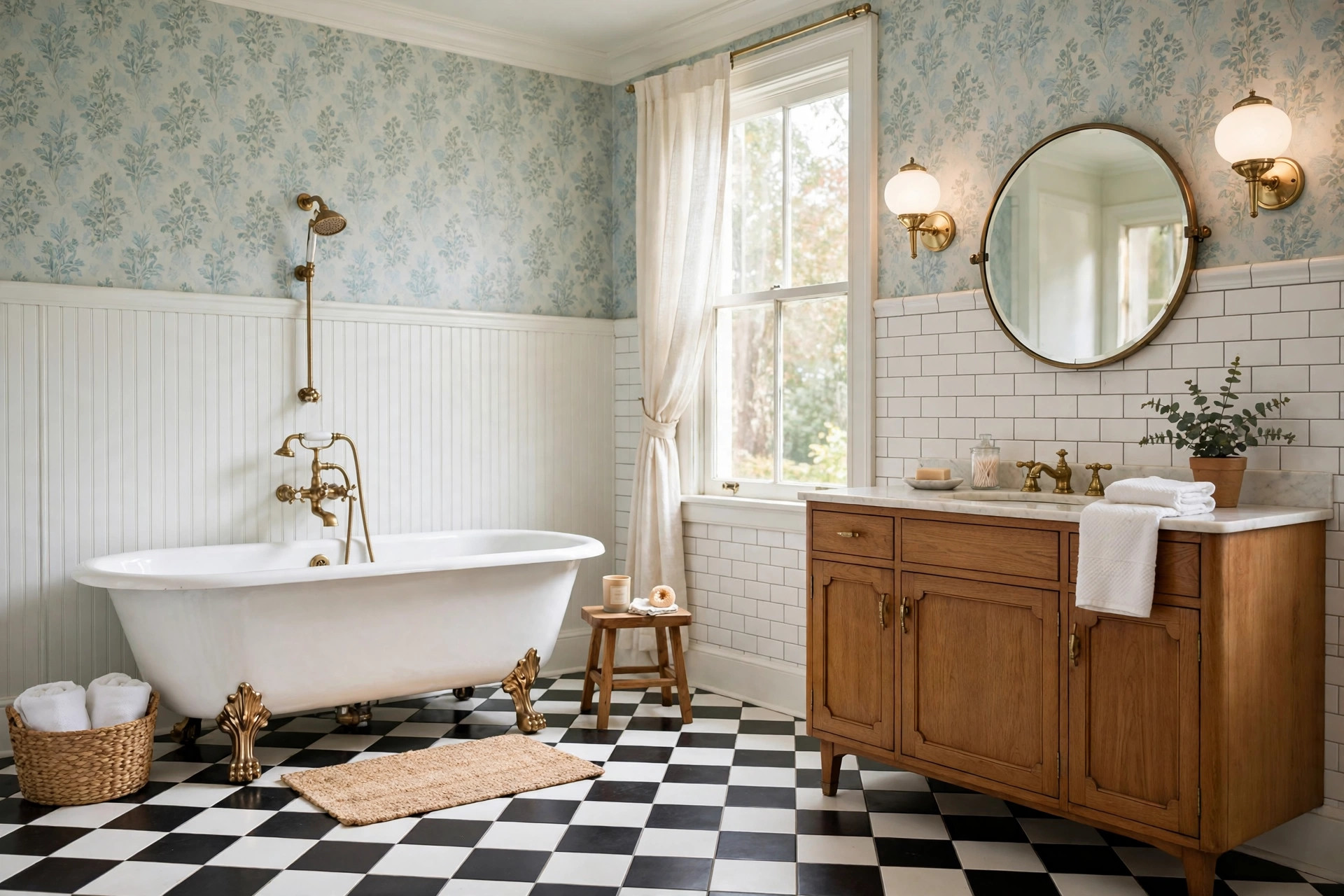
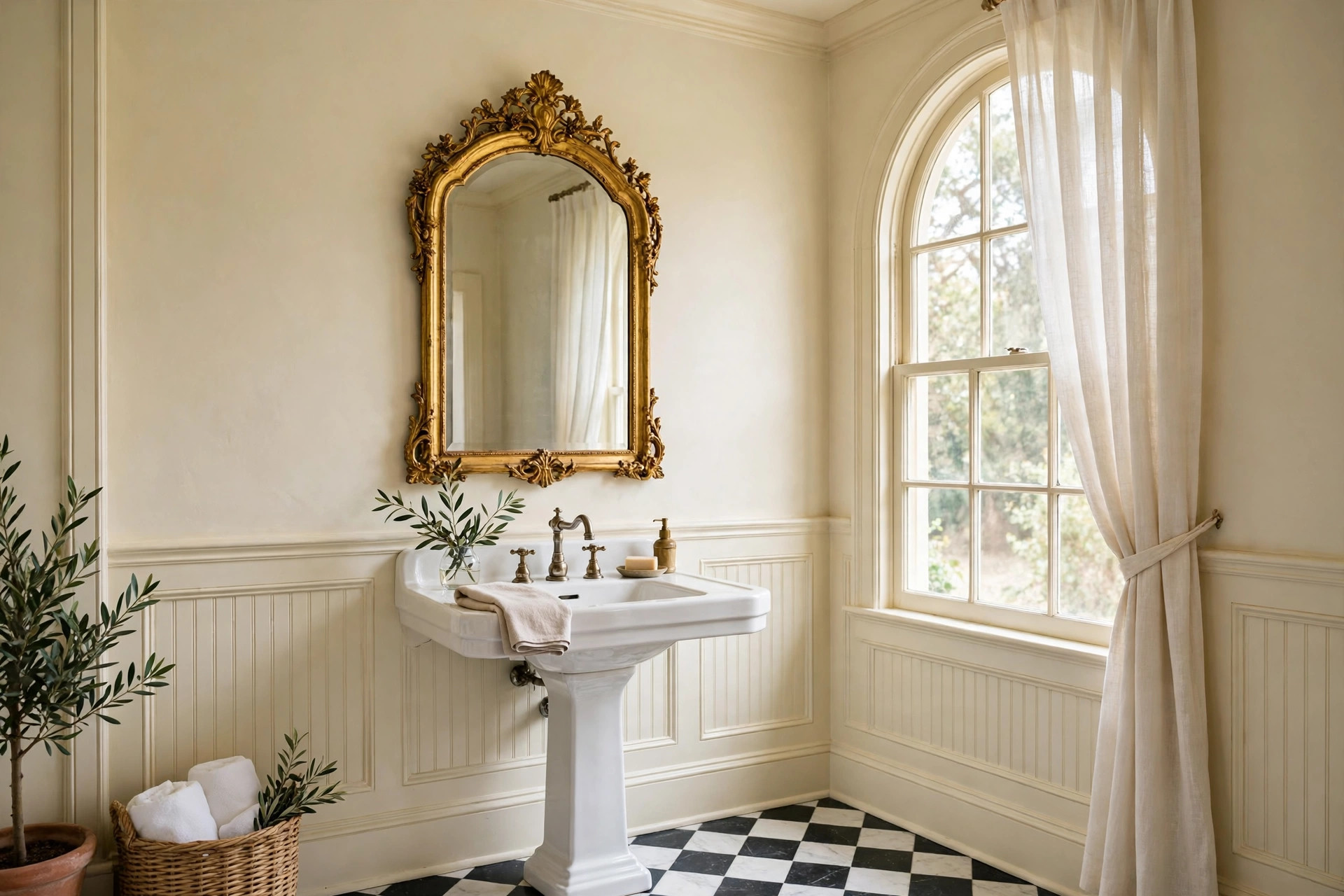
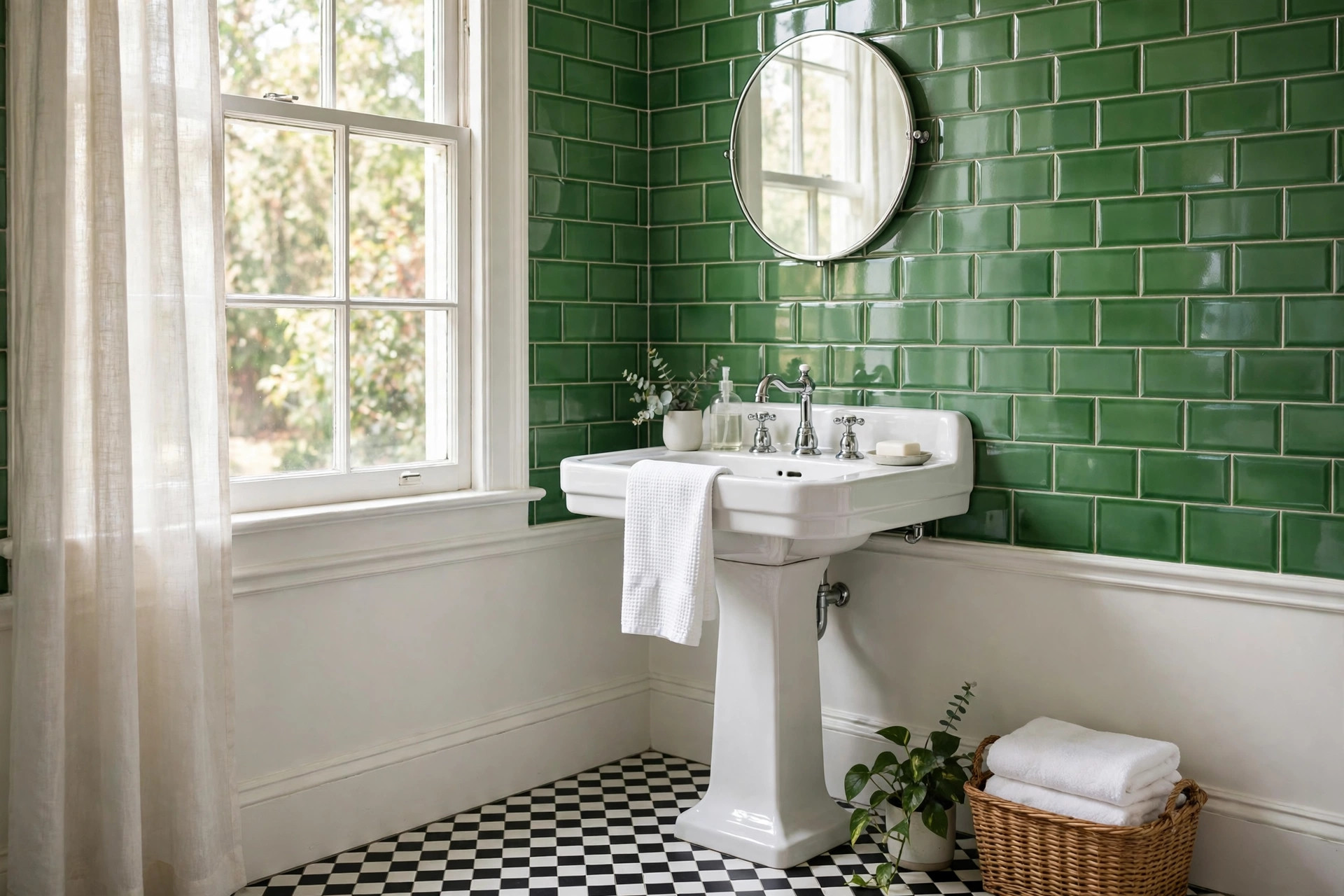
Nothing says “vintage bathroom” faster than a black-and-white floor. It’s the pattern of 1920s apartment buildings, grand old hotels and every stylish period drama you’ve ever admired — and it works just as well in a modern renovation. Here are fifteen black and white vintage bathroom floor tile ideas to steal, from dead-simple classics to genuinely dramatic statements.
Why does black-and-white work so well? Partly it’s contrast — the eye loves a clear light-dark rhythm — and partly it’s honesty. Black-and-white tile doesn’t pretend to be stone or wood; it’s unapologetically tile, which is exactly what period bathrooms celebrated. It also forgives: the high-contrast pattern disguises the odd uneven tile and the realities of daily life far better than a plain pale floor.
Timeless Classics
1. The straight checkerboard. Equal squares of black and white laid in a straight grid. Use 12-inch tiles for a grand, graphic look or 8-inch for something a little softer. This is the safest choice in the list — it suits literally any vintage style, from Victorian to mid-century.
2. The diagonal checkerboard. The same squares, rotated 45 degrees so the grid runs diamond-wise across the room. It makes narrow bathrooms feel wider and adds a sense of movement. Expect slightly more cutting and waste — order 15% extra tile.
3. Small-scale mosaic checkerboard. Two-inch black and white mosaics on mesh sheets. The fine scale feels authentically 1920s and copes brilliantly with the slightly uneven floors of older homes. Porcelain mosaics start around $5–$8 per square foot.
4. Oversized squares, minimal grout. Large 24-inch black and white porcelain tiles with tight grout joints for a contemporary take on the classic. Fewer grout lines means easier cleaning — a practical win for busy family bathrooms.
5. The softened checkerboard. Swap pure black for charcoal or dark grey, and bright white for warm ivory. You keep the vintage rhythm but lose the stark contrast — ideal if a full black-and-white floor feels too bold for everyday living.
Borders and Statement Details
6. White field, black border. A plain white (or pale) tile field framed by one or two rows of black tiles at the room’s edge. Elegant, period-correct and cheaper than a full patterned floor, since most of the area is simple, inexpensive tile.
7. The double border. Black–white–black: three crisp bands framing a white field. Very 1930s, very sharp. Works beautifully in square-ish rooms where the border reads as a picture frame around the floor.
8. Greek key border. A running geometric fret pattern in black on white around the room’s perimeter, with a plain field inside. This is the most “grand hotel” option here — unapologetically Art Deco.
9. Dots at the intersections. A white tile grid with small black “dot” inserts where four tiles meet (or the reverse: black grid, white dots). It’s the same jewellery-like detail that makes basketweave so beloved, applied to a simpler grid.
10. Corner medallions. Keep the field simple and set a decorative black-and-white medallion or motif tile at the room’s centre, or in front of the bath. One strong moment beats pattern everywhere — restraint is a design choice too.
Bold Twists on the Theme
11. Harlequin diamonds. Elongated diamond shapes rather than squares, laid in alternating black and white. Dramatic and unmistakably Deco — best in rooms with enough floor area for the pattern to breathe.
12. Two-tone hexagons. Black and white hexagon mosaics, scattered randomly or laid in stripes. Hex tiles are a touch less expected than squares and read slightly softer, which suits bathrooms that lean cosy rather than graphic.
13. Basketweave in black and white. The classic woven mosaic — white squares with dark dots — is technically a black-and-white floor, and one of the most period-authentic choices on this list. See our basketweave tile guide for the full breakdown.
14. Striped runner effect. Bands of black and white running the length of the room, like a carpet runner rendered in tile. It draws the eye toward the bath or window and makes galley-shaped bathrooms feel longer.
15. Encaustic-look feature tiles. Patterned tiles mixing black, white and grey motifs, used as a “rug” panel in the centre of a plain field. Modern porcelain versions cost $8–$15 per square foot and need no sealing, unlike true encaustic cement tiles.
Costs, Sizes and Practical Tips
- Material costs: basic ceramic checkerboard from $3–$6 per sq ft; porcelain $5–$12; natural marble $12–$20+.
- Installation: $10–$20 per sq ft for labour; intricate borders and mosaics sit at the top of that range.
- Tile size guidance: small bathrooms (under 40 sq ft) generally look better with smaller tiles (2–8 inches); large tiles can make a tiny room feel choppy and increase cutting waste.
- Grout: light grey grout is the practical sweet spot — white shows everything, black can cure patchy. Use unsanded grout with polished stone to avoid scratching.
- Slip resistance: bathroom floors should be rated for wet areas; mosaics with many grout lines naturally grip better than large polished tiles.
- The golden rule: with a high-contrast floor, keep everything else calm — plain walls, a simple suite, quiet textiles. Let the floor do the talking.
- DIY or hire a tiler? A straight checkerboard in a small room is a reasonable confident-DIY project if the subfloor is sound — budget a weekend plus $50–$100 in tools and materials (spacers, trowel, grout float). Borders, diagonals and mosaics are slower and less forgiving; that’s where a professional earns their fee. Either way, seal cement-based grout after curing (a $15–$25 bottle of grout sealer) and reapply every couple of years in a wet bathroom.
Which layout is right for you? If in doubt, start with the straight checkerboard — it’s the little black dress of bathroom floors: appropriate everywhere, flattering always, and never the thing you’ll regret in five years. Save the harlequin diamonds and Greek key borders for the day you’re feeling brave. Either way, a black-and-white floor is one of the few design choices that is simultaneously safe and striking — and in my opinion, that’s exactly why it’s lasted a century.

GIPHY App Key not set. Please check settings