

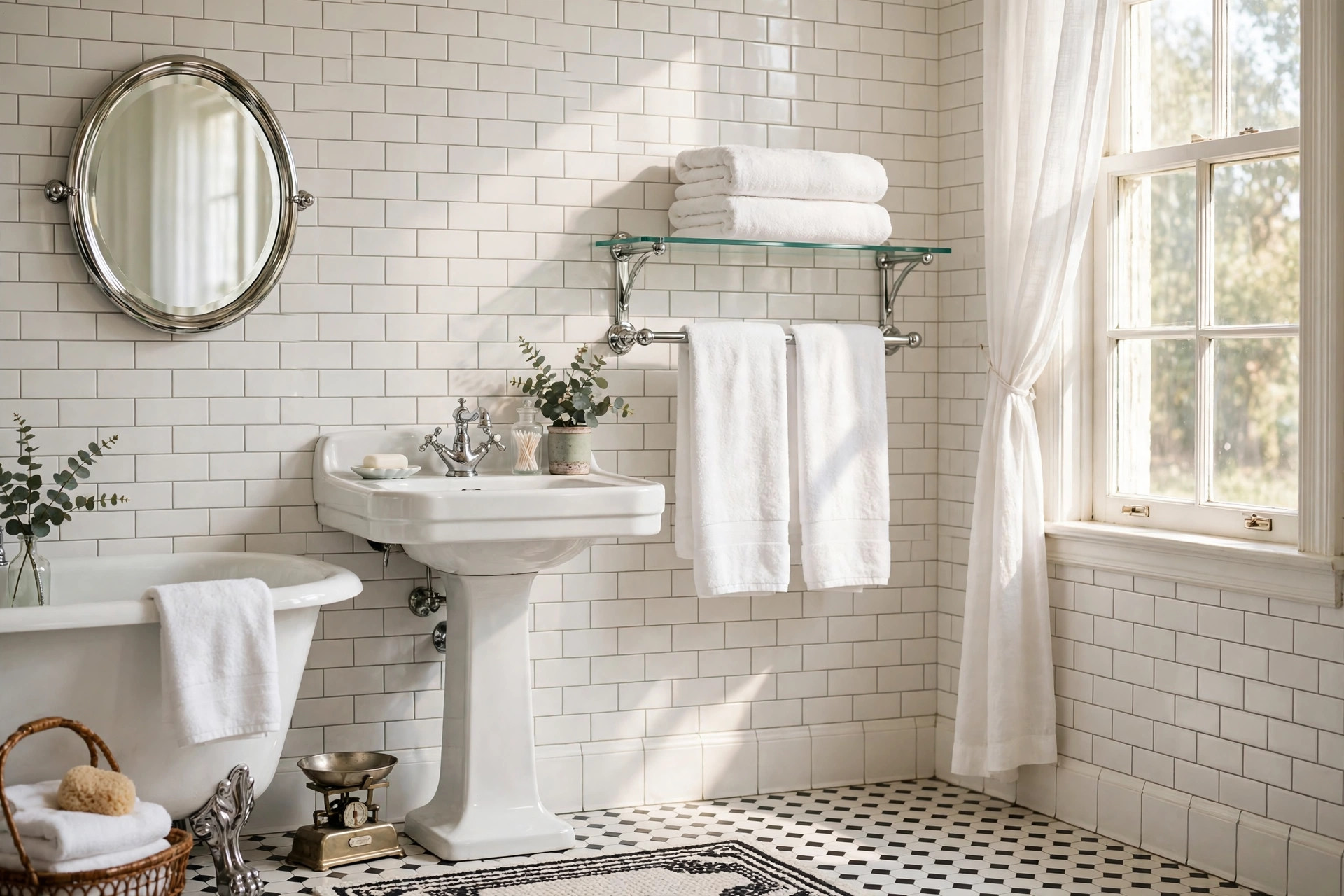
A matching towel bar set is the jewelry of a retro bathroom. When the bars, rings, robe hooks, and toilet paper holder all share the same finish and detailing, the whole room looks considered rather than cobbled together. But the market is full of reproductions dressed up as antiques. If you are hunting for a towel bar set for sale how to find authentic pieces, this guide will help you tell the real thing from a convincing copy — and pay a fair price either way.
Start With the Hallmarks of Authenticity
Genuine vintage towel hardware was usually made from solid brass, chrome-plated brass, or porcelain, and it has a weight that modern zinc-alloy copies cannot match. Pick the piece up: an authentic bar feels substantial in the hand, while a cheap reproduction feels hollow and light. Look for signs of hand finishing — slightly uneven plating, soft edges, and a patina that has settled into crevices over decades. Maker’s marks are another clue: names stamped on the back of a mounting plate or on the underside of a bar often trace to long-gone American or European manufacturers.
Know the Eras and Their Styles
Different decades left different fingerprints on bathroom hardware. The 1920s favored porcelain and chrome combinations with Art Deco angles. The 1930s and 1940s leaned into streamlined chrome and glass shelves. The 1950s brought pastel porcelain and softer curves, while the 1960s and 1970s introduced brushed brass and bolder shapes. Knowing which era your bathroom is channeling helps you spot a piece that belongs — and helps you catch a seller who labels a 1980s reproduction as “1920s original.”
Where Authentic Sets Actually Turn Up
The best authentic sets rarely appear in a single listing with a perfect photograph. They surface in architectural salvage yards, estate sales, flea markets, and the back corners of antique malls. Online, look for sellers who photograph the backs and mounting hardware, describe flaws honestly, and answer questions about provenance. A seller who can tell you which house or hotel a set came from is far more credible than one who lists everything as “rare antique.” Expect to pay $60 to $150 for a complete authentic chrome set in good condition, and $100 to $250 for a porcelain-and-chrome set from the 1920s or 1930s.
The Five-Point Inspection
Before you buy any vintage towel bar set, run through these five checks:
1. Test the plating. Chrome should be bright and even. Pitting, flaking, or green corrosion means the plating has failed, and replating a full set can cost $80 to $150 — often more than the set is worth.
2. Check the mounting hardware. Original wall brackets, set screws, and mounting plates are worth their weight in gold. Missing brackets can be hard to replace, and mismatched modern brackets often do not fit vintage posts.
3. Measure the bar length. Vintage bars commonly run 18 or 24 inches. Measure your wall space and check the bar against it — a 24-inch bar in an 20-inch alcove is a non-starter.
4. Look for matching pieces. A true set shares the same finish, the same mounting style, and the same design language across the towel bar, towel ring, robe hooks, and toilet paper holder. If one piece looks newer or shinier than the rest, it may be a later addition.
5. Test the spring and tension. Spring-loaded bars should hold firm without sagging. Press the bar gently in the middle: a good one flexes slightly and returns; a tired one stays bent or rattles in its sockets.
Reproductions: When a Copy Is the Smarter Buy
Not every bathroom needs a museum piece. A well-made reproduction in solid brass with a chrome or unlacquered brass finish can look nearly identical to the original, cost $40 to $90 for a full set, and come with modern mounting hardware that actually fits today’s walls. The honest reproductions are the ones sold as reproductions. The problem is only when a copy is priced and described as an antique. If you love the look and the price is fair, buy the reproduction proudly — just do not pay antique prices for it.
Red Flags That Should Make You Walk Away
A few warning signs should end the conversation immediately. A seller who refuses to show the back of a piece is hiding something. A listing that uses the same stock photograph for every “different” set is almost certainly selling new imports. Prices that seem too good to be true — a full “1920s porcelain set” for $25 — usually are. And any set described as “mint condition, never used” from a century ago deserves a healthy dose of skepticism; even unused vintage hardware shows some age.
How to Restore an Authentic Set
A little restoration goes a long way. Clean chrome with a soft cloth and a mild soap solution, never with abrasive pads. Remove light tarnish from brass with a gentle polish, and leave heavy patina alone if you like the aged look — over-polishing can erase the character that makes the piece special. Replace missing set screws with brass equivalents from a hardware store, and use proper wall anchors rated for the weight of wet towels. A restored authentic set, hung level and secure, will outlast most modern hardware by decades.
Our Top Picks
- A chrome-and-porcelain towel bar set in the classic 1920s style, with an 18-inch bar, matching towel ring, and two robe hooks. The timeless choice for a white-and-black retro bathroom.
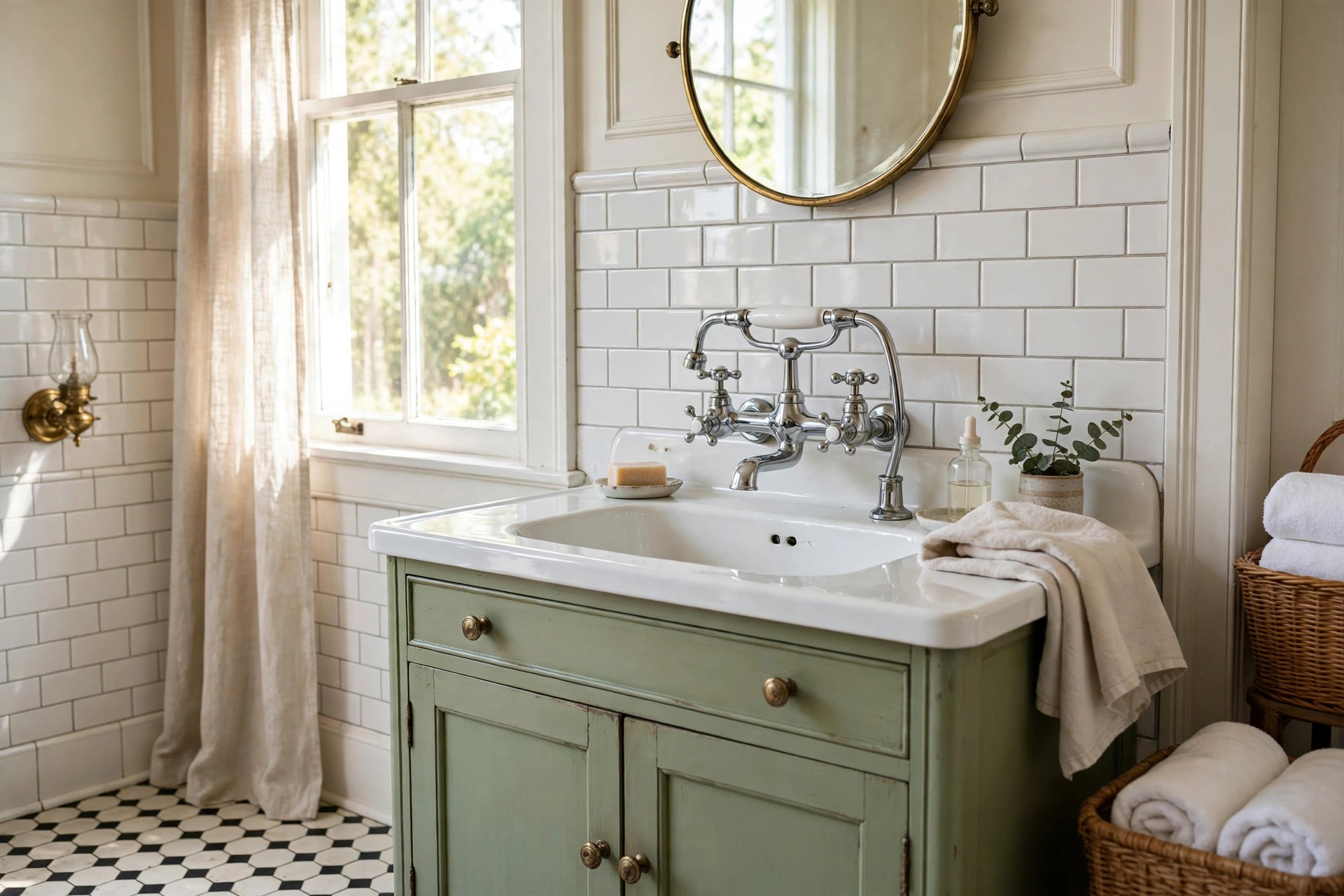
- A solid brass towel bar set with an unlacquered finish that will develop a warm patina over time. Best for a bathroom with warm metals, wood accents, and a lived-in feel.
- A glass-shelf towel bar combination in polished chrome, with a frosted glass shelf above the bar. A practical pick for a small bathroom where every surface earns its keep.
Final Word
Finding an authentic towel bar set takes patience, but the payoff is a bathroom that feels genuinely of its era rather than dressed up as one. Learn the hallmarks, inspect the plating and the mounting hardware, and buy from sellers who show you the backs of their pieces. Do that, and the set you hang will be the real thing — beautiful, solid, and ready for another fifty years of service.

GIPHY App Key not set. Please check settings