

A 1970s bathroom mirror for sale is more than a reflective surface — it is the piece that sets the tone of the whole room. The decade gave us some of the most distinctive mirror designs ever made: bold arches, sunburst frames, smoked glass, and warm brass that caught the light beautifully. This buyer shortlist walks through the styles that defined the decade, where to find them, and the practical checks that separate a treasure from a disappointment.
The Styles That Defined the Decade
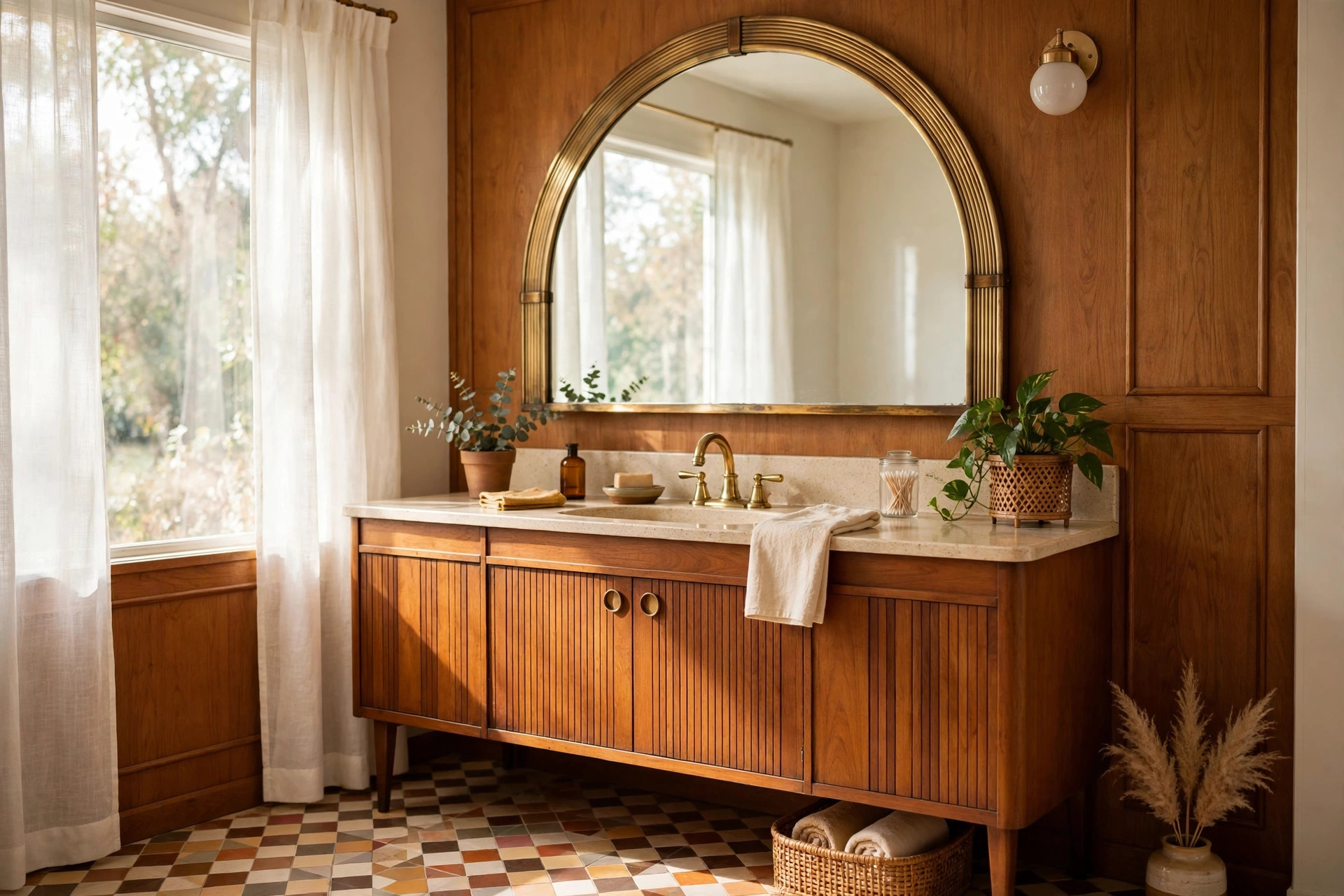
Three shapes dominate 1970s bathroom mirrors. The arched mirror, with its soft rounded top, is the most versatile — it softens the hard lines of a vanity and works in both small and large bathrooms. Typical sizes run 24 by 36 inches or 30 by 40 inches, and frames in brass, chrome, or walnut are the most authentic. The sunburst or starburst mirror, with radiating metal rays around a central round glass, is the boldest statement piece; originals in good condition are increasingly collectible, and reproductions range from 80 to 300 dollars depending on size and materials. Then there is the smoked or tinted glass mirror, often in a bronze or amber tint, which was hugely popular in late-1970s bathrooms and adds a warm, moody glow. When you spot a 1970s bathroom mirror for sale, identifying which of these families it belongs to helps you judge whether the price is fair.
Originals vs Reproductions: Which Should You Buy?
An original 1970s mirror has patina and proportions that reproductions sometimes miss, but it also comes with risks. The silvering on a fifty-year-old mirror can develop dark spots, known as foxing or desilvering, particularly around the edges. Minor foxing adds character; heavy desilvering in the centre makes the mirror hard to use. Reproductions solve this problem: new glass, new silvering, and a warranty, usually at a lower price than a pristine original. Originals vary wildly — a common arched mirror in good condition might sell for 60 to 150 dollars at a salvage yard, while a rare sunburst in brass can fetch 400 dollars or more from a vintage dealer. If you want the mirror for daily use, a reproduction is the safer choice. If you want a collector’s piece for a feature wall, hunt for an original and inspect it in person.
Where to Find One
Etsy and eBay are the richest hunting grounds for a 1970s bathroom mirror for sale. Etsy is particularly strong for reproductions and restored originals from specialist vintage sellers, with arched and sunburst designs typically listed between 90 and 350 dollars. Filter by sellers with strong review histories and ask for photographs taken in natural light, which reveal desilvering far better than flash photography. eBay rewards patience: set up saved searches for “1970s arched mirror,” “vintage sunburst mirror,” and “1970s brass mirror” and check new listings daily, as the best pieces sell quickly. Facebook Marketplace is excellent for local finds — mirrors are fragile and expensive to ship, so buying nearby saves 30 to 80 dollars in freight and lets you inspect before paying. Architectural salvage yards and charity shops are the budget route: mirrors turn up regularly for 20 to 80 dollars, though you may need to clean the frame and reseal the backing. For reproductions, mainstream retailers such as Wayfair, Amazon, and West Elm stock arched and sunburst styles from 70 to 250 dollars, with the advantage of easy returns.
Sizing, Hanging, and Bathroom Practicalities
Size matters more with a mirror than with almost any other bathroom fixture. A mirror should be roughly two-thirds to three-quarters the width of the vanity below it — so a 36-inch vanity pairs well with a 24- to 28-inch mirror. Hang the centre of the mirror at eye level, about 57 to 60 inches from the floor, and leave at least 4 inches of clearance above the taps so water splashes do not constantly spot the glass. Weight is a practical concern: a large mirror with a solid brass frame can weigh 10 to 15 kilograms, so fix it into wall studs or use proper plasterboard anchors rated for the load, never a single picture hook. If the mirror will sit directly above a bath or shower, a demister pad, 25 to 60 dollars, is a worthwhile addition that keeps the glass clear.
Spotting Damage and Fakes
Before you commit to a vintage mirror, inspect it carefully. Hold it at an angle under a bright light and look for dark patches, cloudy areas, or a brownish bloom at the edges — all signs of desilvering. Check the frame joints for gaps or glue repairs, and look at the back: an original 1970s mirror often has a paper or hardboard backing with a maker’s stamp, while a modern reproduction usually has a clean MDF or plastic back. Be wary of “vintage-style” listings priced like genuine antiques; a reproduction should cost less than a verified original in comparable condition. Ask the seller for the mirror’s measurements, weight, and hanging hardware, and confirm whether it includes wall fixings. If buying online, check the return policy — a mirror damaged in transit is common, and a seller who will not accept returns on a fragile item is a red flag. For pieces over 200 dollars, ask for a photograph of the maker’s mark or any original label.
Our Top Picks
The brass arched reproduction. A 24 by 36-inch arched mirror with a slim brushed-brass frame and new, flawless glass. The most versatile choice — it suits a 1970s scheme, a mid-century scheme, or a modern bathroom with retro accents — and it arrives ready to hang with proper fixings.
The restored original sunburst. A genuine 1970s sunburst mirror in brass or gilt metal, professionally cleaned and resealed, bought from a reputable vintage dealer. The statement piece for a feature wall, full of character that no reproduction quite matches.
The budget salvage find. A simple arched or rectangular mirror rescued from a salvage yard or charity shop, cleaned up and hung with new fixings. The cheapest route to an authentic 1970s look, and a satisfying project if you enjoy the hunt.
Styling Your 1970s Mirror
Once the mirror is hung, styling around it completes the look. Flank an arched mirror with a pair of small brass or opal-glass wall lights to echo the era’s love of warm, layered lighting. A sunburst mirror needs breathing room — keep the wall around it clear and let it be the focal point. Clean the glass with a simple vinegar and water solution rather than ammonia-based cleaners, which can damage old silvering over time. With the right mirror, chosen carefully and hung well, a 1970s bathroom gains its most important feature — a piece that reflects both the room and the decade beautifully.

GIPHY App Key not set. Please check settings