


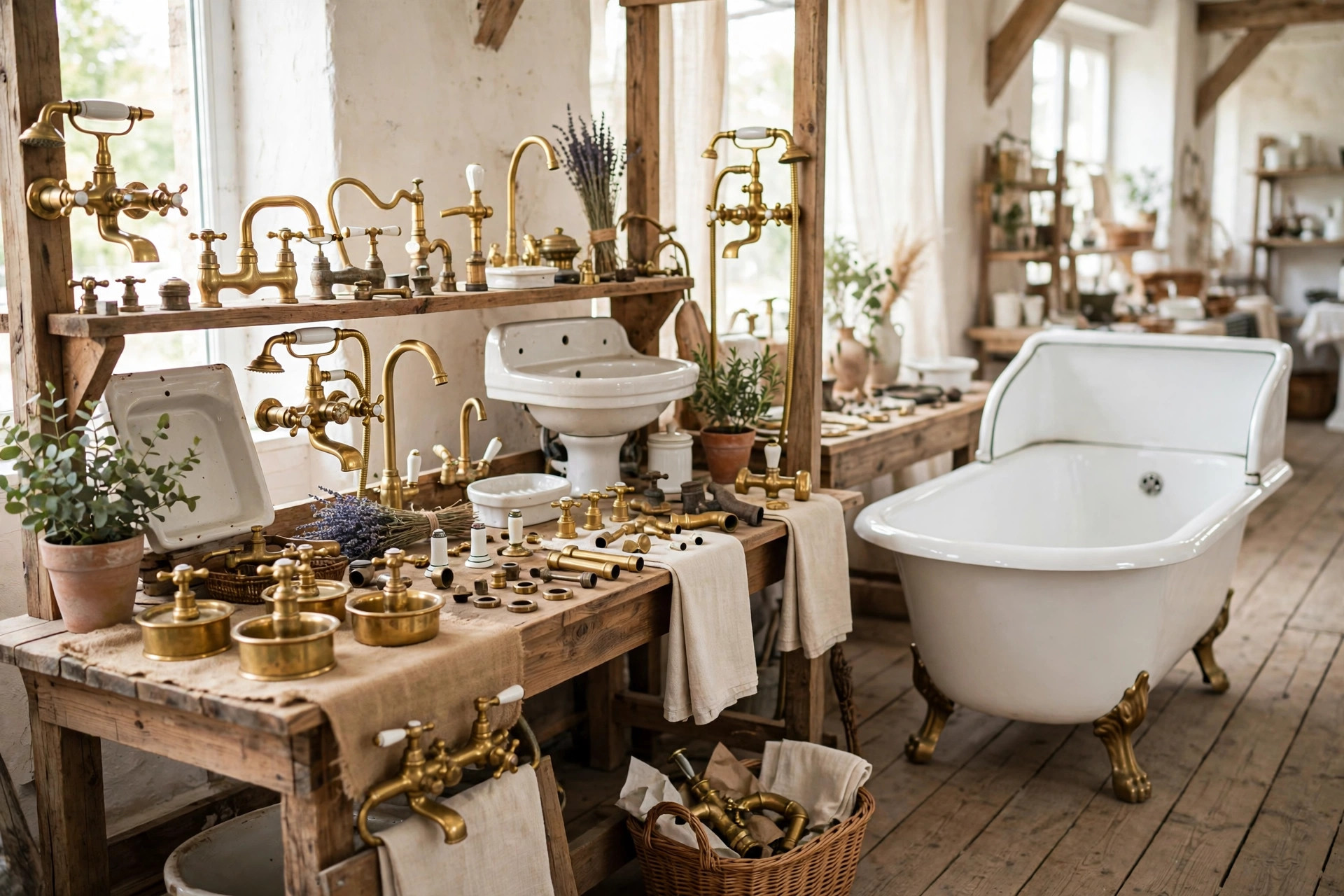
Learning how to thrift tub filler like a pro can save you hundreds of dollars and land you a fitting with real character — if you know where to look and what to check before you hand over your money. A new freestanding tub filler from a bathroom showroom can easily cost $600 to $1,500, while a thrifty find at a salvage yard, flea market, or online auction might cost $50 to $250. The difference is knowledge: the pros know which pieces are worth saving, which ones are money pits, and how to negotiate a fair price.
Know Where the Good Finds Hide
The best tub fillers rarely appear in antique shops with polished displays and premium price tags. They turn up in the messy, dusty places where old bathrooms go to be dismantled. Architectural salvage yards are the first place to look. When a hotel, school, or old house is renovated, the salvage yard buys the fittings by the truckload, and tub fillers often sit in bins or on shelves for months before anyone notices them. Visit regularly, learn the yard owner’s name, and tell them what you are looking for — they will often call you when a good piece comes in.
Flea markets and estate sales are the second hunting ground. Arrive early, because the best plumbing goes fast, and bring a tape measure and a small torch. At estate sales, the bathroom fittings are often the last thing to sell, which means you can sometimes pick up a filler for a fraction of its value on the final day, when sellers are discounting everything to clear the house.
Online, the hunting grounds are eBay, Facebook Marketplace, Etsy, and local auction sites. Search with specific terms — “clawfoot tub filler,” “freestanding bath filler,” “vintage bath taps” — and save your searches so you get alerts when new listings appear. Be careful with listings that use stock photographs or that show the same image for multiple items; those are usually reproduction sellers. A genuine thrift listing will have photographs of the actual piece, including the back, the underside, and any flaws.
Carry a Thrifting Kit and Inspect Before You Buy
Professional thrifters never shop empty-handed. A small kit, kept in a tote bag, turns a hopeful browse into a proper inspection. Your kit should include a tape measure, a small torch, a magnet, a pair of pliers, a notebook, and a few rags. The tape measure checks the height and the spout reach against your bath. The torch lets you look inside the spout and under the base. The magnet tests whether the body is solid brass or plated steel. The pliers let you gently test whether the handles turn and whether the valve spindles move.
A thrifting inspection takes five minutes and can save you a costly mistake. Start with the weight: a good vintage filler is heavy, made from solid brass, and a floor-mounted model can weigh 8 to 12 pounds. If it feels light, it is probably a modern zinc-alloy copy, and you should pay a modern price for it, not a vintage one.
Next, test the handles. Turn them gently. They should move smoothly, with a little resistance, and stop firmly at closed. If a handle spins freely, the valve is broken. If it will not move at all, it may be seized with limescale — often fixable with a soak in white vinegar, but factor in the work. A compression valve with a brass spindle and a washer is a good sign; a plastic cartridge is a sign of a modern reproduction.
Check the finish. Look for the original plating — chrome, nickel, or unlacquered brass — and judge how much of it is left. A filler with 70 percent of its plating intact can be polished and used as it is. One with heavy pitting, flaking, or green corrosion will need a professional re-plate, which costs $150 to $400. Do the maths before you buy: a $60 filler that needs a $300 re-plate is a $360 filler.
Haggle With Confidence
Haggling is part of thrifting, and it is expected at salvage yards, flea markets, and estate sales. The key is to haggle with respect and with facts, not with lowball offers. Start by asking the seller what they know about the piece — where it came from, whether it works, whether anything is missing. Then point out, politely, anything you found in your inspection: a missing handle, a seized valve, a worn finish. Each flaw is a legitimate reason for a lower price.
A good opening offer is 60 to 70 percent of the asking price, and you should be prepared to meet in the middle. If a filler is listed at $150 and needs a $100 re-plate, offering $90 is reasonable and fair. Pay cash where you can, because cash gives the seller a reason to accept a lower price on the spot. Know your walk-away price before you start negotiating — if the seller will not meet it, thank them and leave. Another filler will turn up.
Restore, Don’t Replace
Once you have your find home, resist the urge to replace everything. Most vintage tub fillers need only a deep clean, new washers, and a little patience. Soak the removable parts in a solution of equal parts white vinegar and warm water for a few hours to dissolve limescale, then scrub gently with a soft brush. Replace the washers — standard 15-millimetre tap washers cost a few dollars for a pack — and grease the valve spindles with a little silicone grease.
Our Top Picks
If you are ready to start hunting, these are the finds that offer the best value for a thrifter:
- A solid-brass deck-mounted pair with cross handles from a salvage yard: the most common good find, usually restorable with new washers and a polish, and a perfect match for a roll-top bath with tap holes.
- A floor-mounted filler with its flange and supply pipes intact: harder to find, but worth the search, because the mounting hardware is the part that is most expensive to replace.
- A mismatched pair — one tap and a spout from different sets: often sold cheaply because they do not match, but if the finish and the style are close, a good plumber can make them work together, and the result looks deliberately eclectic rather than wrong.
Thrifting a tub filler is part treasure hunt, part detective work, and entirely worth it. Hunt in the right places, inspect with your kit, haggle with facts, and restore rather than replace — and you will end up with a fitting that has history, character, and a price tag that makes you smile every time you run a bath.

GIPHY App Key not set. Please check settings