

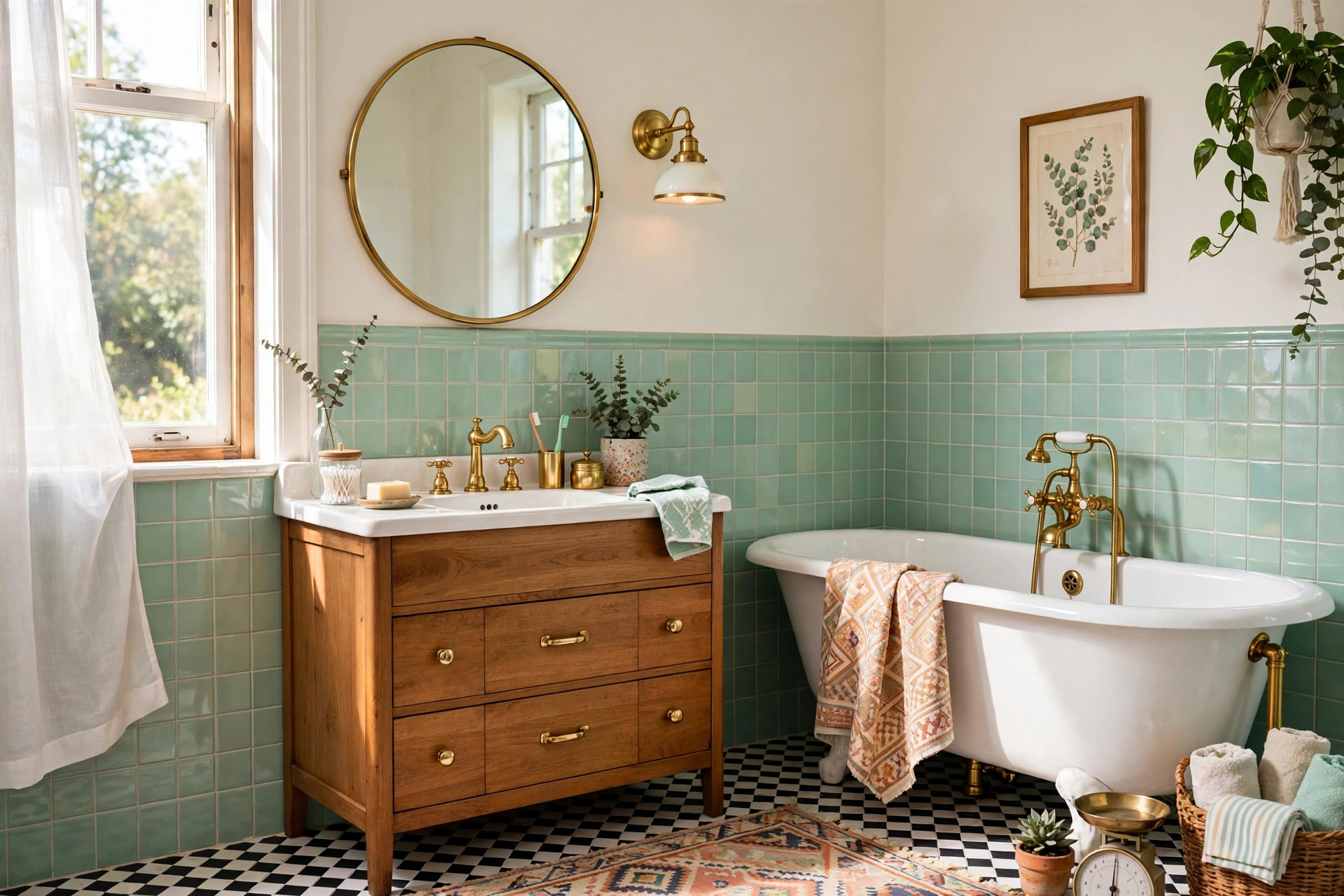
If 7 small changes with big retro bathroom impact sounds too good to be true, here is the reassuring truth: in a bathroom, the details do most of the talking. A bathroom is a small room with a short list of visible surfaces — the taps, the mirror, the light, the towel rail, the textiles — and changing just one of them shifts the whole feeling of the space. You do not need to rip out tiles, move plumbing, or spend thousands. You need seven well-chosen swaps, most of which take an afternoon and cost less than a dinner out. Work through them in order, and by the end of the weekend your plain bathroom will read as unmistakably, warmly retro.
Start With the Fixtures
1. Swap the tap handles. Start with the smallest, highest-impact change in the room: the tap handles. Modern lever taps are practical, but they say nothing about the past. A pair of crosshead or porcelain-lever handles in chrome or polished brass instantly signals a period bathroom, and they fit most standard tap bodies. Porcelain indices — the little hot and cold caps in white or pale blue — add an authentic touch for just a few dollars each. If your taps are in good working order, you may only need the handles themselves, which typically cost $15 to $40 a pair. Turn off the water, unscrew the old handles, and fit the new ones with the grub screw provided. Ten minutes a tap.
2. Change the mirror. The mirror is the largest single object most people look at in a bathroom, and it sets the tone for everything around it. A plain frameless mirror says modern and anonymous. Replace it — or simply frame it — and the room changes. A mirror with a rounded, arched top nods to the 1920s and 1930s; a simple brass or gilt frame suits a 1950s or 1960s scheme; a wooden frame in teak or walnut brings a warm Scandinavian note. If a new mirror is beyond the budget, buy a frame kit that clips over your existing mirror, or have a local glazier cut a mirror to fit a vintage frame you found second-hand. Hang it so the centre sits at about 150 centimetres from the floor, and check it is level.
Light and Colour
3. Rethink the lighting. Bathroom lighting is often the least considered and the most transformative element in the room. A single harsh ceiling light flattens everything; a pair of warm wall lights beside the mirror flatters faces, softens the room, and immediately reads as vintage. Look for small sconces with opal or frosted glass shades in brass or chrome, and fit warm-white bulbs of around 2700 Kelvin — the colour temperature matters as much as the fitting, because it is what gives the light its golden, flattering quality. If you cannot add wall lights, even swapping a cool-white ceiling bulb for a warm-white one, and fitting a simple fabric or glass shade, will change the mood of the room in minutes. Have any electrical work done by a qualified electrician.
4. Add a hit of period colour. Retro bathrooms are not shy about colour, and one confident hit of it will do more than a whole room of beige ever could. You do not need to repaint the walls. Paint the vanity instead: a deep sage green, a dusty pink, a butter yellow, or a classic mint will transform a plain wooden cabinet into the centrepiece of the room, and a tin of suitable bathroom paint costs $25 to $40. Alternatively, paint just the lower half of the wall, or the inside of a door. If paint feels like too much commitment, bring the colour in through textiles: a hand towel in a bold 1960s geometric print, a bath mat in a solid period colour, or a shower curtain in a cheerful retro pattern. Colour is the fastest way to make a bathroom feel intentional rather than accidental.
The Finishing Details
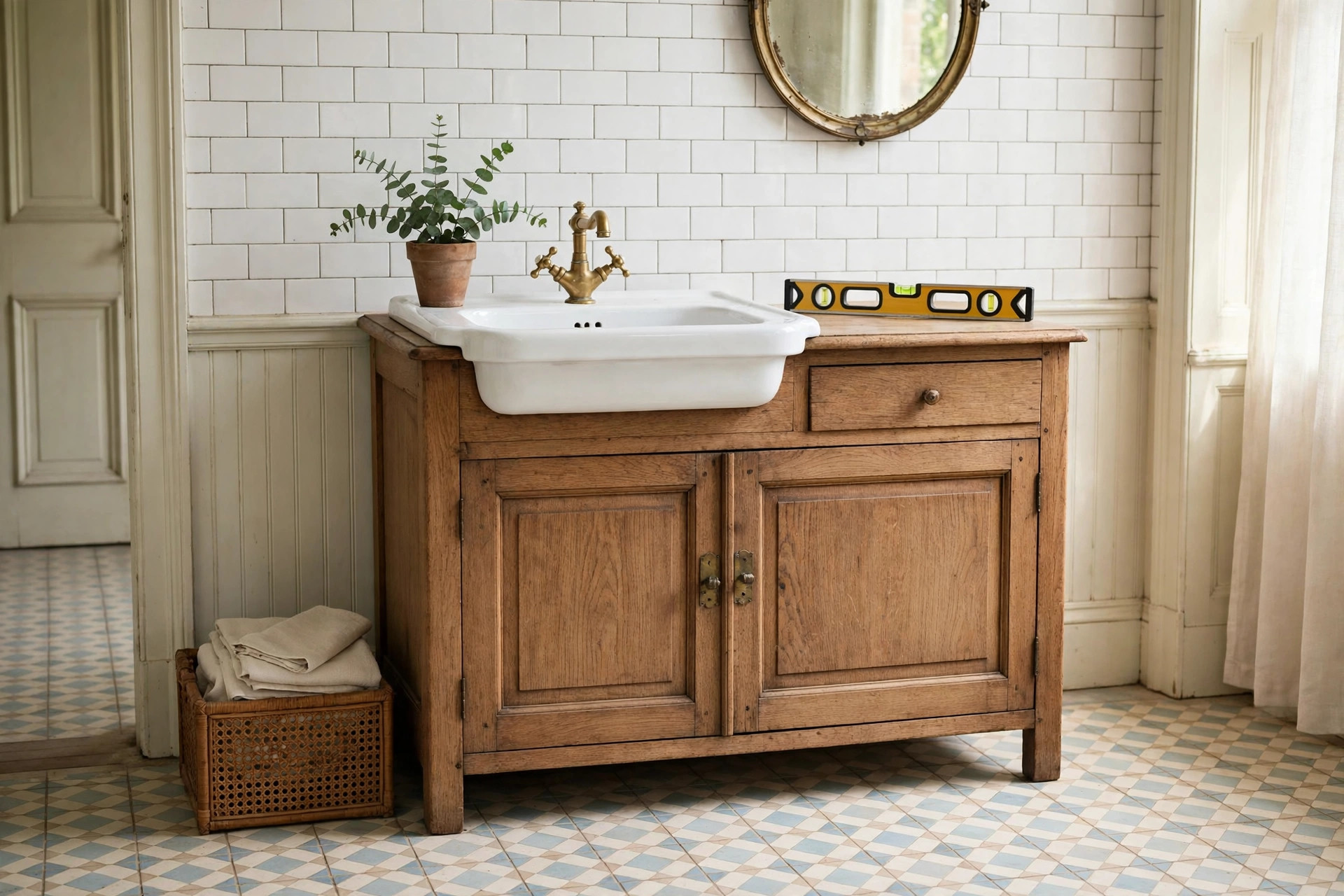
5. Upgrade the hardware. Cabinet knobs, drawer pulls, the towel rail, the toilet-roll holder, the robe hook — these are the jewellery of the bathroom, and they are almost always the cheapest things to change. A set of small brass or ceramic knobs costs $3 to $8 each and takes minutes to fit with a screwdriver. Choose one finish and use it consistently across the room: polished brass with a warm, golden tone suits most retro schemes, while chrome with a slightly rounded, period profile works beautifully in a 1930s or 1950s bathroom. Match the towel rail and the robe hook to the same finish, and suddenly the room looks considered rather than assembled.
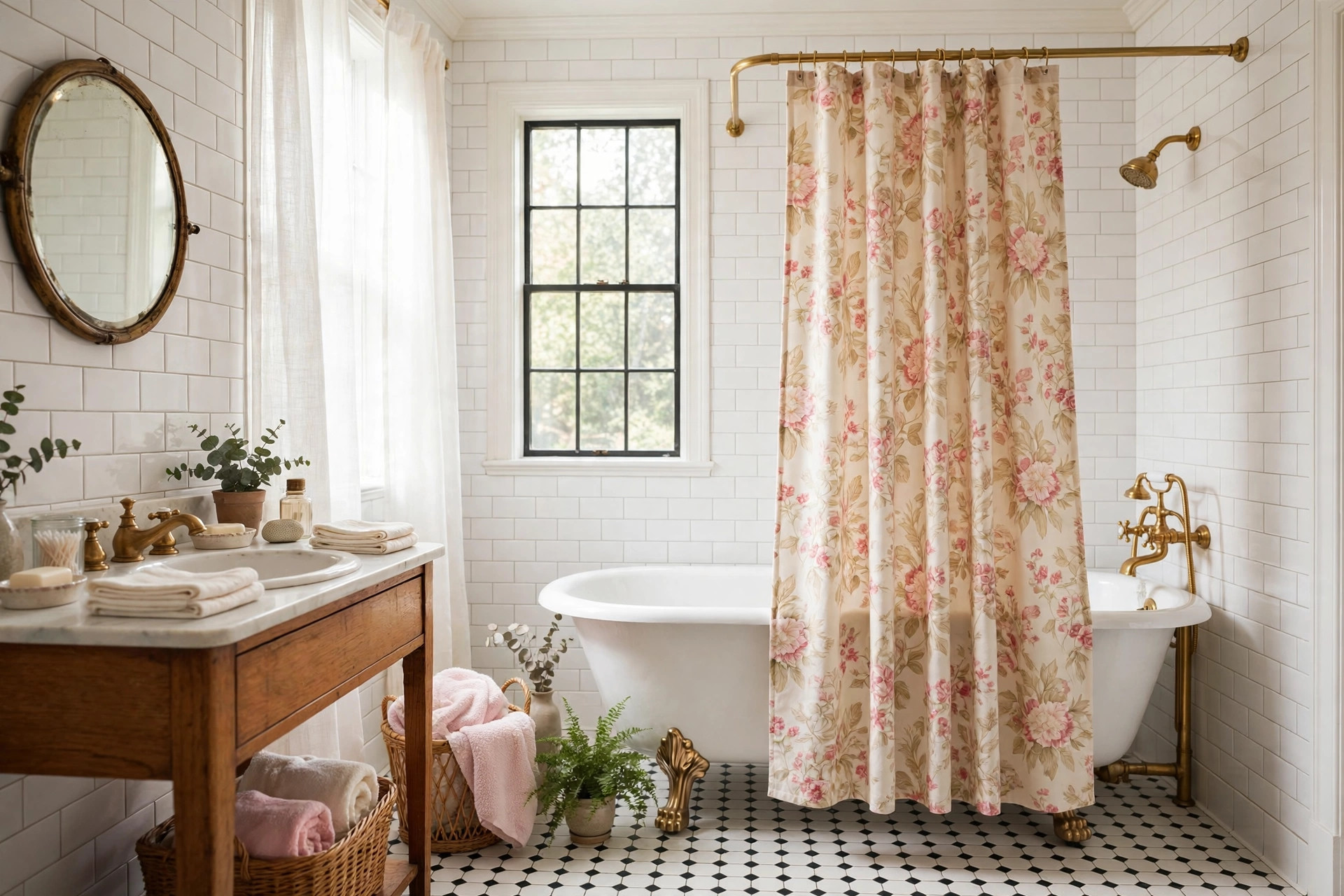
6. Layer in vintage textiles. Textiles are the softest, warmest layer in a hard-surfaced room, and they are where retro character really shows. A waffle-weave bath mat in a solid period colour, a set of hand towels with a simple woven stripe, and a shower curtain in a bold but not overwhelming print will do more for the room’s atmosphere than almost any fixture. Look for natural fibres — cotton and linen rather than polyester — because they feel better, age better, and drape the way textiles did in the period you are evoking. A small stool or a folded stack of towels on an open shelf adds a lived-in, hotel-like touch. A linen hand towel on a brass ring costs almost nothing, and it is the detail visitors remember.
7. Finish with one genuine vintage piece. Finally, give the room one thing that is genuinely old. It does not need to be large or expensive — a small enamel soap dish, a glass apothecary jar for cotton wool, a vintage perfume bottle on the windowsill, or a framed period advertisement on the wall. One authentic object anchors all the new period-style pieces around it and makes the whole room feel collected rather than decorated. Charity shops, flea markets and online second-hand listings are full of these pieces for $5 to $20, and the hunt is half the pleasure. Choose something you genuinely like, not something that merely looks old, and let it be the last thing you add — the full stop at the end of the room’s sentence.
Putting It All Together
The beauty of these seven changes is that they work in any order and at any pace. Do one this weekend and the room improves; do all seven and it transforms. Keep a consistent thread running through them — one metal finish, one or two colours, one era as your guide — and the result will feel coherent rather than costume-like. A retro bathroom is not about pretending to live in the past. It is about borrowing the warmth, the colour and the craftsmanship of earlier decades and making them work for the way you live now. Seven small changes, one afternoon each at most, and a bathroom that finally feels like yours.

GIPHY App Key not set. Please check settings