


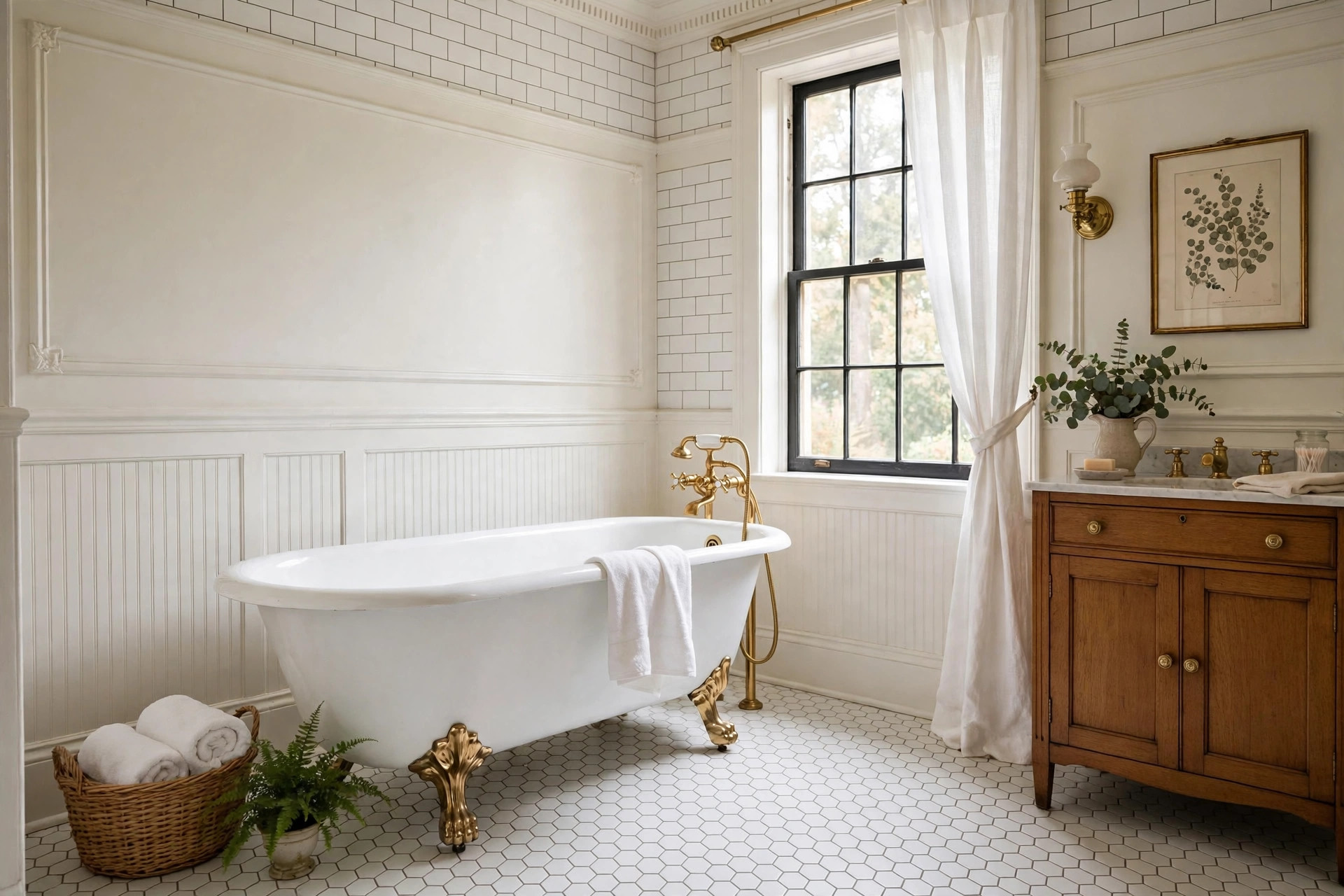
Do clawfoot tubs add value to your home? The short answer is: sometimes, and it depends far more on the buyer than on the tub. A clawfoot tub is a statement piece. For the right buyer it is the reason they fall in love with a bathroom; for the wrong buyer it is a bulky, impractical fixture they plan to rip out. Understanding which buyer you are likely to meet — and what a clawfoot tub really costs to install and live with — is the difference between a smart investment and an expensive mistake.
What Buyers Actually Think of Clawfoot Tubs
In period homes — Victorians, Craftsman bungalows, 1920s Tudors — a clawfoot tub reads as authentic. It belongs there, and buyers who chose a historic house usually want historic character. In that context, a well-restored cast iron clawfoot tub in good condition can be a genuine selling point, especially if the rest of the bathroom respects the era: hexagonal floor tile, a pedestal sink, period-appropriate fixtures.
In a modern suburban home, the reaction is mixed. Many buyers love the look in photos but worry about the practicalities once they imagine daily use: no shower is the big one. A clawfoot tub without a shower ring and curtain is a soaking tub only, and families with children or anyone who showers daily will see that as a downgrade from a standard tub-shower combination. Real estate agents consistently report that a bathroom’s value comes from its overall condition and functionality first, and from character second. A beautiful clawfoot tub in a tired bathroom will not save the room; a clean, functional bathroom with a clawfoot tub can absolutely help sell the house.
The Real Cost of Installing One
Before counting any added value, count the cost. A new cast iron clawfoot tub runs $800–$2,500 depending on size and brand, while acrylic reproductions cost $500–$1,200 and weigh far less. A genuine antique in restorable condition can be found for $200–$600 at salvage yards, but professional refinishing adds $300–$600, and that assumes the iron underneath is sound.
Installation is where the numbers climb. Cast iron tubs weigh 300–500 pounds empty, so the floor may need reinforcing — budget $300–$1,000 for a carpenter to sister joists if the bathroom is on an upper floor. Freestanding tub fillers cost $200–$600, and the drain and supply lines usually need to be moved or extended, which means a plumber at $75–$150 per hour. A realistic all-in cost for installing a new cast iron clawfoot tub in an existing bathroom is $2,000–$5,000, before any surrounding tile or floor work. An acrylic tub on a ground floor with existing plumbing nearby can come in closer to $1,000–$2,000.
When a Clawfoot Tub Helps — and When It Hurts
When It Helps Resale
A clawfoot tub is most likely to help your home’s value when several conditions line up. First, the house has another full bathroom with a shower, so the clawfoot bathroom is a luxury second bath rather than the family’s only washing option. Second, the home’s style supports it — a period house, a farmhouse, or a deliberately vintage-styled renovation. Third, the tub is installed properly, with a shower ring and curtain if it will serve as a shower, and with the floor reinforced so there are no long-term structural worries.
In those conditions, the tub becomes part of a cohesive, photogenic bathroom that photographs beautifully for listings and sticks in buyers’ memories. That memorability has real value in a competitive market, even if no appraiser will ever add a line item for it. Appraisers value bathrooms by count, condition, and overall quality — a clawfoot tub does not get its own adjustment the way an extra bedroom does.
When It Can Hurt Value
There are situations where a clawfoot tub actively works against you. The clearest is a one-bathroom home. Removing the only shower to install a soaking tub narrows your buyer pool significantly, and that can translate into a lower sale price or a longer time on the market. The same applies in homes marketed to families with young children, where a shower-tub combination is close to a requirement.
Practical drawbacks also matter to buyers who look past the photos. Clawfoot tubs are harder to clean around — the gap between the tub and the wall collects dust and moisture. They are harder to get in and out of, which matters for older buyers or anyone with mobility concerns. The exposed plumbing underneath can look charming or unfinished depending on the buyer. And a poorly installed tub — wobbling feet, a slow drain, a shower curtain that never quite contains the water — reads as a problem to fix, not a feature to enjoy.
Cast Iron vs. Acrylic: Which Holds Up Better?
If you decide to go ahead, the material choice affects both daily life and resale appeal. Cast iron with a porcelain enamel interior is the classic: it holds heat beautifully, so bath water stays warm far longer, it feels solid underfoot, and it lasts for decades. Its downsides are weight, cost, and the fact that chipped enamel is expensive to repair properly.
Acrylic clawfoot tubs are lighter, cheaper, warmer to the touch, and easier to install — a two-person job rather than a four-person one. They scratch more easily and do not hold heat as well, and some buyers can tell the difference in feel. For a second bathroom or a rental property, acrylic is the sensible choice. For a forever home where the tub is the centrepiece, cast iron is worth the extra money and effort.
The Bottom Line
So, do clawfoot tubs add value to your home? In the right house, with a second bathroom to cover daily showering, a well-installed clawfoot tub adds character that buyers remember and photograph — and that can support a stronger sale. In a one-bathroom home, or a house where the tub forces compromises on function, it can narrow your buyer pool and cost you more than it returns.
Treat a clawfoot tub as a lifestyle choice first and an investment second. If you love long soaks, your home suits the style, and you can afford the $2,000–$5,000 installation without cutting corners, it is a wonderful addition that you will enjoy every week. Just do not install one expecting a guaranteed return at resale — the value is in the living, and the resale benefit, when it comes, is a bonus.

GIPHY App Key not set. Please check settings